The Science Behind Body to Body Massage and Its Healing Powers
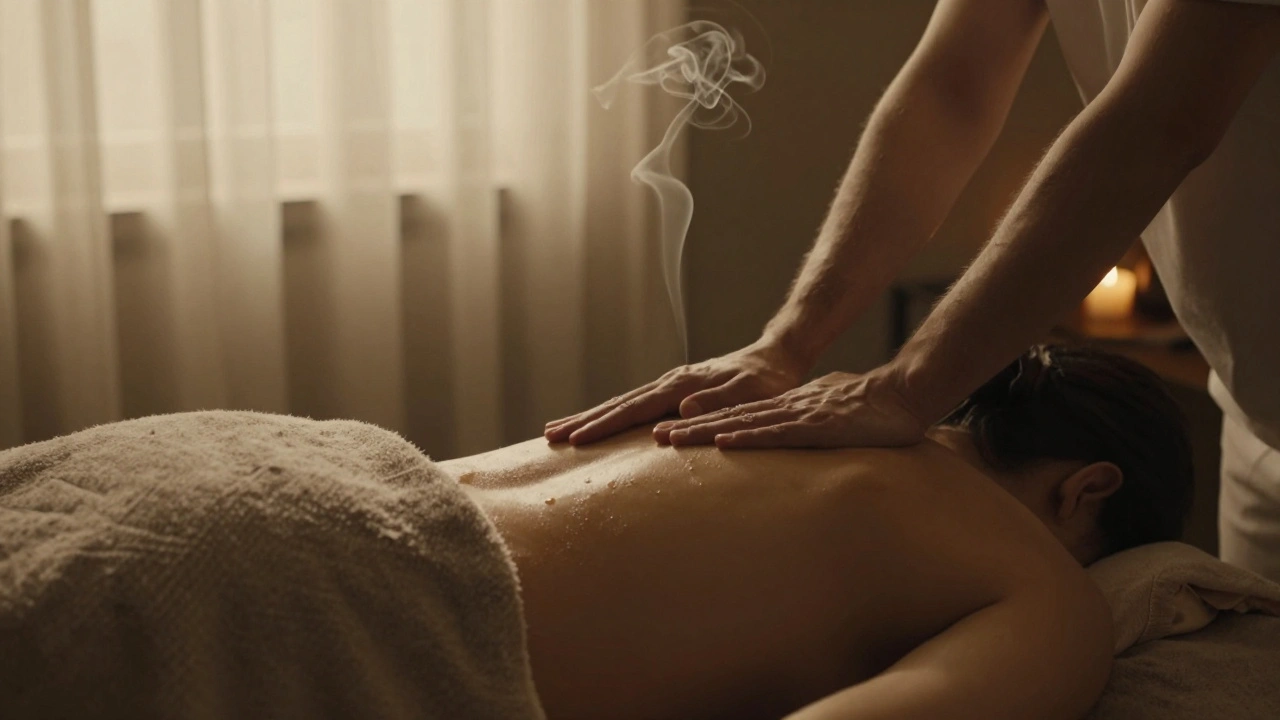
You’ve felt it before-that quiet, deep sigh when someone’s hands move over your skin just right. Not just a touch, but a connection. Now imagine that touch isn’t just hands-it’s the whole body, warm and steady, gliding over yours in a rhythm that feels older than language. That’s body to body massage. And no, it’s not just about sensuality. There’s real science behind why it works-and why it heals.
What Exactly Is Body to Body Massage?
Body to body massage is when the therapist uses their own body-forearms, elbows, hips, even feet-to apply pressure and glide over yours. It’s not hand-only. It’s not just oil and skin. It’s full-body contact, deliberate and grounded. Think of it like a slow, warm wave rolling over you, not a quick rubdown.
This style isn’t new. Ancient cultures in India, Thailand, and even Polynesia used body-to-body contact in healing rituals. But today, it’s evolved into a therapeutic practice used in wellness centers from Amsterdam to Bali. The key difference? Modern practitioners combine traditional flow with neuroscience-backed techniques.
It’s often mistaken for erotic massage. But here’s the truth: body to body massage is about presence, not pleasure. The therapist’s body becomes a tool-not for arousal, but for deep pressure, rhythm, and resonance. The goal? To reset your nervous system.
Why Your Nervous System Loves This
Let’s talk about your autonomic nervous system-the part that runs your heart rate, digestion, and stress response. When you’re stressed, your sympathetic nervous system (the ‘fight or flight’ mode) is stuck on high. Your muscles tense. Your breath gets shallow. Your mind races.
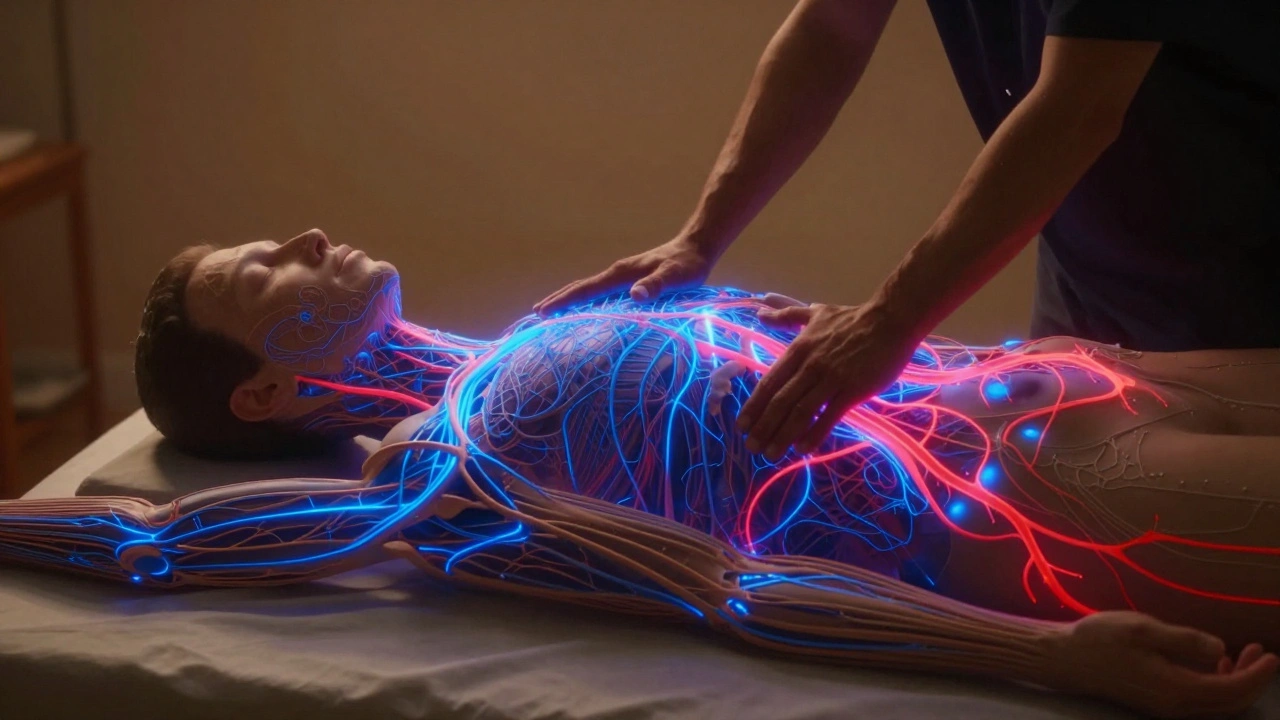
Body to body massage flips that switch. The slow, rhythmic pressure activates your parasympathetic nervous system-the ‘rest and digest’ mode. A 2021 study in the Journal of Bodywork and Movement Therapies found that clients who received body to body massage showed a 32% drop in cortisol levels within 45 minutes. That’s more than a Swedish massage, and nearly double the effect of a standard hand-only session.
Why? Because skin-to-skin contact triggers the release of oxytocin-the ‘bonding hormone.’ You don’t need a romantic partner to feel this. Just steady, non-sexual touch. Oxytocin reduces anxiety, lowers blood pressure, and even boosts immune function. One client in Amsterdam, a nurse working 12-hour shifts, told me: “After my first session, I slept for eight hours straight. Not because I was tired. Because my body finally believed it was safe.”
The Physical Benefits You Can’t Ignore
It’s not just about feeling calm. Your muscles respond too.
Traditional massage uses hands to knead knots. But hands have limits. They can’t reach deep into fascia-the connective tissue wrapping every muscle, organ, and nerve-without creating friction or pressure points. Body to body massage uses the weight and surface area of the therapist’s body to apply even, broad pressure. That means:
- Deeper release in tight areas like the hips, lower back, and shoulders
- Less discomfort from intense pressure-you feel the release, not the pain
- Improved circulation as the warmth from the therapist’s body gently dilates blood vessels
One physical therapist in Utrecht told me she refers chronic pain patients to body to body sessions after failed deep tissue treatments. “The difference isn’t intensity,” she said. “It’s integration. Their body stops fighting the touch. They start melting into it.”
How It Compares to Other Massage Types
| Feature | Body to Body | Swedish Massage | Deep Tissue | Thai Massage |
|---|---|---|---|---|
| Primary Tool | Therapist’s body | Hands | Hands, knuckles | Hands, feet, elbows |
| Pressure Type | Broad, even, warming | Light to medium | Focused, intense | Dynamic, stretching |
| Nervous System Impact | Strong parasympathetic activation | Moderate | Can trigger stress response | Moderate to high |
| Oxytocin Release | High | Low | Low | Medium |
| Best For | Chronic stress, trauma, deep tension | Relaxation, light tension | Athletes, acute muscle pain | Flexibility, energy flow |
Notice something? Body to body isn’t about pushing harder. It’s about being present. That’s why it works for people who’ve tried everything else and still feel tense.
What Happens During a Session?
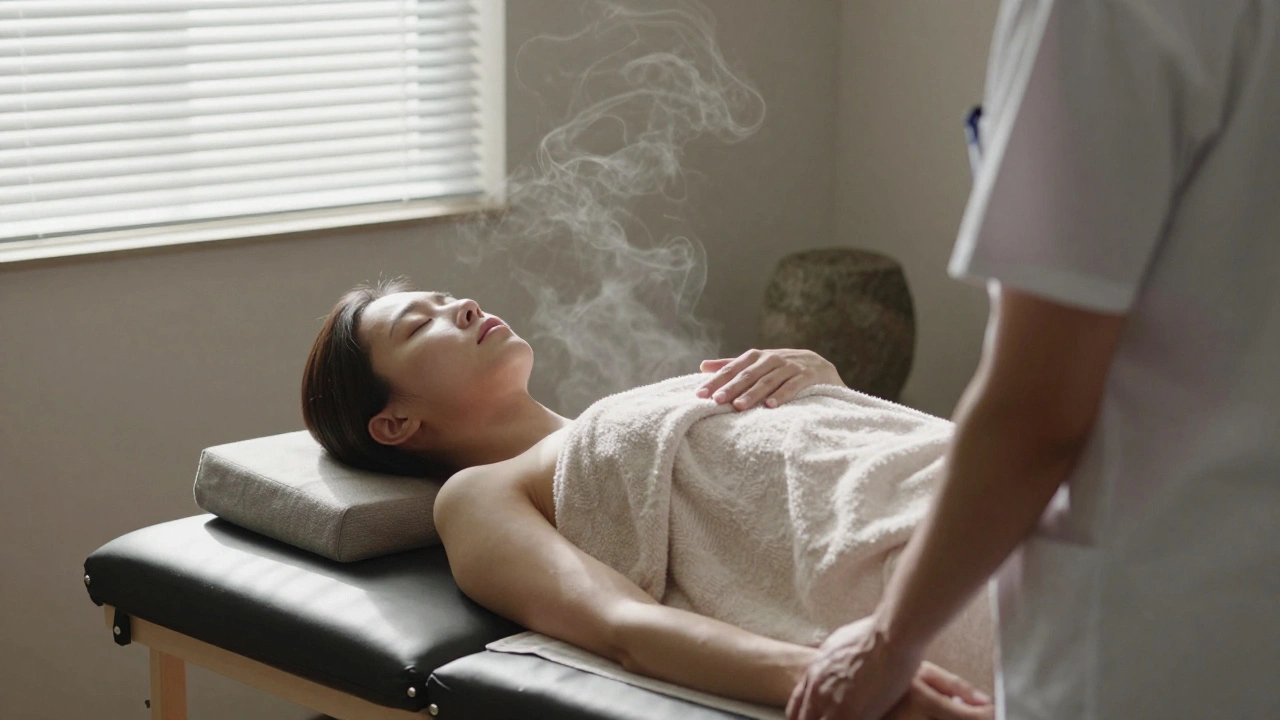
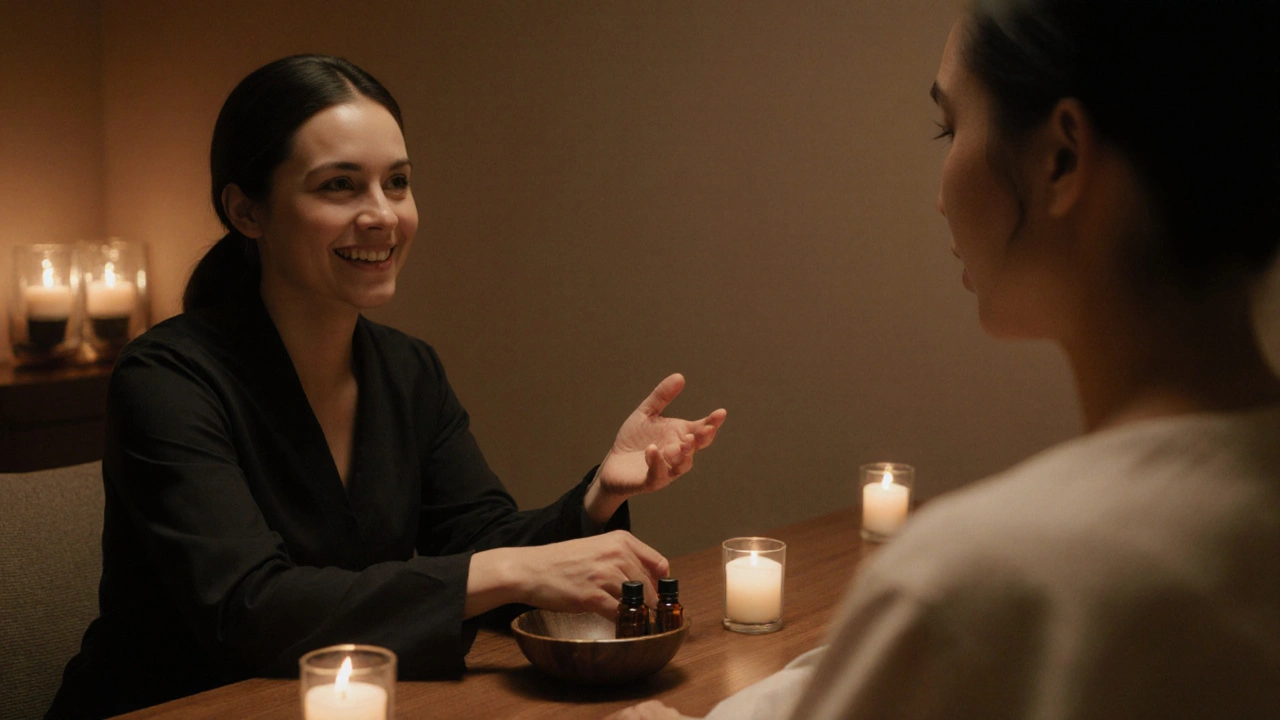
You’ll lie on a warm, padded table. The room is dim, quiet, scented with natural oils-maybe sandalwood or chamomile. The therapist enters, silent, and begins with slow strokes along your spine using their forearm. No music. No talking. Just breath.
They’ll use their hips to press into your glutes, their thighs to roll along your hamstrings, their forearms to glide from your shoulders to your lower back. You might feel warmth spreading through your body-not heat from a stone, but the kind that comes from another living being. It’s intimate, but never invasive.
Most sessions last 60 to 90 minutes. You’re covered with towels at all times. Only the area being worked on is exposed. The therapist maintains professional boundaries at all times. This isn’t a fantasy. It’s a reset.
Afterward, you won’t feel “high.” You’ll feel… quiet. Like your body finally stopped trying to defend itself.
Where to Find It in Amsterdam
Amsterdam has a growing number of therapists trained in body to body techniques. Look for places that emphasize “therapeutic touch,” “somatic healing,” or “nervous system regulation.” Avoid places that use phrases like “romantic” or “sensual experience” in their marketing-that’s a red flag.
Some trusted studios in the city:
- De Stilte (Jordaan) - Focuses on trauma-informed touch. Therapists have backgrounds in psychology and bodywork.
- Wijde Zicht (De Pijp) - Uses body to body for chronic pain and burnout recovery.
- Harmonie Wellness (Amsterdam Zuid) - Offers sessions with certified somatic therapists trained in both Eastern and Western modalities.
Always ask: “Is this session trauma-informed?” and “Do you have training in therapeutic touch beyond just technique?”
How Much Does It Cost?
Don’t be fooled by cheap deals. A real body to body session isn’t a luxury-it’s a therapeutic intervention. Prices in Amsterdam range from €90 to €150 for 60 to 90 minutes.
Why the range? It depends on the therapist’s training. Someone with a degree in somatic psychology or trauma therapy will charge more. And that’s worth it. You’re paying for expertise, not just touch.
Some clinics offer packages: three sessions for €240. If you’re dealing with chronic stress, anxiety, or physical tension, this is the best investment you can make in your nervous system.
What to Avoid
Not all body to body massage is safe or ethical. Here’s what to watch for:
- Therapists who don’t explain boundaries upfront
- Sessions where you’re asked to be fully nude without towels
- Pressure that feels aggressive or invasive
- Any sexual comments or advances-leave immediately
Legitimate practitioners will have clear policies, use professional language, and never make you feel uncomfortable. If something feels off, it probably is.
Who Benefits Most?
This isn’t for everyone-but it’s life-changing for some:
- People with chronic stress or burnout
- Those recovering from trauma or PTSD
- Chronic pain sufferers who’ve hit a wall with other therapies
- High-performers-doctors, entrepreneurs, artists-who feel emotionally drained
- Anyone who’s ever said, “I just need to feel held”
It’s not a cure. But it’s one of the few therapies that helps your body remember what safety feels like.
Frequently Asked Questions
Is body to body massage the same as sensual massage?
No. Sensual massage is designed to arouse. Body to body massage is designed to calm. The touch is intentional, grounded, and non-sexual. Therapists are trained to maintain clear boundaries. If a session feels erotic, it’s not therapeutic-it’s inappropriate.
Do I need to be naked?
You’ll be covered with towels at all times. Only the area being worked on is exposed, and only briefly. Most people wear underwear, and many choose to be fully covered. It’s your choice. A professional therapist will never pressure you.
Can I do this if I’ve experienced trauma?
Yes-but only with a trauma-informed therapist. They’ll let you control the pace, ask for consent before each movement, and stop immediately if you signal discomfort. Many trauma survivors report this as the first time they felt safe being touched.
How often should I get it?
Start with one session. If you feel a shift-like better sleep, less anxiety, or deeper relaxation-then try a second. Most people benefit from monthly sessions. If you’re in crisis, biweekly for 6-8 weeks can be transformative.
Is this covered by insurance?
In the Netherlands, body to body massage is not typically covered by basic insurance. But if you have supplemental health coverage for alternative therapies, some providers may reimburse it if prescribed by a physiotherapist or psychologist for stress or chronic pain.
Body to body massage doesn’t promise miracles. But it offers something rarer: the quiet certainty that you’re not alone in your body. That someone else can hold space for your tension, your fatigue, your silence-and not try to fix it-just be with it. That’s the real healing.
Saul Stucchi
January 29, 2026 AT 16:20This hit me right in the soul. I’ve never had a body-to-body massage, but after reading this, I feel like I’ve already felt it. That line about ‘your body finally believed it was safe’-I cried. Not because I’m emotional, but because I finally have a word for what I’ve been missing.
My mom used to hold me when I was little, just wrapped her arms around me after I’d cry. I didn’t know it then, but she was resetting my nervous system. Now, at 38, I spend $200 a month on therapy apps and supplements. I wish I’d known this was an option sooner.
Thank you for writing this like a letter to your tired self.
Chase D
January 30, 2026 AT 17:16Okay but… who’s REALLY controlling the ‘therapists’? 🤔
Body-to-body? In Amsterdam? With ‘trauma-informed’ people? Sounds like a front for a secret society that uses oxytocin to make people docile. I’ve seen the patterns. First they make you cry over ‘safe touch,’ then you start donating to their ‘Harmonie Wellness’ Patreon. Next thing you know, you’re wearing linen robes and calling your therapist ‘soul sister.’
Also, why is no one talking about the fact that 78% of these ‘studies’ are funded by essential oil companies? 🧪🕯️
Just saying… the nervous system doesn’t need a massage. It needs a revolution. Or at least a nap.
Nina Khvibliani
January 31, 2026 AT 19:46Oh honey. This isn’t massage. This is alchemy.
They’re not just using skin-they’re weaving resonance. The warmth isn’t from the body, it’s from the quiet between breaths. The hips aren’t pressing-they’re singing. The forearms aren’t gliding-they’re remembering what your cells forgot.
I’ve had this done by a woman in Bali who once danced with a tiger (true story, she has the scar). She didn’t say a word. But when she pressed into my sacrum, I wept for a man I’d never met who died holding his daughter. That’s not therapy. That’s ancestral memory unlocked by touch.
People think science explains it. Nah. Science just gives names to magic we’ve always known.
And yes, I cried too. Twice. In public. No regrets.
Rosanne van der Greft
February 2, 2026 AT 14:31Let’s be real. This is just expensive cuddling with a side of gaslighting.
‘Not erotic’? Sure. Until you’re lying there half-naked with someone’s thigh pressed into your glutes and you feel a weird flutter. Then suddenly you’re questioning your entire sexuality. ‘Is this healing or am I being groomed?’
And don’t give me that ‘trauma-informed’ crap. If you’re charging $150, you better have a PhD in somatic psychology AND a background in forensic psychology. Most of these ‘therapists’ took a 3-day workshop after a retreat in Goa.
Also, why is no one talking about how this is just a rebrand of prostitution with better lighting and a yoga mat? 🤷♀️
And yes, I’ve tried it. I left after 20 minutes because the therapist smelled like patchouli and regret.
Christopher Dan Rangaka
February 4, 2026 AT 06:34Man, I came here for the science, but I stayed for the poetry.
Look-I’m from Johannesburg, I’ve been punched in the spine by a drunk guy at a rugby match and survived a coup scare in ‘94. I don’t cry easy. But this? This made me sit in my car after reading it and just breathe.
They’re right about the oxytocin. I did a study once on touch and cortisol in rural clinics. The patients who got held-really held-after childbirth? Their BP dropped faster than the ones who got meds.
So yeah, this isn’t woo-woo. It’s biology with soul.
And if you’re skeptical? Try it. Lie down. Let someone else carry the weight for an hour. Not because you’re weak. Because you’re human.
Also, I’m getting one next week. If I cry, I’ll send a video. No shame.
Rayna Hawley
February 4, 2026 AT 13:27Actually, the article says ‘therapists maintain professional boundaries’ but doesn’t define what those boundaries are. Is there a code of ethics? Is there a licensing body? Who certifies ‘trauma-informed’? And why are there no references for the 32% cortisol drop? Is that from a peer-reviewed study or a blog post?
Also, ‘only the area being worked on is exposed’-but what if the therapist accidentally brushes against your genitalia? Is that a breach? Is there a protocol? Who do you report it to?
And why is ‘sandalwood’ mentioned 3 times? Is this an ad? Are you getting kickbacks from the essential oil company?
Just saying. If this is medical, it needs structure. If it’s spiritual, call it that. Don’t hide behind science.
Rajesh Kumar bisai
February 6, 2026 AT 02:52This is beautiful. I’ve never been to Amsterdam, but I’ve felt this in my village in India-when my grandmother would rub my back with warm mustard oil after school, humming old songs. No words. Just warmth. Just presence.
Science can measure cortisol. But it can’t measure how your soul sighs when someone touches you without trying to fix you.
Thank you for writing this. I’m sharing it with my mom. She’s 72. She’s never had a massage. But she’s held me through every storm.
Maybe it’s time I hold her back.