The Healing Touch: Exploring the Wonders of Body to Body Massage
You’ve probably heard whispers about it-maybe a friend mentioned it in passing, or you saw it listed on a wellness site with a soft, glowing photo. Body to body massage isn’t just another spa treatment. It’s a deeply personal, often misunderstood experience that blends touch, presence, and rhythm in a way few other therapies can. If you’re curious, skeptical, or just wondering what all the fuss is about, you’re not alone. Let’s cut through the noise and talk about what this really feels like, why people seek it out, and how it can actually help you-no fluff, no hype.
What Exactly Is Body to Body Massage?
At its core, body to body massage means the therapist uses their own body-usually their forearms, elbows, or even legs-to apply pressure and glide over yours. Unlike traditional massage where hands do all the work, here, the therapist’s body becomes an extension of the touch. Think of it like a slow, warm wave rolling over your skin, not just pressing into it. It’s not about romance or sexuality. It’s about depth, connection, and the way human skin-to-skin contact can melt tension you didn’t even know you were carrying.
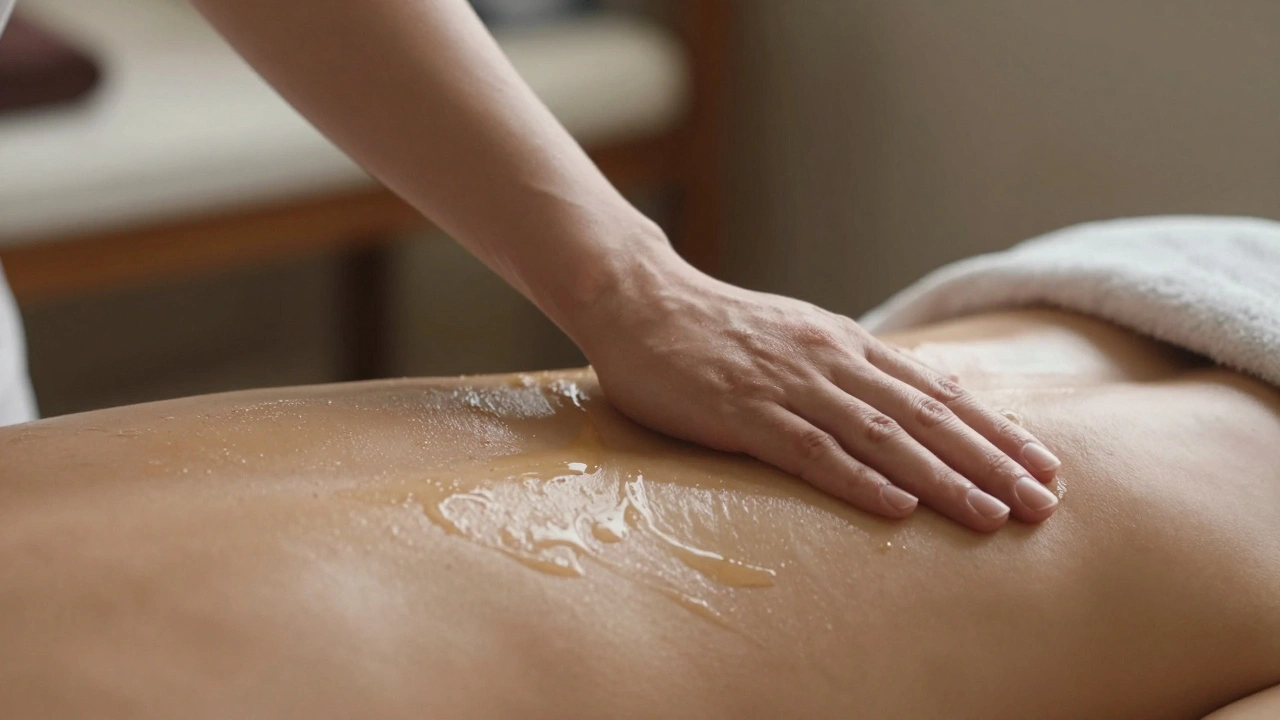
This style of massage has roots in ancient traditions, especially in Thailand and parts of Southeast Asia, where therapists naturally used their whole bodies to deliver longer, more flowing strokes. In modern spas, especially in cities like Amsterdam, it’s been refined into a therapeutic practice that prioritizes relaxation, nervous system regulation, and emotional release. The oil used is typically warm, plant-based, and absorbs slowly, letting the glide last longer and the sensation linger.
Why Do People Choose Body to Body Massage?
Most people come in because they’re exhausted-not just tired, but heavy. Like your muscles are wrapped in concrete, and your mind won’t shut off. Traditional massages help, sure. But body to body massage? It does something different. It doesn’t just release knots. It recalibrates your sense of safety.
One client, a nurse working 12-hour shifts in Utrecht, told me she came in after months of insomnia. "I didn’t even realize how tight my shoulders were until I felt someone’s forearm move down my spine," she said. "It wasn’t deep pressure. It was like my body remembered how to relax."
Studies in touch-based therapies (like those from the Touch Research Institute at the University of Miami) show that skin-to-skin contact reduces cortisol levels by up to 31% in a single session. That’s not just "feeling good." That’s your stress response literally quieting down. And with body to body massage, the extended contact time-often 60 to 90 minutes-gives your nervous system the time it needs to shift from "fight or flight" to "rest and digest."
It’s also surprisingly effective for people with chronic pain, anxiety, or PTSD. The consistent, predictable rhythm of the massage creates a sense of safety the brain can latch onto. It’s not therapy, but it often feels like emotional first aid.
What Happens During a Session?
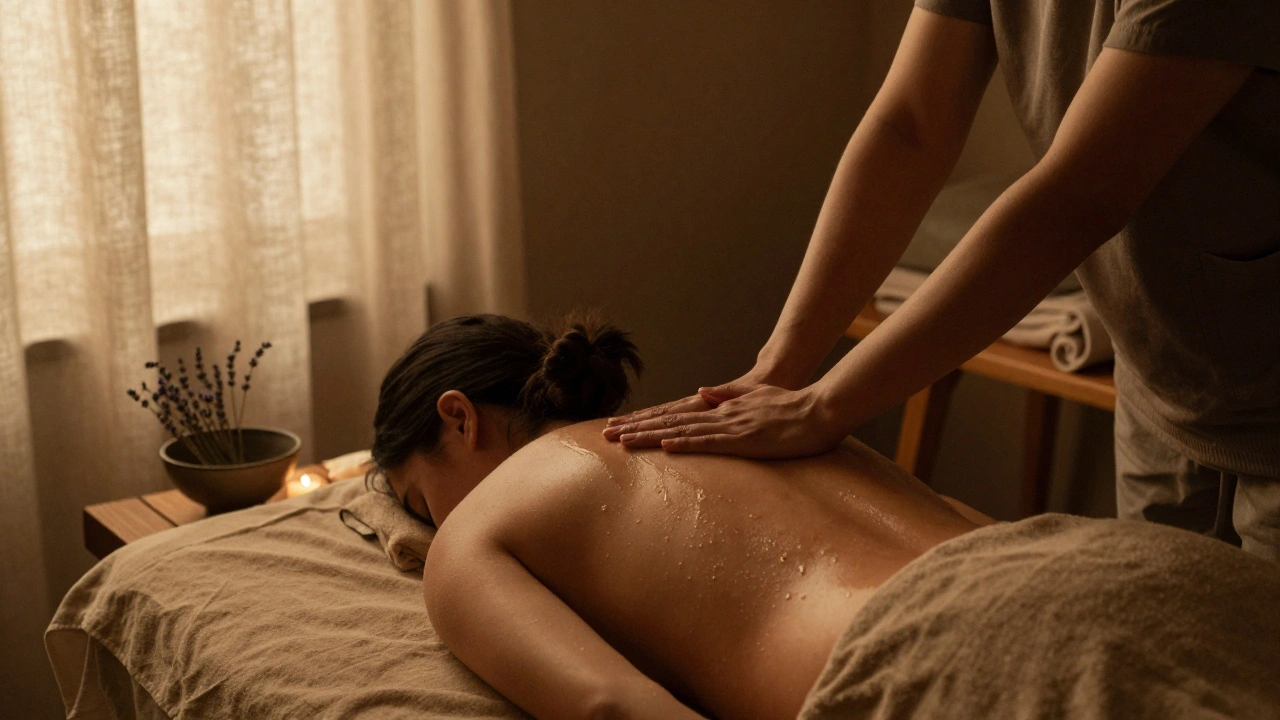
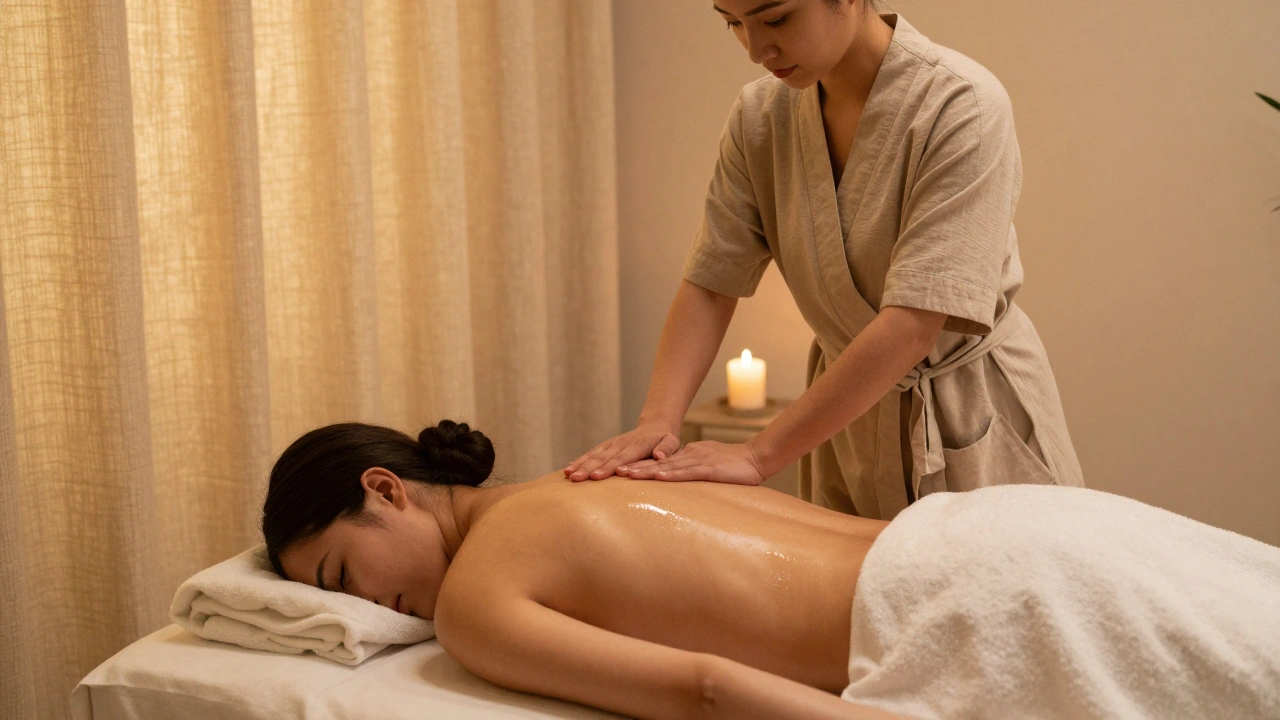
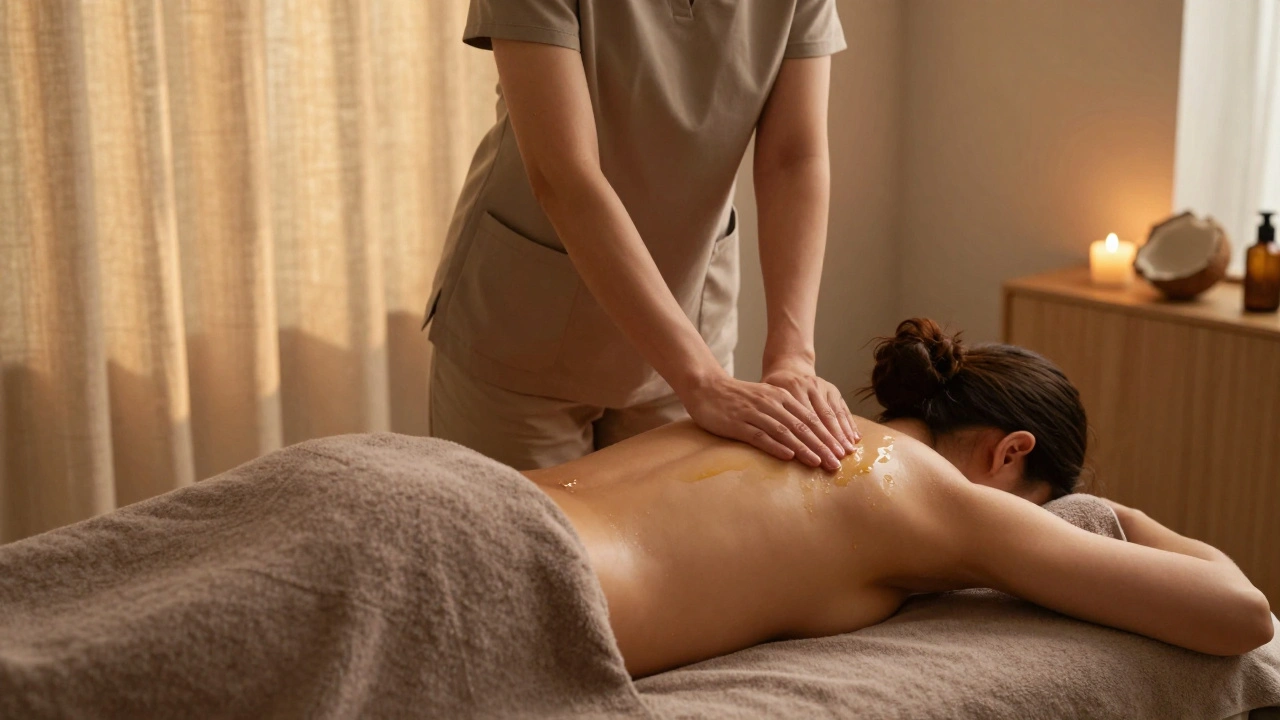
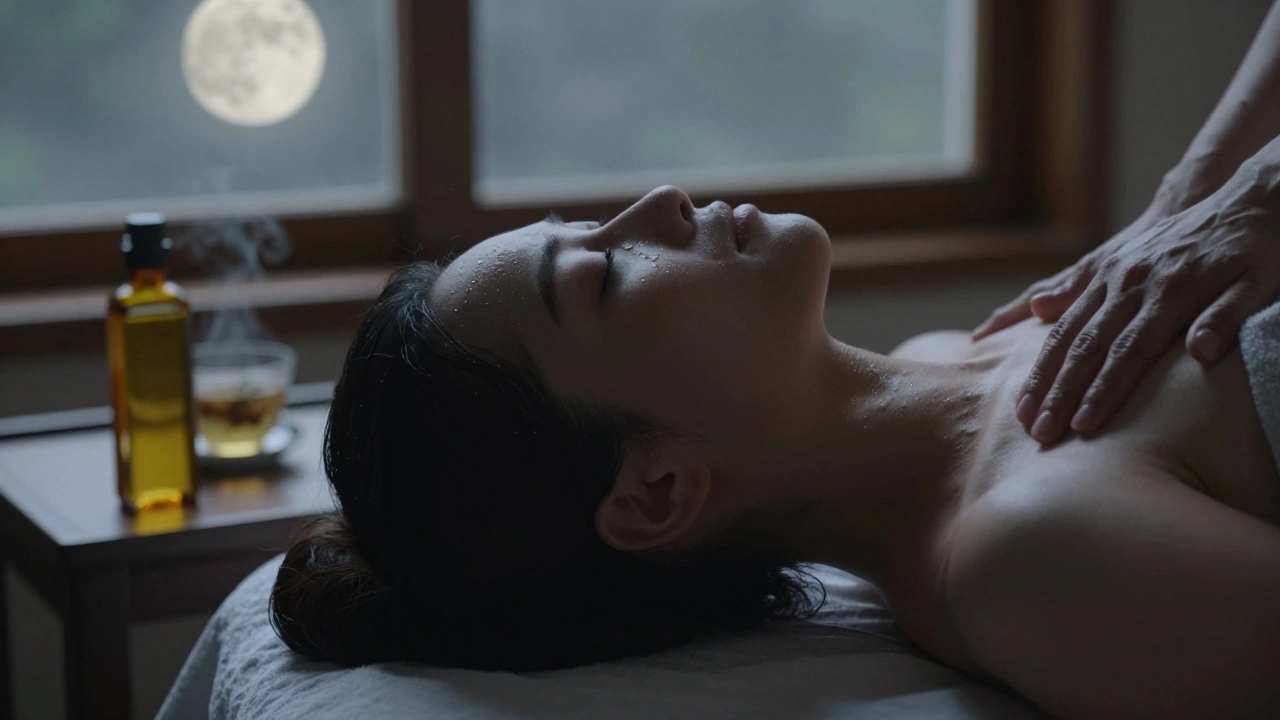
Picture this: You walk into a softly lit room, warm air, the scent of lavender and coconut oil. You’re asked to undress to your comfort level-most people keep their underwear on. You lie face down on a heated table. The therapist enters quietly, with bare feet and a calm presence. No talking unless you initiate it.
The session begins with long, slow strokes using the forearms, starting at your back and moving down to your legs. Then, the therapist might shift to using their thighs to glide along your hamstrings, or their elbows to apply gentle pressure along your spine. The oil lets them move like water over stone. No sudden movements. No aggressive kneading. Just rhythm.
Midway through, you might be asked to turn over. The same flow continues-gentle pressure on your chest, arms, and legs. The touch is always intentional, never invasive. Your boundaries are respected. Always. The therapist doesn’t touch your face, genitals, or breasts. This isn’t erotic. It’s sacred. And it’s professional.
The whole experience lasts about 75 minutes. You leave feeling like you’ve been hugged by the ocean-held, supported, and deeply calm.
Body to Body vs. Traditional Massage: What’s the Difference?
| Feature | Body to Body Massage | Traditional Massage |
|---|---|---|
| Touch Surface | Therapist’s body (forearms, thighs, elbows) | Therapist’s hands only |
| Pressure Depth | Wider, more even pressure | Localized, focused pressure |
| Oil Usage | More, for extended glide | Less, for hand mobility |
| Session Length | 75-90 minutes | 60-75 minutes |
| Best For | Deep relaxation, emotional release | Targeted muscle relief |
| Intensity Level | Low to moderate | Low to high |
| After-Effect | Emotional calm, reduced anxiety | Physical relief, less soreness |
Traditional massage is great for tight shoulders or a sore lower back. Body to body massage? It’s for when you need to feel human again.
Where to Find Authentic Body to Body Massage in Amsterdam
Not every place offering "body to body" is legit. Some use the term to mask inappropriate services. In Amsterdam, you’ll find a few reputable studios-mostly in the Jordaan, De Pijp, and Oud-Zuid neighborhoods-that focus on therapeutic touch, not spectacle.
Look for places that:
- Have licensed therapists with training in Thai or Swedish body-to-body techniques
- Offer clear descriptions of the process (no vague terms like "intimate experience").
- Require you to sign a consent form outlining boundaries
- Use professional, neutral spaces-not dimly lit bedrooms or "couples suites"
- Have reviews mentioning "calm," "professional," "safe," and "transformative"
One studio, Stillness & Flow in Jordaan, has been operating since 2021. Their therapists are trained in both Thai massage and somatic therapy. They don’t advertise aggressively. You’ll find them through word-of-mouth or wellness directories like Amsterdam Wellness Guide. Bookings are limited to 3 sessions per day. You’ll often wait a few weeks-but it’s worth it.
How Much Does It Cost?
Prices in Amsterdam range from €110 to €180 for a 75-minute session. Higher-end places include aromatherapy, warm stone integration, or post-session tea rituals. Don’t go cheaper than €90. If it’s too cheap, they’re likely cutting corners-or worse.
Most places require a 50% deposit to book. Cancellations within 24 hours are non-refundable. Why? Because these sessions are time-intensive, and therapists need to protect their schedule. It’s not about profit. It’s about respect-for their work, and yours.
What to Expect After Your First Session
You won’t feel sore. You’ll feel lighter. Like you’ve been holding your breath for weeks and just exhaled. Some people cry. Others don’t feel anything at all-just quiet. Both are normal.
The next day, you might sleep deeper. Your mind might feel quieter. You might notice you’re less reactive to stress. That’s not coincidence. Your nervous system was reset.
One woman in her 50s, who’d been through divorce and chronic illness, told me: "I didn’t realize how much I’d shut down until I felt someone’s warmth move over me without asking for anything in return."
That’s the magic. No demands. No expectations. Just presence.
Safety First: What to Watch Out For
Not all body to body experiences are safe. Here’s how to protect yourself:
- Never go to a place that doesn’t let you ask questions before booking
- Check if the therapist is licensed (ask for their certification)
- Watch how they dress-they should wear professional, modest attire (usually shorts and a top, never lingerie)
- Trust your gut. If something feels off, speak up or leave
- Real practitioners won’t pressure you to do more than you’re comfortable with
- Don’t confuse "sensual" with "sexual." The line is clear: no genital contact, no kissing, no eye contact beyond professionalism
If you’re unsure, ask: "What’s your training? Can I see your certification?" A real therapist won’t mind.
Who Should Try This?
Body to body massage isn’t for everyone-and that’s okay. But it’s perfect for:
- People with chronic stress or anxiety
- Those recovering from trauma (with therapist approval)
- Anyone who feels disconnected from their body
- People who’ve tried other massages and still feel tense
- Those seeking emotional release, not just physical relief
If you’re looking for deep muscle work, go for deep tissue. If you want to feel held, truly held, then this might be what you’ve been missing.
Frequently Asked Questions
Is body to body massage sexual?
No. Legitimate body to body massage is a therapeutic, non-sexual practice. Therapists are trained professionals who maintain strict boundaries. The touch is meant to soothe, not stimulate. Any establishment that blurs this line is not ethical-and should be avoided.
Do I need to be naked?
No. You’re always in control. Most people wear underwear. The therapist will drape you with towels or sheets, uncovering only the area being worked on. Privacy and modesty are non-negotiable.
Can men receive body to body massage?
Absolutely. Gender doesn’t matter. Many men find this especially healing because they’re rarely given space to relax without performance pressure. The experience is about connection, not gender dynamics.
How often should I do it?
Once a month is ideal for most people. If you’re going through high stress, twice a month may help. But this isn’t something to overdo. It’s a deep reset, not a routine. Let your body tell you when it’s ready again.
Can I combine this with other therapies?
Yes. Many people pair it with acupuncture, yoga, or talk therapy. It complements practices that help you reconnect with your body. Just avoid intense workouts the same day-you’ll want to stay soft and calm.
If you’ve been carrying stress in your bones, not just your muscles-this might be the quiet revolution your body has been waiting for. You don’t need to understand it to feel it. Just show up. Let go. And see what happens.