Body to Body Massage: The Key to a Balanced Lifestyle
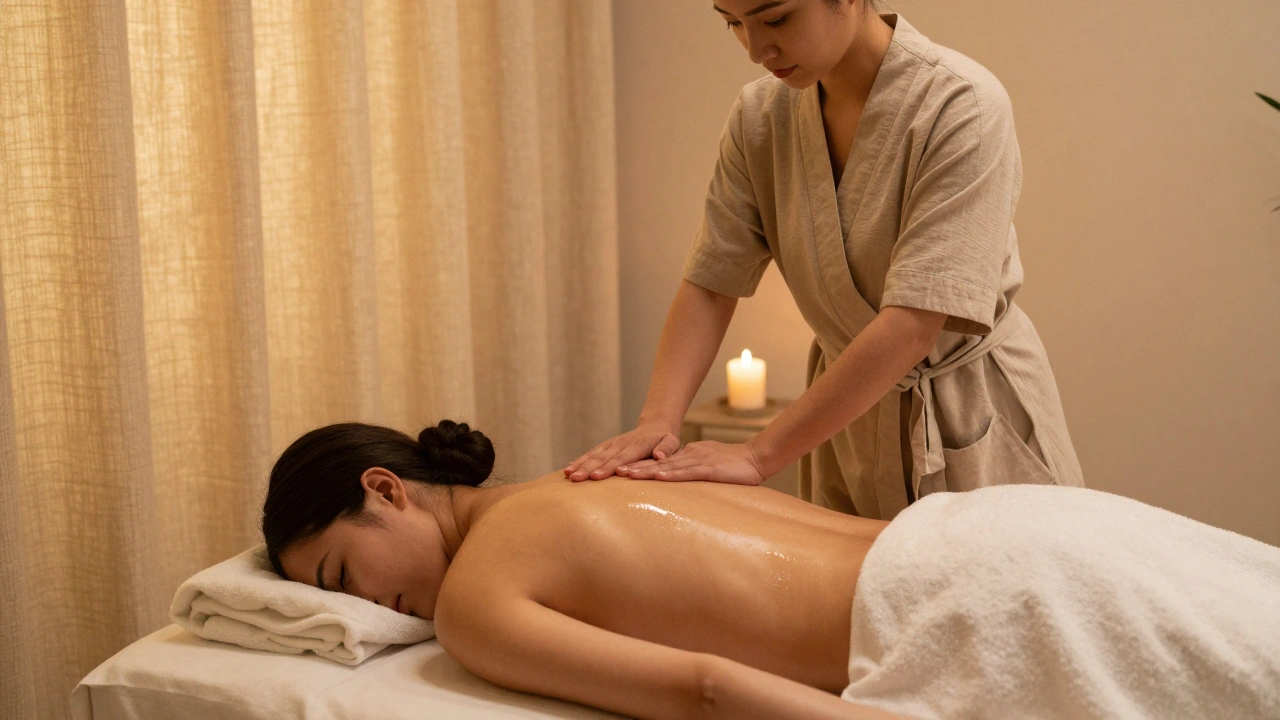
You’ve probably heard whispers about body to body massage-maybe from a friend who swore it changed their week, or seen it mentioned online with a mix of curiosity and hesitation. What’s the real deal? Is it just another spa trend, or does it actually help you feel more balanced, grounded, and at peace? Let’s cut through the noise. This isn’t about romance or fantasy. It’s about touch, connection, and the quiet science of how human skin-to-skin contact can reset your nervous system and bring your body back into rhythm.
Key Takeaways
- Body to body massage uses the therapist’s body to apply pressure and glide over yours, creating deep, flowing strokes that standard hand massage can’t replicate.
- It’s not sexual-it’s therapeutic. Trained practitioners use it to release deep tension, improve circulation, and calm the mind.
- Regular sessions can reduce chronic stress, ease muscle stiffness, and even improve sleep quality within just a few weeks.
- It’s especially effective for people who carry tension in their back, shoulders, or hips-think desk workers, parents, or anyone who feels constantly "on."
- Always choose a certified therapist who works in a clean, private setting. Safety and consent are non-negotiable.
What Exactly Is Body to Body Massage?
Body to body massage is exactly what it sounds like: the therapist uses their own body-forearms, elbows, thighs, even feet-to glide over yours. Think of it like a slow, warm wave moving across your skin. Unlike traditional massage where hands do all the work, this method allows for broader, deeper pressure that can reach layers of muscle you didn’t even know were tight.
It’s not new. Ancient cultures from Thailand to India used body-to-body techniques for healing and ritual. Today, it’s evolved into a modern therapeutic practice, often blended with elements of Thai massage or tantric flow-but stripped of any spiritual or erotic intent. The goal? To create a deeply relaxing, full-body experience that helps you reset.
Why It Works: The Science of Skin-to-Skin Touch
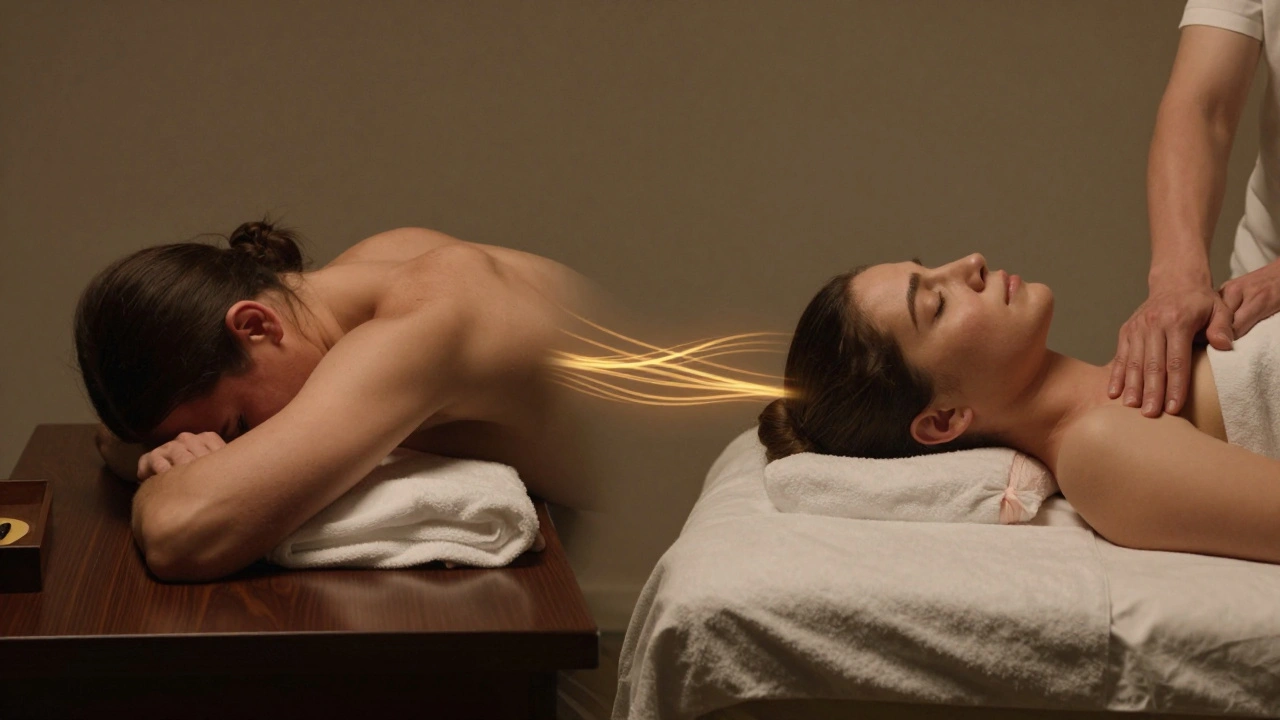
Here’s the thing: your skin isn’t just a covering. It’s your largest sensory organ. When warm, smooth skin glides over yours with steady pressure, your vagus nerve lights up. That’s the same nerve that controls your heart rate, digestion, and stress response. Studies from the Touch Research Institute show that consistent, non-sexual skin-to-skin contact lowers cortisol (the stress hormone) by up to 31% and increases oxytocin (the bonding hormone) by 17%.
Imagine this: you’ve been sitting at a desk for 10 hours. Your shoulders are locked. Your breath is shallow. You feel like you’re running on fumes. Now picture a warm, slow stroke moving from your neck down your spine-no sudden movements, no poking, just steady, rhythmic pressure. Your muscles don’t just relax. Your mind follows. That’s body to body massage in action.
Benefits You Can Actually Feel
- Deeper muscle release - The larger surface area of the therapist’s body allows for more even pressure, making it ideal for stubborn knots in the upper back, glutes, or hamstrings.
- Better circulation - The slow, flowing motions encourage blood flow, helping deliver oxygen and nutrients to tired tissues.
- Reduced anxiety - Many clients report feeling calmer within minutes. One woman in Amsterdam, after six sessions, said she stopped taking sleep aids because her body finally learned how to unwind.
- Improved posture - When deep tension in the hips and lower back eases, your body naturally realigns. No more slouching.
- Emotional release - Some people cry during sessions. Not because something’s wrong, but because the body holds onto stress. This massage helps it let go.
What to Expect During Your First Session
You’ll arrive to a quiet, warm room with soft lighting. A towel covers the massage table. The therapist will ask about any injuries, areas of tension, or what you’re hoping to get out of the session. You’ll undress to your comfort level-most people keep underwear on-and cover yourself with a sheet.
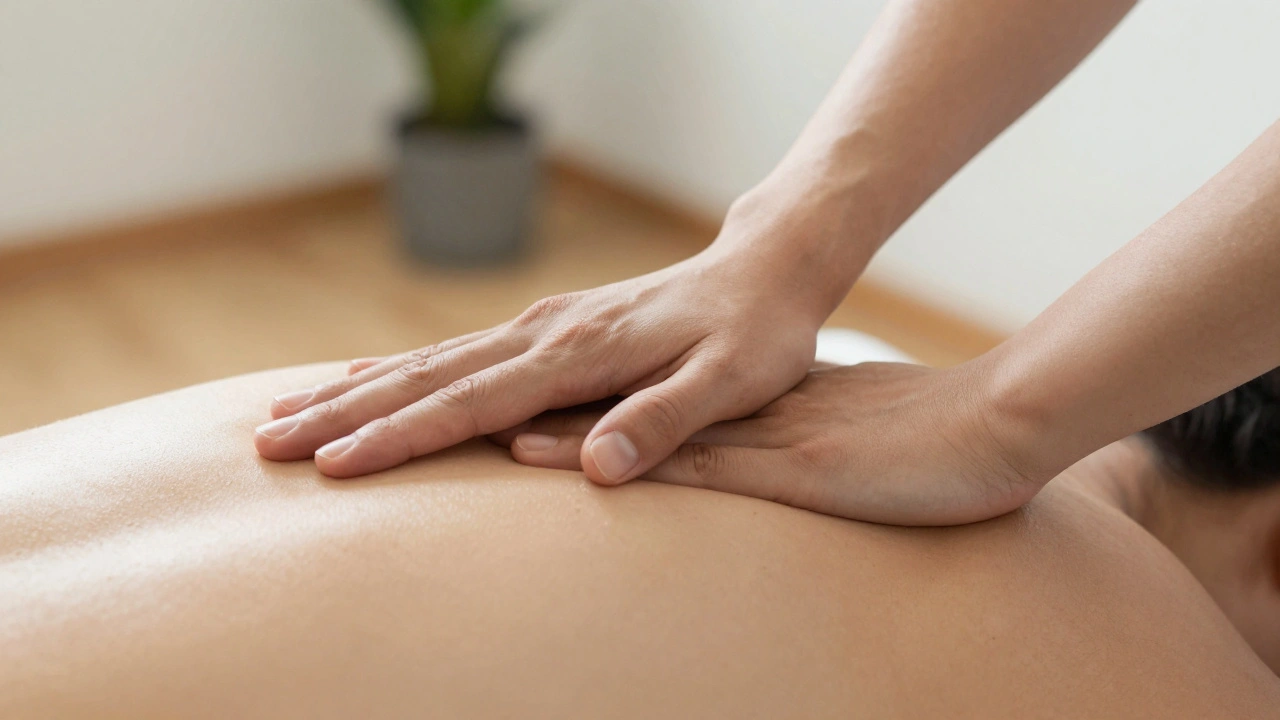
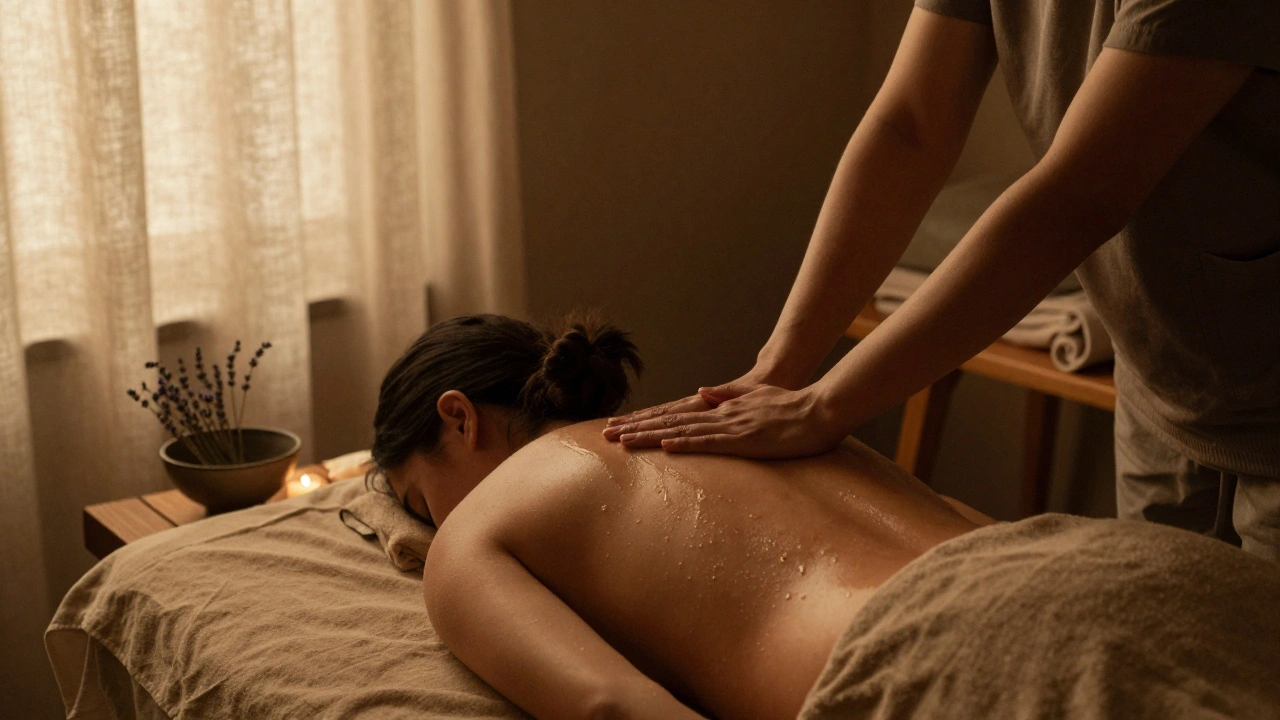
The therapist will use organic oils or lotions-no synthetic fragrances. They’ll start with light strokes to help you relax, then gradually increase pressure. You’ll feel warmth, pressure, and movement-not tickling, not poking. The therapist moves like water, not like a machine. You might feel a little awkward at first. That’s normal. By the third minute, you’ll stop thinking about it. And by the fifth, you’ll forget you’re even on a table.
There’s no nudity involved. The therapist wears a thin, seamless garment-usually cotton or silk. The focus is on the quality of touch, not the bodies involved.
How to Find a Reputable Body to Body Massage Provider
Not every place offering this service is legit. Some use the term to mask inappropriate services. Here’s how to tell the difference:
- Check credentials - Look for therapists trained in therapeutic massage, not just "sensual" or "erotic" styles. Certifications from organizations like the American Massage Therapy Association (AMTA) or European Massage Therapy Society (EMTS) are a good sign.
- Read reviews - Look for mentions of "professional," "calm environment," and "no pressure." Avoid places that use suggestive language in reviews.
- Ask about boundaries - A reputable therapist will clearly explain what to expect and what’s off-limits. If they avoid the question, walk away.
- Location matters - Book at a licensed spa, wellness center, or clinic-not a private home or unlisted address.
In Amsterdam, places like Harmony Spa a certified wellness studio in the Jordaan district known for its therapeutic body-to-body sessions and Stillness Studio a quiet, minimalist clinic specializing in somatic release techniques have built strong reputations by prioritizing safety and skill over hype.
Pricing and Booking
Don’t expect to pay $30 for this. Body to body massage requires more training, space, and time than a standard session. In Amsterdam, prices range from €80 to €150 for a 60- to 90-minute session. Most places offer package deals-three sessions for €210 is common. Some include a short consultation or aftercare tea.
Book online. Most reputable studios have a calendar system. You’ll be asked to fill out a short intake form. This isn’t bureaucracy-it’s to make sure the session is safe and tailored to you.
Safety First: What You Need to Know
- Consent is ongoing - You can say "stop" at any time. A good therapist will check in mid-session.
- No pressure to undress - You’re in control. If you’re uncomfortable, keep your underwear on. No one will judge you.
- Hygiene is strict - Sheets are changed after every client. Oils are single-use. Therapists wash thoroughly between sessions.
- Not for everyone - If you have open wounds, recent surgery, or are pregnant (unless trained in prenatal bodywork), avoid this. Always disclose your health history.
Body to Body Massage vs. Traditional Swedish Massage
| Feature | Body to Body Massage | Traditional Swedish Massage |
|---|---|---|
| Pressure Depth | Deeper, more even due to larger surface area | Shallower, focused on hands and forearms |
| Best For | Chronic tension, stress relief, emotional release | General relaxation, light muscle soreness |
| Therapist Attire | Thin cotton or silk garment | None (hands only) |
| Duration | 60-90 minutes (minimum) | 60 minutes |
| Oil Used | Organic, unscented | May include fragranced oils |
| After Effects | Deep calm, emotional lightness | Mild relaxation |
Frequently Asked Questions
Is body to body massage sexual?
No. Legitimate practitioners treat it as a therapeutic technique, not a sensual or erotic service. The focus is on touch as a healing tool. The therapist wears clothing, the environment is professional, and boundaries are clearly defined. If a place makes you feel uncomfortable or uses suggestive language, it’s not a trustworthy provider.
Can I request a male or female therapist?
Yes, most studios let you choose. It’s about your comfort. There’s no difference in technique between male and female therapists-it’s all about training and experience. Don’t assume one gender is "better." Look for reviews and certifications instead.
How often should I get body to body massage?
Once a month is ideal for maintenance. If you’re dealing with high stress or chronic pain, every two weeks for 6-8 weeks can create lasting change. Think of it like physical therapy for your nervous system-you don’t need it daily, but regular sessions build resilience.
Does it hurt?
It shouldn’t. This isn’t deep tissue massage. The pressure is firm but smooth, like warm honey flowing over your skin. If you feel sharp pain, speak up. A good therapist will adjust immediately. Mild discomfort is normal if you’re releasing long-held tension-but never pain.
What should I wear during the session?
You’ll be draped in a sheet the entire time. Most people wear underwear, but you can keep on shorts or a tank top if you prefer. The therapist will adjust the draping as needed. Your comfort comes first.
Ready to Reset?
If you’ve been feeling heavy-like your body’s carrying the weight of a hundred invisible tasks-body to body massage might be the reset you didn’t know you needed. It’s not magic. It’s biology. Your nervous system remembers what calm feels like. And sometimes, all it takes is one slow, warm stroke to remind you.
Start small. Book one session. See how your body responds. You might just find that the key to a balanced lifestyle isn’t in a pill, a app, or a 5 a.m. routine. It’s in the quiet, grounding power of human touch.


Janey Doe
March 6, 2026 AT 19:34Just tried this last week after reading the post-honestly? Mind blown. I didn’t think something so simple could make me feel like I’d slept for a week. No weird vibes, just warmth and pressure that melted my shoulder blades into the table. I cried. Not sad tears. The kind you cry when your body finally says, ‘Hey, you can relax now.’
Worth every euro.