The Cultural Significance of Thai Massage in Thailand
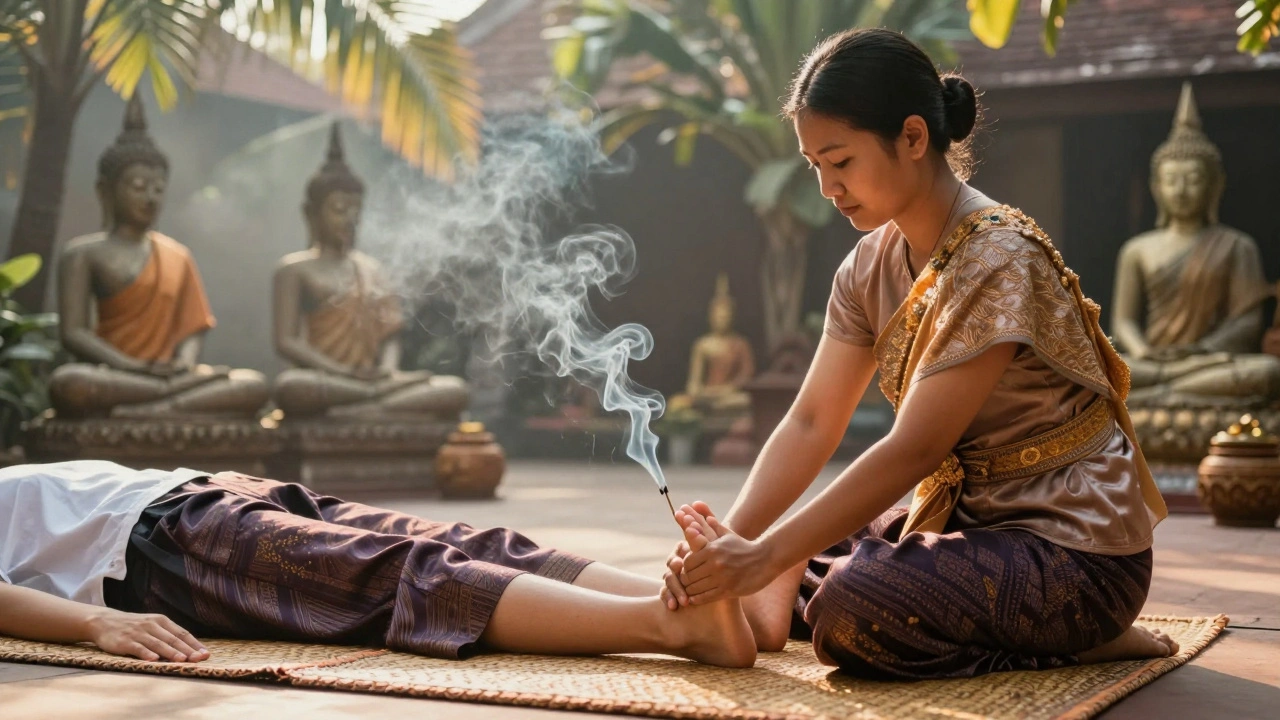
You’ve seen the photos: a therapist in flowing silk, using their palms, elbows, and even feet to guide your body through stretches you didn’t know were possible. But Thai massage isn’t just a spa treatment-it’s a living tradition, passed down for centuries in temples, villages, and family lineages across Thailand. If you’ve ever wondered why it feels so different from a Swedish massage, the answer isn’t just technique-it’s culture.
What Makes Thai Massage More Than Just a Bodywork Session?
Thai massage, or Nuad Thai, translates to "Thai pressure point massage." Unlike Western massages that focus on muscle manipulation, Nuad Thai works on energy lines called Sen-similar to meridians in Chinese medicine. There are ten main Sen lines running through the body, each linked to organs, emotions, and physical functions. The goal isn’t just to relax muscles-it’s to unblock energy flow.
This isn’t new-age thinking. It’s rooted in ancient Indian Ayurvedic practices, blended with Buddhist spiritual traditions and indigenous Thai healing methods. Monks in temples like Wat Pho in Bangkok were the original practitioners, using massage not just for healing, but as part of spiritual discipline. Even today, many Thai massage schools are still attached to temples, and the first thing students learn isn’t technique-it’s respect.
Why Thai Massage Is Considered Intangible Cultural Heritage
In 2019, UNESCO added Nuad Thai to its Representative List of the Intangible Cultural Heritage of Humanity. That’s not just a fancy title-it means Thailand’s government officially recognizes this practice as a core part of its national identity. It’s not about tourism. It’s about preservation.
Before the 20th century, Thai massage was taught orally, often from master to apprentice, with no written manuals. Techniques were passed down through generations, sometimes over decades. A true master might spend years learning how to apply pressure just right-not too hard, not too soft. The rhythm, the breathing, the timing-all matter. One wrong move, and instead of healing, you could cause harm.
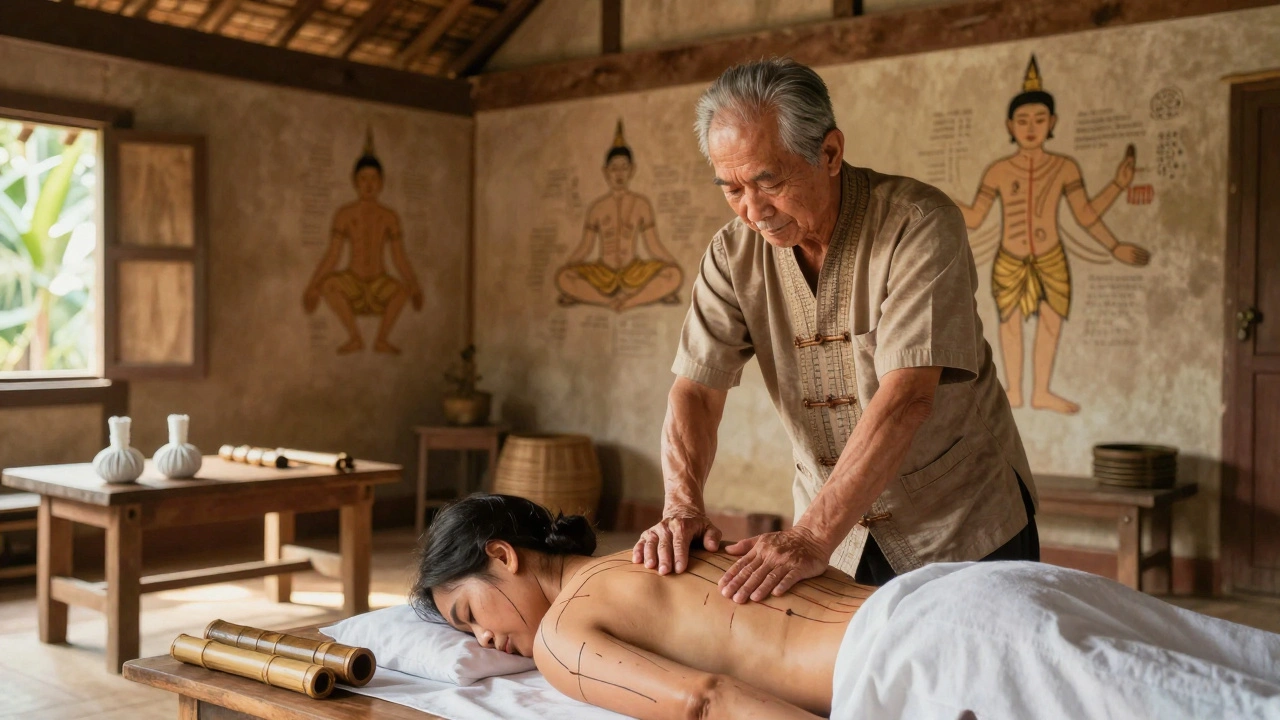
Today, you can find Thai massage schools in Chiang Mai, Ayutthaya, and Bangkok, but the most authentic training still happens in rural areas. In places like Lopburi or Udon Thani, you’ll find elders who learned from their grandparents, using bamboo sticks, herbal compresses, and chants to guide the session. These aren’t performances for tourists-they’re sacred rituals.
How Thai Massage Differs From Other Bodywork
Think of a Swedish massage: quiet room, soft music, oil, gentle strokes. Thai massage? No oil. No table. You’re fully clothed, lying on a mat on the floor. The therapist moves you like a yoga instructor-stretching your legs, twisting your spine, pulling your arms into deep positions. It’s active, not passive.
Here’s what you won’t find in a Western spa:
- No aromatherapy oils-just natural coconut or sesame oil, if used at all
- No loud music-just the sound of breathing and quiet chanting
- No time limits-sessions last 90 to 120 minutes, sometimes longer
- No pressure to tip-service is seen as a gift, not a transaction
The therapist uses their whole body: thumbs for pressure points, knees for back stretches, feet for deep compression. It sounds intense, but it’s not about pain-it’s about release. Many people describe it as "painful but healing," like stretching a muscle that’s been locked for years.
Where to Experience Authentic Thai Massage in Thailand
If you visit Thailand and want the real thing, skip the luxury resorts. Head to places where locals go:
- Wat Pho, Bangkok - The birthplace of modern Thai massage. The temple complex houses a massage school and a museum dedicated to the history of Nuad Thai. You can get a session right next to ancient Buddha statues.
- Chiang Mai’s Old City - Home to dozens of small, family-run clinics. Look for signs in Thai script, not English. Many therapists here still learn from temple-trained masters.
- Phuket’s Rural Villages - Tourists rarely go here, but that’s where you’ll find the oldest techniques. Some elders use herbal poultices made from turmeric, lemongrass, and ginger-steamed and applied to sore joints.
- Isan Region (Northeast Thailand) - Here, massage is often combined with herbal steam baths and spirit blessings. It’s less about relaxation and more about restoring balance after hard labor.
The best way to find an authentic session? Ask a local. Not a hotel concierge. Ask the market vendor, the tuk-tuk driver, the monk at the temple. They’ll point you to someone who’s been doing this for 40 years.
What Happens During a Real Thai Massage Session
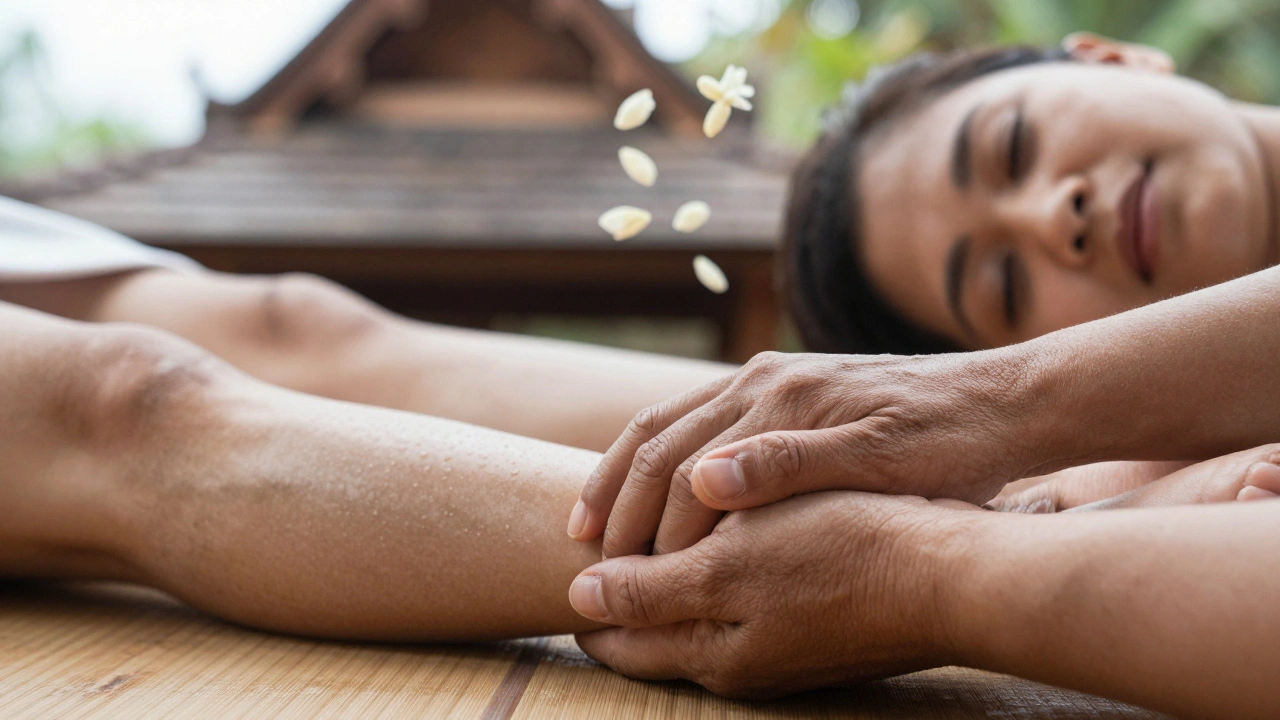
Picture this: You’re lying on a padded mat, wearing loose cotton pants and a t-shirt. The therapist starts by asking you to breathe slowly. No music. No talking. Just breath.
Then they begin-pressing along your legs, working from your feet up to your hips. You’ll feel deep, rhythmic pressure. No sudden movements. Everything flows. They’ll stretch your hamstrings, rotate your shoulders, gently pull your spine into alignment. You might feel a twinge-then a release. It’s like your body remembers how to move.
Halfway through, they’ll use their feet to apply pressure to your back. Yes, their feet. It’s not aggressive-it’s controlled. You’ll feel the weight, but not pain. You’ll also notice they’re constantly checking your breathing. If you tense up, they pause. If you sigh, they go deeper.
At the end, they’ll often place their hands gently on your forehead and whisper a blessing. No English. Just a quiet phrase in Thai. You won’t understand it-but you’ll feel it.
How Much Does It Cost? And How to Book
Prices vary wildly depending on where you are. In Bangkok’s tourist zones, expect to pay 1,500 to 2,500 baht (about $40-$70) for a 90-minute session. But in Chiang Mai’s backstreets? You’ll pay 300 to 600 baht ($8-$17). In rural villages? Sometimes it’s bartered-rice, fruit, or a few hours of help in the garden.
Booking is simple. No apps. No websites. Walk in. Most places don’t have signs in English. Look for a quiet shop with a mat laid out in front. If you see someone lying there, you’re in the right place. A smile and a nod are all you need.
Tip: Always ask if they’re trained at Wat Pho or another temple school. If they say yes, you’re getting something rare.
What You Should Know Before You Go
Thai massage isn’t for everyone-but if you’re open to it, here’s what to expect:
- Don’t eat right before. Wait at least two hours. You’ll be twisted, stretched, and pressed-digestion won’t be happy.
- Wear loose, stretchy clothes. No underwear with elastic bands. Cotton shorts and a tank top work best.
- Don’t be afraid to speak up. If something hurts too much, say so. Thai therapists are trained to adjust. They’re not trying to break you.
- Stay hydrated after. You’ll feel loose, even dizzy. Drink water. Rest. Don’t rush into a hike or a bike ride.
- Respect the silence. This isn’t a chat session. The therapist isn’t being rude-they’re preserving the energy of the practice.
Thai Massage vs. Swedish Massage: A Cultural Comparison
| Aspect | Thai Massage (Nuad Thai) | Swedish Massage |
|---|---|---|
| Origin | Thailand, rooted in Ayurveda and Buddhist monastic tradition | Sweden, developed in the 1800s for physical rehabilitation |
| Setting | Mat on floor, clothed, quiet, often temple-linked | Table, unclothed under sheet, music, spa-like |
| Technique | Stretching, acupressure, leverage, energy line work | Long strokes, kneading, circular movements |
| Duration | 90-120 minutes | 60 minutes |
| Oil Use | Optional, minimal | Essential |
| Goal | Energy flow, balance, spiritual alignment | Relaxation, muscle tension relief |
| Cost in Thailand | 300-2,500 baht ($8-$70) | 1,200-3,000 baht ($35-$85) |
Frequently Asked Questions
Is Thai massage painful?
It can feel intense, especially if you’re stiff or haven’t stretched in years. But it shouldn’t hurt. A good therapist adjusts pressure based on your breathing and reactions. If you’re clenching your fists or holding your breath, they’ll slow down. Pain isn’t the goal-release is.
Can I get Thai massage if I’m pregnant?
Yes-but only with a therapist trained in prenatal Thai massage. Standard Thai massage involves deep stretches and pressure points that aren’t safe during pregnancy. Look for clinics that specifically offer prenatal sessions, often marked with a symbol of a mother and child.
Do I need to be flexible to get Thai massage?
No. In fact, Thai massage is often most helpful for people who are stiff. The therapist moves you gently into stretches you can’t do yourself. You’re not expected to do anything-just breathe and let them guide you.
Why do Thai therapists use their feet?
Feet allow for deeper, more even pressure across large areas like the back and legs. It’s not about force-it’s about control. A skilled therapist uses their body weight, not muscle strength. Think of it like a yoga block, but alive.
Is Thai massage religious?
It’s spiritual, not religious. While it comes from Buddhist temples, you don’t need to be Buddhist to benefit. The chants, the breathwork, the quiet respect-it’s about mindfulness, not doctrine. Many people leave feeling calmer, not because they were prayed for, but because they were truly listened to.
Final Thought: More Than a Massage
Thai massage isn’t just about sore muscles. It’s about reconnecting with a rhythm older than modern medicine. It’s about a culture that sees the body not as a machine to fix, but as a vessel to honor. When you lie on that mat in a quiet temple courtyard, with the scent of incense and the sound of breathing around you-you’re not just getting a massage. You’re participating in something that’s been alive for hundreds of years.
And that’s worth more than any spa package.