Thai Massage in Amsterdam: A Holistic Approach to Wellness
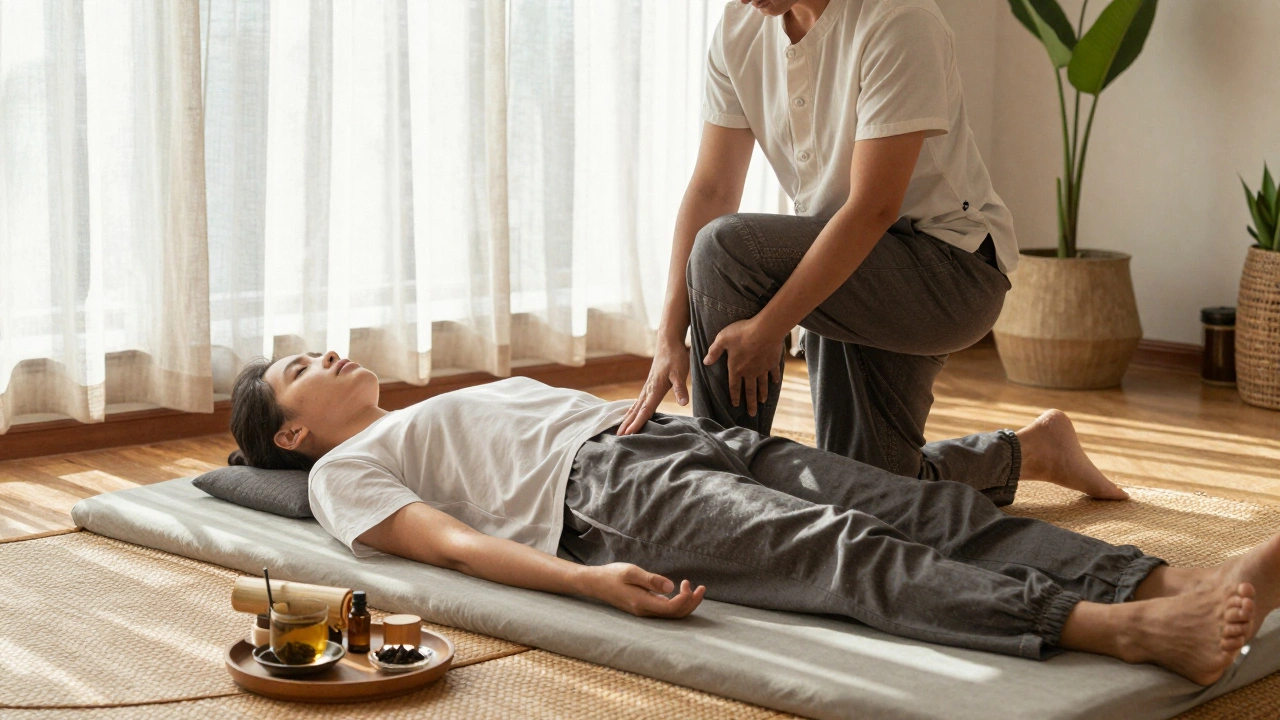
You’ve had a long week. Your shoulders are stiff from staring at screens, your feet ache from walking Amsterdam’s cobblestones, and your mind feels like it’s running ten different apps at once. You’re not alone. Every day, people just like you walk into quiet studios in the Jordaan or De Pijp, hoping for more than just a rubdown-they’re looking for a reset. That’s where Thai massage comes in. It’s not just another spa treatment. It’s a full-body experience rooted in ancient healing traditions, and right here in Amsterdam, it’s more accessible-and more effective-than ever.
What Exactly Is Thai Massage?
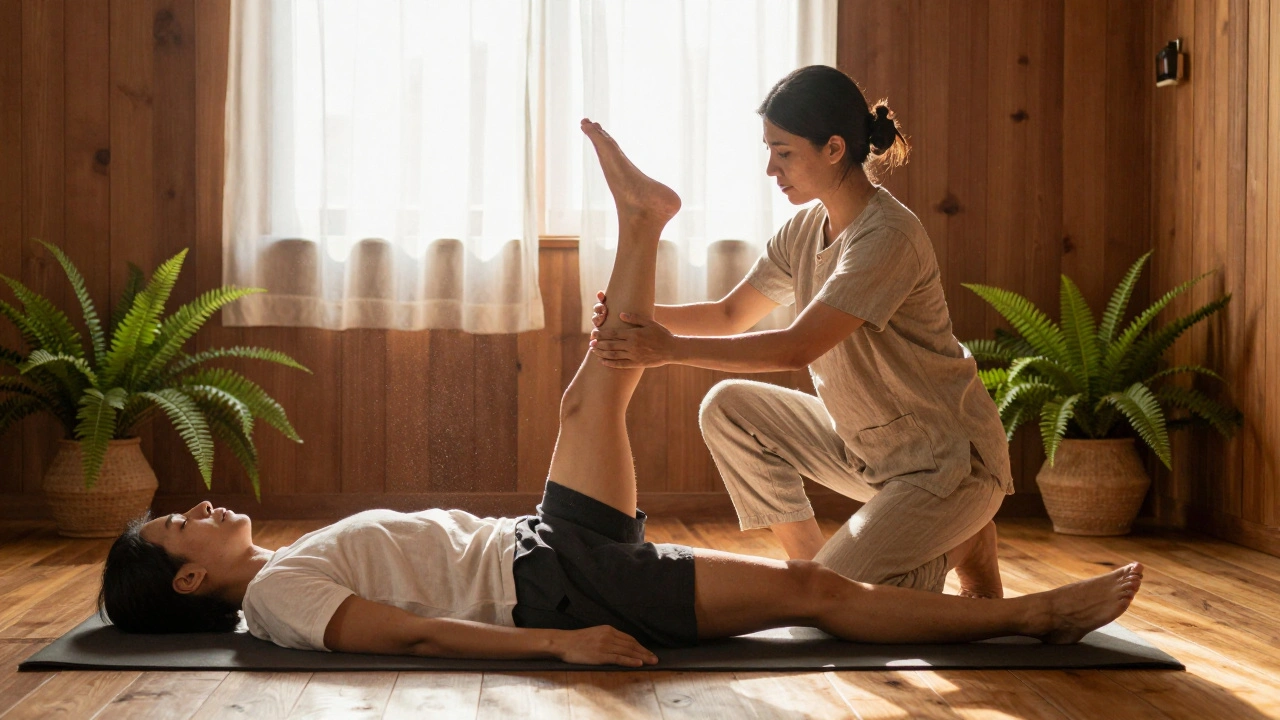
Thai massage isn’t what you think. No oils, no candles, no soft music playing in the background. Instead, you lie on a firm mat on the floor, fully clothed in loose, comfortable clothes. The therapist uses their hands, thumbs, elbows, knees, and even feet to guide you through a series of stretches, compressions, and rhythmic pressure points. It’s like yoga, but someone else is doing the moving for you.
This practice, called Nuad Boran in Thailand, is over 2,500 years old. It’s based on energy lines-called sen lines-that run through the body, similar to acupuncture meridians. When these lines get blocked by stress or tension, your body feels it. Thai massage clears those blockages, helping energy flow again. Think of it like unclogging a drain in your nervous system. You don’t just feel relaxed-you feel lighter.
Why Thai Massage Works Better Than You Think
Let’s be real: you’ve tried Swedish massage. You’ve had deep tissue, hot stones, even reflexology. But Thai massage? It’s different. It doesn’t just relax your muscles-it resets your whole system.
After a session, people here in Amsterdam report things like:
- Headaches that vanished within hours
- Lower back pain that hadn’t budged in months suddenly easing up
- Better sleep-not because they were tired, but because their body finally stopped holding tension
- Improved posture from standing taller after being gently stretched
A 2023 study from the University of Amsterdam’s Center for Integrative Medicine found that regular Thai massage reduced chronic muscle stiffness by 68% in participants over 8 weeks. Not because of force, but because of rhythm. The therapist moves with your body, not against it. That’s why it works for people who’ve tried everything else and still feel stuck.
Types of Thai Massage Available in Amsterdam
Not all Thai massage is the same. Here’s what you’ll actually find in Amsterdam:
- Traditional Thai Massage - The full 90- to 120-minute experience. Includes deep stretches, pressure along sen lines, and gentle rocking. Best for first-timers and those with chronic tension.
- Thai Oil Massage - A hybrid. Still done on a mat, but with light coconut or sesame oil added. Good if you’re used to Western massages but want the Thai structure.
- Thai Foot Massage - Focused on the feet and lower legs. Uses bamboo sticks and thumb pressure. Great if you’re on your feet all day or just want a quick reset.
- Thai Head and Neck Massage - Shorter sessions (30-45 minutes) targeting the scalp, jaw, and shoulders. Perfect for office workers, students, or anyone with tension headaches.
- Thai Couples Massage - Done side-by-side in a shared room. Not just romantic-it’s a shared reset. Popular with couples who want to unwind together without talking.
Most places in Amsterdam offer the traditional version as their core service. The others are add-ons or specialties. Stick with traditional unless you know exactly what you need.
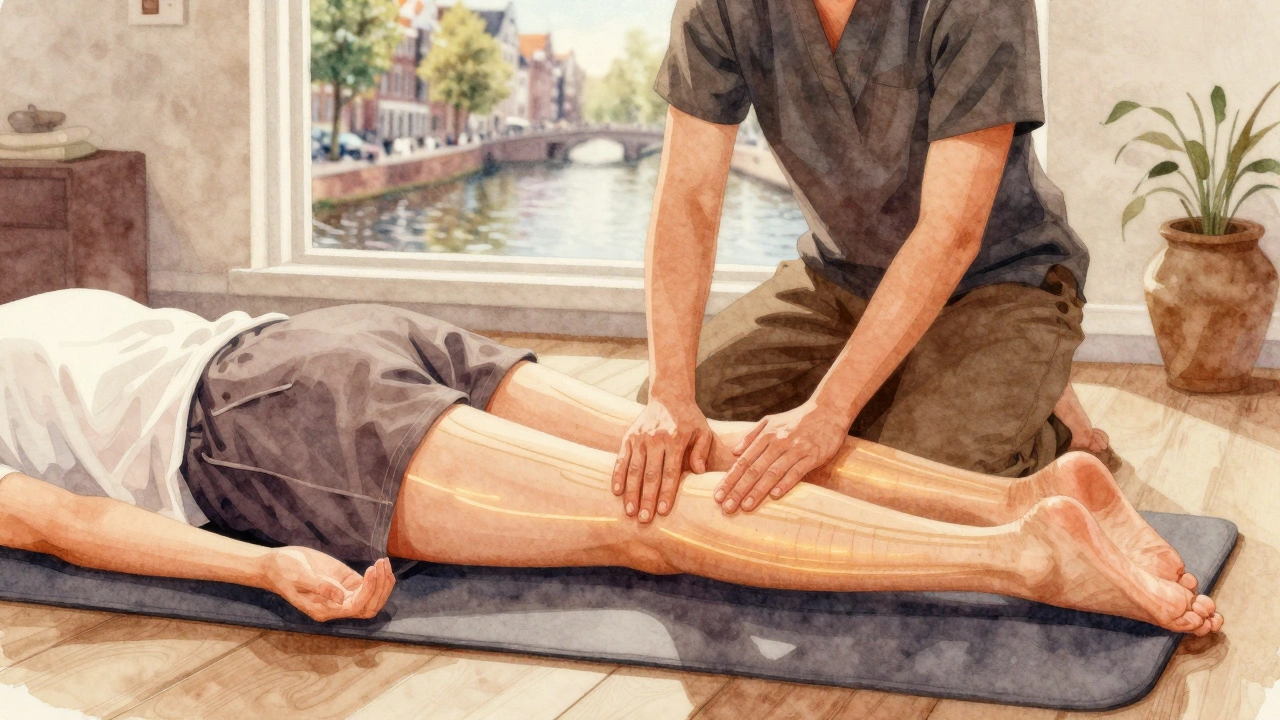
How to Find the Best Thai Massage in Amsterdam
You don’t want to book a place that calls itself "Thai massage" but uses Swedish techniques with a bamboo stick and incense. Here’s how to spot the real deal:
- Look for Thai-certified therapists - Ask if they trained in Thailand. Many top studios in Amsterdam have therapists who studied at Wat Pho in Bangkok, the birthplace of Thai massage.
- Check the space - Real Thai massage happens on mats on the floor, not on massage tables. If the room looks like a luxury spa with dim lights and lavender oil, it’s probably not authentic.
- Read reviews with specifics - Look for comments like, "They stretched my hips like I’d never been stretched before" or "The therapist used their knee to open my chest-felt amazing." Vague praise like "very relaxing" is a red flag.
- Neighborhoods to check - Jordaan, De Pijp, Oud-West, and the Red Light District have the highest concentration of authentic studios. Try Thai Wellness House on Prinsengracht or Lotus Hands in De Pijp. Both have therapists who trained in Chiang Mai.
Don’t book based on Google Maps ratings alone. Some places with 4.9 stars are just well-marketed. Look for consistency in reviews mentioning technique, not ambiance.
What to Expect During Your First Session
First-timers often feel nervous. What if I can’t bend? What if it hurts too much? Here’s what actually happens:
- You’ll be asked to wear loose, comfortable clothing-no underwear required, but most people wear shorts and a tank top.
- You lie on a clean, padded mat. No sheets, no draping. You’re fully clothed, so there’s no awkwardness.
- The therapist starts at your feet and works upward, using gentle pressure and slow, flowing movements.
- They’ll guide you into stretches you didn’t know you needed-like pulling your knee to your chest, rotating your spine, or gently arching your back.
- At some point, they might use their forearm or knee to apply deep pressure to your back or hips. It shouldn’t hurt, but it might feel intense. That’s normal.
- After 90 minutes, you’ll sit up slowly. You might feel a little dizzy. That’s your energy adjusting. Drink water. Don’t rush out.
Most people describe the feeling afterward as "like I was reset." Not sleepy. Not numb. Just… clear.
Pricing and How to Book
Prices in Amsterdam are straightforward:
- 60 minutes - €65-€80
- 90 minutes - €90-€110
- 120 minutes - €120-€150
Most studios include a short tea ritual at the end-herbal tea, usually ginger or lemongrass. That’s part of the experience. Don’t skip it.
Booking is easy. Most places accept online reservations through their websites. Avoid third-party platforms like Booking.com or Airbnb Experiences-they often take a cut, and the therapist doesn’t get paid fairly. Go direct. Many studios offer a first-time discount (usually 10-15%), so ask.
Pro tip: Book early morning or late evening. These slots are less crowded, and therapists have more time to focus on you.
Safety Tips for First-Timers
Thai massage is safe for most people-but not all. Here’s what to watch for:
- Don’t go if you’re pregnant - Deep stretches and pressure on the abdomen aren’t safe in early pregnancy. Look for prenatal-specific Thai massage if you’re expecting.
- Speak up if it hurts - Intensity is normal, sharp pain isn’t. Say something. A good therapist will adjust immediately.
- Avoid if you have osteoporosis, recent surgery, or blood clots - The stretches can be too aggressive. Talk to your doctor first.
- Hydrate after - Your body releases toxins during the session. Drink water to flush them out.
- Wait 2-3 hours before exercising - Your muscles are in a state of release. Going to the gym right after defeats the purpose.
These aren’t rules. They’re just ways to make sure you leave feeling better, not worse.
Thai Massage vs. Swedish Massage in Amsterdam
| Feature | Thai Massage | Swedish Massage |
|---|---|---|
| Setting | Floor mat, fully clothed | Massage table, undressed under sheet |
| Technique | Stretching, compression, acupressure | Gliding strokes, kneading, light pressure |
| Duration | Typically 90-120 minutes | Typically 60 minutes |
| Oil Used | None (unless specified as Thai oil version) | Yes, usually almond or lavender oil |
| Energy Focus | Yes-sen lines, chi flow | No-muscle relaxation only |
| Best For | Chronic tension, stiffness, energy blockages | Relaxation, light stress relief |
| After Feel | Light, clear, energized | Relaxed, sleepy |
If you’re looking to just chill out after work, Swedish is fine. But if you’ve been carrying stress in your hips, shoulders, or spine for years, Thai massage doesn’t just soothe-it heals.
Frequently Asked Questions
Is Thai massage painful?
It can feel intense, especially if you’re tight, but it shouldn’t hurt. A good therapist works with your body’s limits, not against them. If you feel sharp pain, tell them. Pain means you’re resisting, not releasing.
Do I need to be flexible for Thai massage?
No. In fact, most people who need Thai massage the most are the least flexible. The therapist adjusts every stretch to your body. You’re not being tested-you’re being supported.
How often should I get Thai massage?
For maintenance, once a month works for most people. If you have chronic pain or sit at a desk all day, every two weeks is ideal. Some regulars come weekly-especially yoga teachers, dancers, and nurses. Listen to your body.
Can I get Thai massage if I’m not from Thailand?
Absolutely. Thai massage was developed to help anyone, regardless of origin. Thousands of locals and expats in Amsterdam rely on it. It’s not cultural appropriation-it’s cultural sharing, done respectfully by trained professionals.
Is Thai massage worth the price?
If you’ve tried other therapies and still feel stuck, yes. A single session can change how you move, sleep, and even think for days. It’s not a luxury-it’s preventative healthcare. Compare it to a monthly gym membership or a stack of painkillers. This one session might save you hundreds later.
Ready to feel like yourself again? Book your session. Don’t wait until you’re in pain. The best time to reset is before you break.

Elizabeth Guice
January 20, 2026 AT 11:36Thai massage isn't just therapy-it's a meditation you don't have to sit still for. I used to think stretching was for yoga fanatics until I had my first session in Amsterdam. The therapist used her knee to open my hips like I was a rusty hinge-and I cried. Not from pain. From release. I hadn't realized how much tension I'd been carrying since college. Afterward, I walked like I'd been given new bones. This isn't luxury spa nonsense. It's ancestral medicine that actually works when modern medicine gives up. People say 'it's just massage' like it's a pedicure. No. It's a reset button for your nervous system. And yeah, I'm not even Thai. But I'm not here to perform cultural purity-I'm here to feel human again.
Thandi Mothupi
January 21, 2026 AT 14:37Eugene Stanley
January 23, 2026 AT 06:44Rutuja Patil
January 24, 2026 AT 02:10Marc Lipscke
January 25, 2026 AT 01:13