Tantra for Emotional Healing: Release Past Trauma Through Sacred Touch

You’ve carried this weight for years-maybe since childhood, maybe after a breakup, maybe after losing someone or something you couldn’t name. It’s not in your mind alone. It’s in your shoulders, your stomach, your breath that catches when you’re quiet. You’ve tried therapy, journaling, meditation. But something still feels stuck. What if the key isn’t more talking… but more feeling?
What Tantra Really Is (And What It Isn’t)
Tantra isn’t about sex. Not really. Not the way pop culture paints it. Tantra is an ancient system-rooted in Indian spiritual traditions-that uses breath, movement, touch, and awareness to reconnect you with your body and release stored emotion. It’s not magic. It’s not a quick fix. But for people carrying deep emotional wounds, it can be the missing bridge between knowing something is broken and actually feeling it heal.
Think of your body like a hard drive. Every time you suppressed anger, grief, or fear, you didn’t erase the file-you just hid it. Over time, those hidden files take up space. They make your muscles tight, your breathing shallow, your heart guarded. Tantra doesn’t ask you to forget the past. It asks you to feel it… safely.
How Tantra Helps Release Trauma
Studies in somatic psychology show that trauma isn’t stored in memories alone-it’s stored in the nervous system. Your body remembers what your mind tries to forget. Tantric practices work directly with this. Through slow, intentional touch and breathwork, you teach your body it’s safe to feel again.
One woman I worked with, let’s call her Lena, came in after 12 years of therapy following childhood abuse. She could talk about it clearly. But when her arms were touched, she’d freeze. During a tantra session, we didn’t talk. We just breathed together. Her hands trembled. Tears came-not from sadness, but from relief. Later she said, “I didn’t know my body still remembered the fear. But for the first time, I felt it wasn’t mine to hold anymore.”
This isn’t about being touched by a stranger. It’s about being held by presence. A trained tantra practitioner creates a space where you can drop your defenses without judgment. The touch is never sexual. It’s sacred. It’s slow. It’s designed to help you reconnect with parts of yourself you’ve shut down.
The Difference Between Tantra and Regular Massage
Most massages focus on muscles. Tantra focuses on energy. A Swedish massage might loosen your neck. A tantra session might unlock the grief you’ve been holding since your father left.
Here’s how they differ:
| Aspect | Tantra for Emotional Healing | Regular Massage |
|---|---|---|
| Primary Goal | Emotional release and nervous system regulation | Physical relaxation and muscle relief |
| Touch Style | Slow, intentional, non-sexual, full-body | Pressure-based, targeted areas |
| Role of Breath | Central-used to deepen awareness and release | Usually ignored |
| Emotional Response | Common: crying, shaking, laughter, silence | Rare-usually just relaxation |
| After Effects | Feeling lighter, clearer, emotionally raw but free | Physically relaxed, mentally tired |
Tantra doesn’t just relax your body. It rewires your relationship with your own sensations. And that’s where healing begins.
What Happens in a Tantra Session for Trauma Release
First, there’s no nudity. No pressure. No expectations. You’re fully clothed-usually in loose, comfortable clothes. The session starts with a quiet conversation. You share what you’re carrying. The practitioner listens. Not to fix it. Just to hold space.
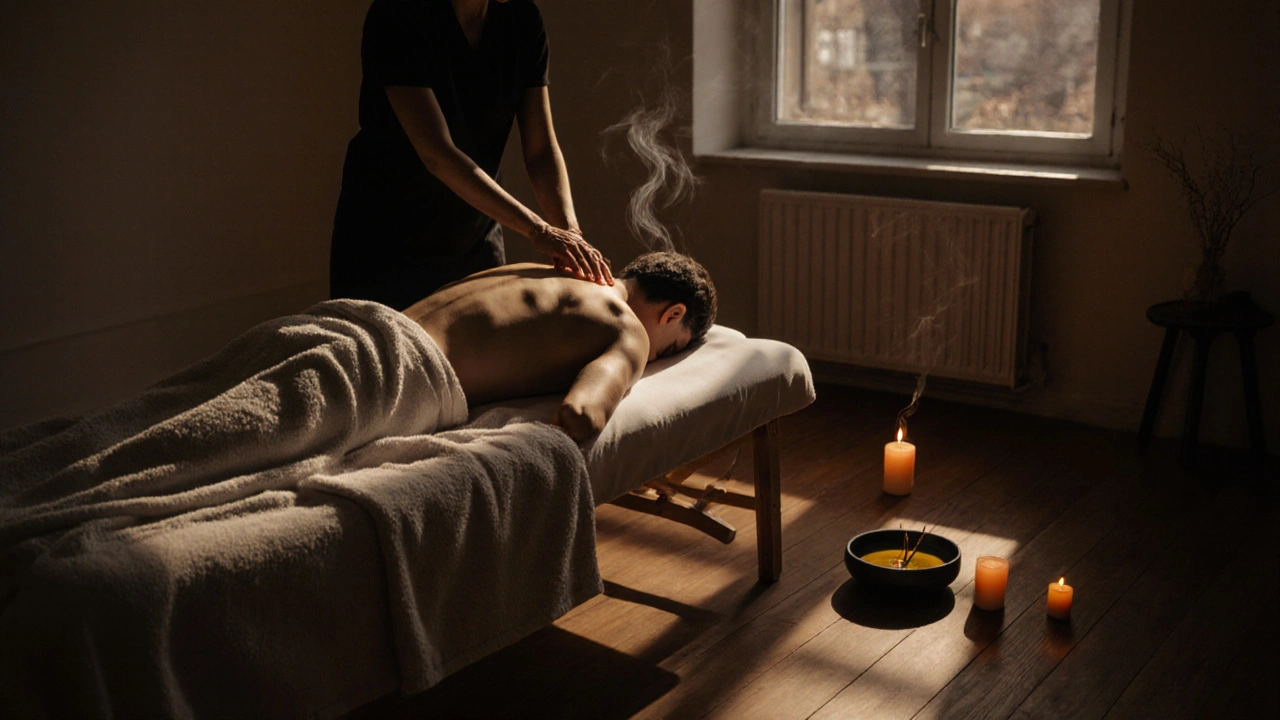
Then, you lie down. The practitioner begins with gentle hand placement-on your chest, your back, your feet. No pressure. Just presence. As you breathe, they match your rhythm. Slowly, they guide you to notice where your body tightens. Where you hold your breath. Where you want to pull away.
And then… something shifts. Maybe your chest opens. Maybe you sob. Maybe you feel warmth spreading through your legs. These aren’t accidents. They’re your body releasing what it’s been holding onto for years.
The session ends with silence. No rushing. No talking. Just you, breathing, feeling. And then, a cup of tea. A quiet walk. That’s when the real work starts-integrating the release.

Where to Find Tantra Healing in Amsterdam
Amsterdam has a quiet but deep tradition of somatic healing. You won’t find tantric sessions advertised on every corner. But if you know where to look, you’ll find practitioners who’ve trained for years in authentic lineages-from Nepal to California to Berlin.
Look for practitioners who:
- Have at least 3 years of formal training in tantric somatics or body-based trauma therapy
- Offer a pre-session consultation (not just a booking form)
- Emphasize consent, boundaries, and emotional safety
- Don’t promise “spiritual enlightenment” or “sexual awakening”
Some trusted spaces in Amsterdam include Yoga & Soma in De Pijp and The Still Point in the Jordaan. Both focus on trauma-informed tantra, not performance or eroticism.
What to Expect After Your First Session
Some people feel euphoric. Others feel exhausted. Some cry for hours. Others feel nothing at first. That’s normal.
Healing doesn’t happen in one session. It happens in layers. After your first session, you might:
- Have vivid dreams about your past
- Feel unusually sensitive to touch
- Notice old emotions surfacing in unexpected moments
- Feel a strange sense of calm, even when nothing seems “fixed”
This is your nervous system recalibrating. Give yourself space. No journaling. No forcing insights. Just rest. Drink water. Walk barefoot on grass. Let your body integrate.
Is Tantra Safe for Trauma Survivors?
Yes-if you choose wisely. The biggest risk isn’t the practice. It’s the practitioner.
Some people misuse tantra as a cover for boundary violations. That’s why vetting matters. Ask:
- What’s your training background?
- How do you handle triggers during a session?
- Can I stop at any time-even mid-touch?
- Do you offer follow-up support?
A good practitioner will welcome these questions. A bad one will dismiss them. Trust your gut. If something feels off, it is.

How Much Does It Cost?
In Amsterdam, a single trauma-focused tantra session typically costs between €90 and €150. That’s comparable to a therapist’s hourly rate. Some practitioners offer package deals-three sessions for €250. That’s often the sweet spot for real change.
Why so expensive? Because this isn’t a massage. It’s emotional labor. The practitioner has spent years learning how to hold space for pain without fixing it. That’s rare. And valuable.
Who Should Try This?
You might benefit from tantra for emotional healing if:
- You’ve been in therapy but still feel emotionally stuck
- You disconnect from your body during stress
- You’ve had trauma you can’t talk about
- You feel numb most of the time
- You’ve tried everything else-and still feel like something’s missing
You might not need this if:
- You’re looking for a quick fix
- You’re not ready to feel uncomfortable emotions
- You want to “get turned on” during a session
- You’re currently in acute crisis and need immediate medical support
Tantra isn’t for everyone. But for those who’ve been waiting for their body to catch up with their healing… it’s a lifeline.
Ready to Begin?
You don’t need to understand tantra to heal through it. You just need to be willing to feel.
Start small. Book a 60-minute session. No expectations. Just show up. Let your body lead. And if you cry, shake, or go silent-that’s not failure. That’s your trauma releasing its grip.
Healing isn’t about forgetting. It’s about remembering… without the weight.
Can tantra help with PTSD?
Yes. Many trauma survivors with PTSD find tantra helps regulate their nervous system when talk therapy alone isn’t enough. Tantric practices lower cortisol, activate the parasympathetic nervous system, and help the body release frozen energy tied to trauma. It’s not a replacement for clinical treatment, but it’s a powerful complement.
Do I need to be spiritual to try tantra?
No. Tantra is not a religion. You don’t need to believe in chakras, energy fields, or gods. All you need is curiosity about your body and a willingness to feel. Many people who use tantra for healing are atheists, agnostics, or simply tired of spiritual jargon. The practice works whether you believe in it or not.
Is tantra the same as sensual massage?
No. Sensual massage is designed to arouse. Tantra for emotional healing is designed to release. In trauma-informed tantra, arousal is not the goal-and often, it doesn’t happen. The focus is on safety, presence, and emotional release. If a practitioner pushes for sexual energy, walk away.
How many sessions do I need?
There’s no set number. Some people feel a shift after one session. Others need three to five to start noticing lasting change. The key isn’t frequency-it’s consistency. One session a month for three months often leads to deeper integration than three sessions in one week.
Can I do tantra on my own?
You can practice breathwork, body scanning, and mindful touch alone-but trauma release often needs a witness. A trained practitioner holds space you can’t hold for yourself. That’s why working with someone is recommended, especially when dealing with deep trauma. Solo practices are great for maintenance, but not for initial release.

Terrance Bianco
January 4, 2026 AT 17:11So let me get this straight-you’re telling me that if I just lie there while some guru touches my feet, all my childhood trauma will magically dissolve like sugar in tea? And this isn’t about sex? Right. So why do all these people charge $150 an hour? I’ve seen this before. Same script. New age jargon. They’re not healers-they’re emotional con artists. The body doesn’t store trauma. The brain does. And if you really want to heal, stop paying strangers to breathe with you and start reading a damn neuroscience textbook. Or better yet-get a real therapist who doesn’t wear incense as cologne.
William Kramer
January 5, 2026 AT 23:50So tantra = touch + breath = healing? Wow. That’s the breakthrough? I thought we were past this. You know what else releases trauma? Crying in the shower. Or screaming into a pillow. Or punching a bag. But no, we gotta make it mystical now. $150 to feel your feet? I could get a foot massage at a mall for $40 and not have to listen to someone say ‘your chakras are blocked’ like it’s a weather report. This is just capitalism with a yoga mat.
Summer Perkins
January 7, 2026 AT 06:27I tried something like this last year after my divorce. Not tantra-just a somatic therapist who focused on breath and gentle touch. I didn’t cry. I didn’t shake. I just… felt tired. But after a few weeks, I noticed I could sleep through the night for the first time in years. I didn’t understand it. I still don’t. But it worked. I’m not saying it’s magic. I’m saying sometimes, healing doesn’t need a story. It just needs space.
Jimmy Jew
January 8, 2026 AT 02:31As someone who’s trained in both Thai massage and trauma-informed bodywork in Bali, I’ve seen this work-over and over. Not because it’s mystical. Because it’s biological. When you’re traumatized, your nervous system gets stuck in fight-or-flight. Tantric touch-slow, non-invasive, consensual-triggers the vagus nerve. That’s not spirituality. That’s physiology. The tears? The shaking? That’s your body discharging adrenaline that’s been locked in for decades. I’ve had veterans sob during sessions because they’d never felt safe enough to release it. This isn’t woo-woo. It’s neuroscience with a heartbeat. And yes-it costs a lot because the practitioner is holding space for your pain, not selling you a product. If you’re skeptical, fine. But don’t mock what you haven’t tried. Especially when people are still hurting.
William Kramer
January 10, 2026 AT 02:30Jimmy, you just said it better than I ever could. I was gonna say the same thing-this isn’t about chakras. It’s about the nervous system. I used to think it was all nonsense too… until I had a panic attack and my therapist said, ‘Try this: lie down, breathe slow, and let someone hold your hand-just hold it, no talking.’ I didn’t believe it. But after 10 minutes, my chest stopped feeling like a vise. I didn’t cry. I didn’t feel ‘enlightened.’ I just felt… human. Again. Maybe it’s not magic. Maybe it’s just… permission. Permission to feel what you’ve spent years hiding from. And sometimes, that’s the most radical thing of all.