How Tuina Massage Supports Holistic Healing
You’ve probably heard of massage for relaxation, but what if a single technique could help with chronic pain, stress, digestion, and even sleep-all at once? That’s the power of tuina massage. Unlike a typical spa massage, tuina isn’t just about loosening tight muscles. It’s a 2,000-year-old healing system from Traditional Chinese Medicine (TCM) that works on your body’s energy, not just its tissues. And it’s not just for people with problems-it’s for anyone who wants to feel more balanced, grounded, and alive.
What Exactly Is Tuina Massage?
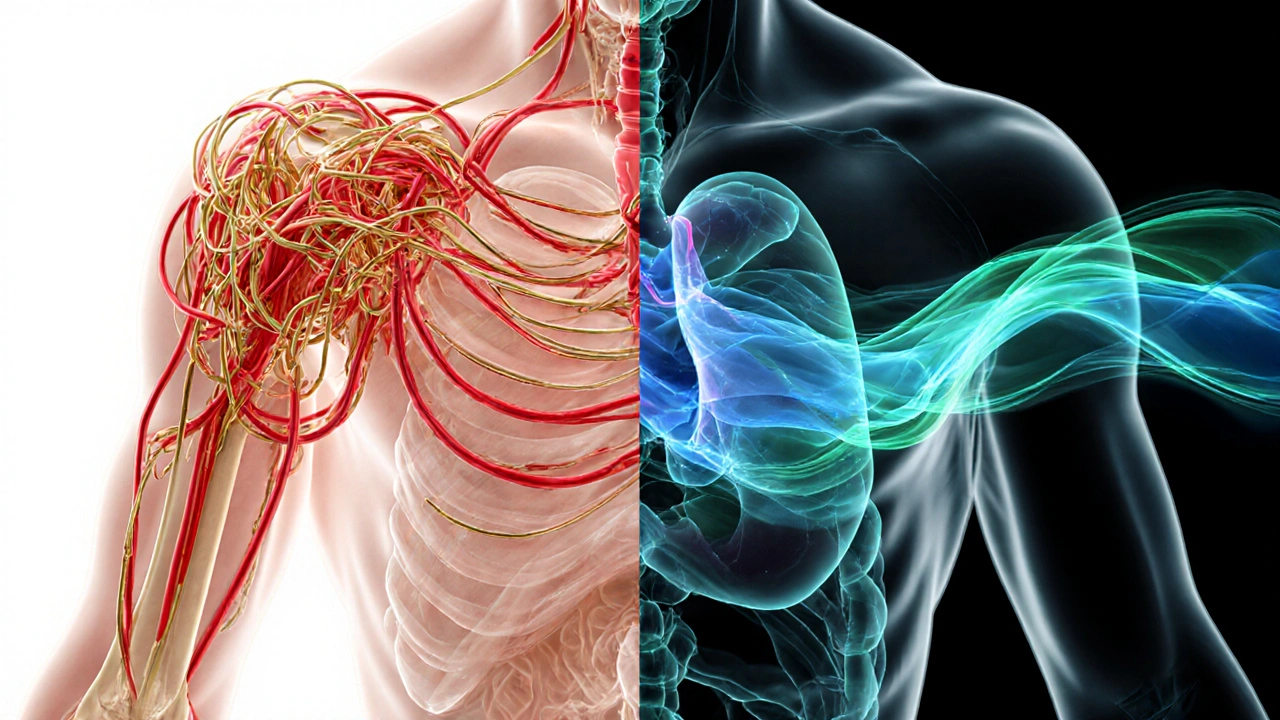
Think of tuina as acupuncture without needles. It’s a hands-on therapy that uses pressing, kneading, rolling, and stretching motions to stimulate the same energy pathways-called meridians-that acupuncturists target. Practitioners apply pressure with their thumbs, palms, elbows, and sometimes even knuckles to specific points along these pathways. The goal? To unblock stagnant energy (called qi) and restore natural flow.
It’s not just about feeling good in the moment. Tuina works on the root causes: a stiff neck might not be from poor posture-it could be tied to liver energy backing up. A digestive issue? It might be linked to spleen energy being weak. Tuina therapists don’t just treat symptoms; they look at the whole person-their sleep, emotions, diet, and stress levels-to understand what’s out of balance.
It’s no surprise that tuina is used in hospitals across China alongside Western medicine. In the U.S., it’s gaining traction in integrative clinics, physical therapy centers, and wellness studios. You won’t find it in every spa, but if you’ve ever walked out of a session feeling both deeply relaxed and oddly energized, you’ve likely experienced tuina.
How Tuina Supports Holistic Healing
Holistic healing means treating the whole person-not just the pain in your back or the headaches you keep ignoring. Tuina fits perfectly here because it doesn’t separate the body from the mind or emotions.
Let’s say you’ve been under constant stress. Your shoulders are rock hard, your sleep is broken, and you’re snapping at people for no reason. A regular massage might ease your shoulders for a day. Tuina? It goes deeper. It targets the Liver meridian, which in TCM is tied to anger, frustration, and stress. By releasing blockages there, it helps calm your nervous system, improves sleep, and even reduces irritability.
Studies have shown tuina can reduce chronic low back pain as effectively as physical therapy. One 2020 clinical review found patients with osteoarthritis of the knee experienced significant pain reduction after eight weekly sessions. Another study in the Journal of Traditional Chinese Medical Sciences showed improved digestion in patients with functional dyspepsia after just six tuina treatments.
And it’s not just physical. Many people report feeling more emotionally stable after regular sessions. That’s because in TCM, emotions are stored in organs. Unresolved grief affects the lungs. Anxiety ties to the heart. Tuina helps release these stored tensions-not by talking about them, but by physically resetting the body’s energy.
What Happens During a Tuina Session?
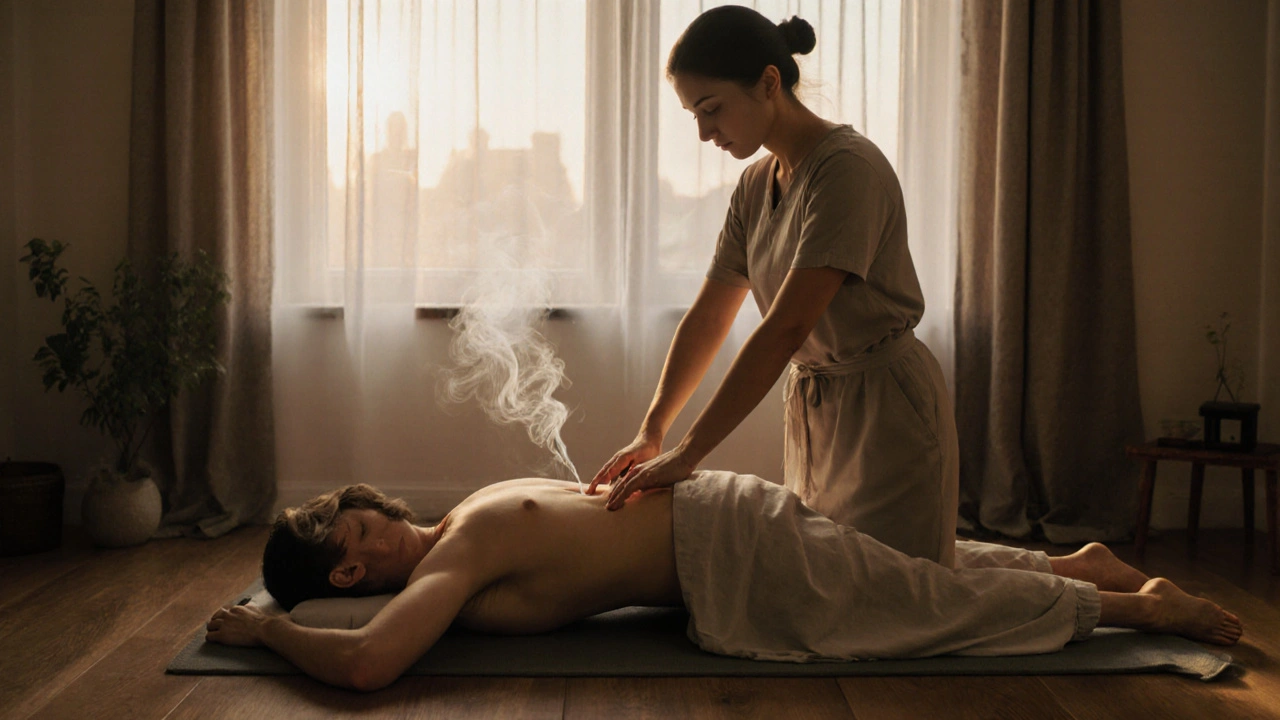
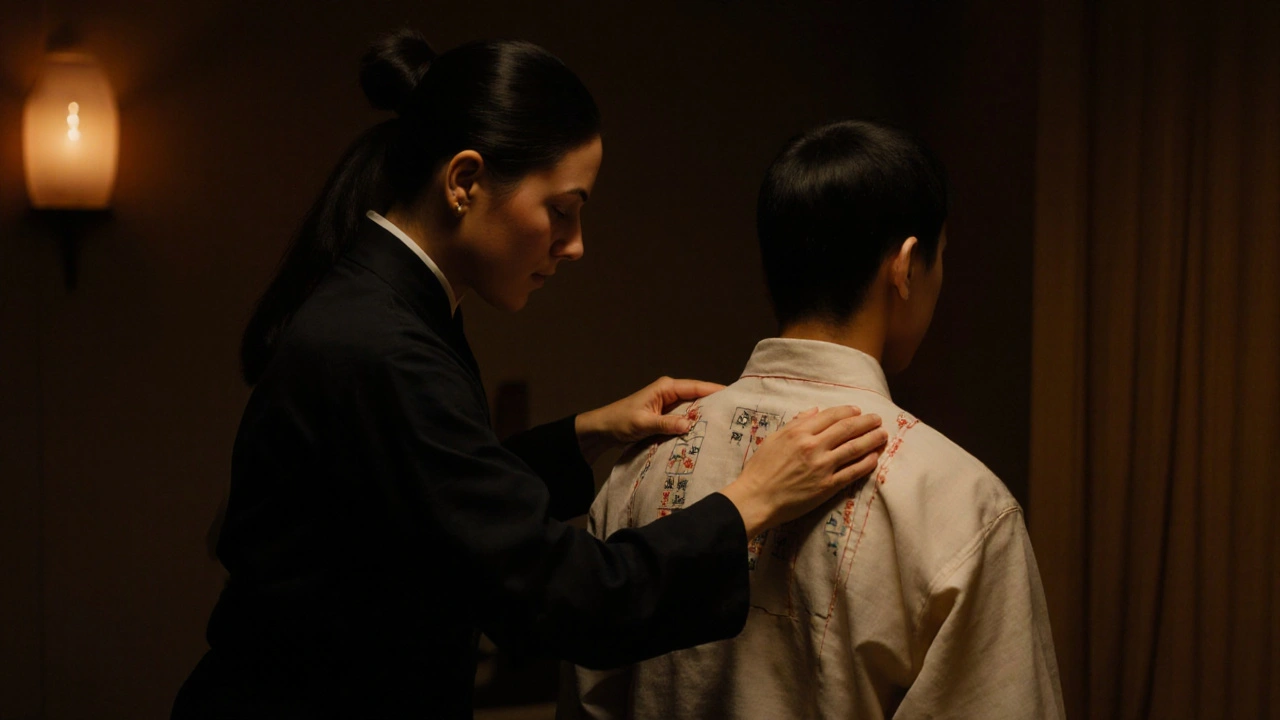
Unlike Swedish massage, where you lie on a table in a robe, tuina is usually done over clothing. You’ll wear loose, comfortable clothes-no oils, no music blasting, no candlelit ambiance. It’s practical, focused, and deeply effective.
The session starts with a short conversation. The practitioner will ask about your sleep, digestion, stress levels, and any areas of discomfort. They might check your tongue and pulse-standard in TCM-to get a fuller picture of your internal state.
Then comes the work. You’ll feel firm, rhythmic pressure. It’s not a gentle stroke-it’s targeted, sometimes even intense. You might feel a dull ache or a quick pinch, but it shouldn’t hurt. If it does, speak up. A good practitioner adjusts on the spot.
They’ll work on your back, neck, shoulders, arms, legs, and sometimes even your head and feet. Each movement has a purpose: rolling motions to loosen tight fascia, pressing on acupressure points to stimulate organ function, stretching to improve joint mobility. You might feel warmth spreading through your limbs or a tingling sensation-that’s your qi moving.
Most sessions last 45 to 60 minutes. You won’t feel groggy afterward. Instead, you’ll feel clear-headed, lighter, and surprisingly calm.
Who Can Benefit from Tuina Massage?
Tuina isn’t just for people with chronic pain. It’s for anyone feeling off-kilter.
- Chronic pain sufferers-back, neck, shoulder, knee, or arthritis pain-often see lasting relief.
- People with poor digestion-bloating, constipation, or acid reflux-can find improvement through abdominal tuina techniques that stimulate the spleen and stomach meridians.
- Insomniacs benefit from calming the heart and liver meridians, helping the mind quiet down at night.
- Stressed-out professionals or caregivers who feel constantly drained often report renewed energy after a few sessions.
- Women during menstrual cycles can find relief from cramps and mood swings through targeted pelvic and lower back work.
- Athletes use tuina for recovery, not just injury prevention. It helps release deep muscle tension faster than foam rolling.
Even if you don’t have a specific issue, tuina can be a powerful tool for prevention. Think of it like a tune-up for your body’s internal system. Regular sessions-once every two to four weeks-can keep energy flowing and prevent small imbalances from turning into bigger problems.
Tuina vs. Other Massage Therapies
| Feature | Tuina Massage | Swedish Massage | Deep Tissue Massage | Acupressure |
|---|---|---|---|---|
| Primary Goal | Restore energy flow, balance organs | Relax muscles, reduce stress | Break down deep muscle knots | Stimulate acupressure points |
| Technique | Pressing, kneading, rolling, stretching | Long strokes, kneading, tapping | Slow, deep pressure | Finger pressure on points |
| Clothing | Over clothes | Undressed, under sheet | Undressed, under sheet | Over clothes |
| Focus | Energy meridians, organ systems | Superficial muscles | Deep muscle layers | Acupressure points only |
| After Effects | Clear-headed, energized | Relaxed, sleepy | Sore, then relieved | Localized relief |
Swedish massage is great for unwinding after a long week. Deep tissue fixes stubborn knots. Acupressure hits key points. But only tuina connects the dots between your physical tension and your internal state. It’s the only one that treats your liver, your spleen, and your emotions as part of the same system.
How to Find a Qualified Tuina Practitioner
Not every massage therapist knows tuina. Look for someone trained in Traditional Chinese Medicine. In the U.S. and Europe, licensed acupuncturists often include tuina in their practice. Check their credentials: look for L.Ac. (Licensed Acupuncturist) or Dipl. Ac. (Diplomate of Acupuncture) from the NCCAOM (National Certification Commission for Acupuncture and Oriental Medicine).
If you’re in a city with a strong TCM presence-like New York, San Francisco, or Boston-you’ll find clinics that specialize in it. Smaller towns? Ask at holistic health centers or yoga studios. Many physical therapists now offer tuina as part of integrative care.
Don’t be afraid to ask questions: “How long have you practiced tuina?” “Do you work with meridian theory?” “Will you assess my pulse or tongue?” A good practitioner will explain their approach clearly. If they just say, “I do deep pressure,” they’re probably not trained in true tuina.
What to Expect in Terms of Cost and Booking
Tuina sessions typically cost between $70 and $120 for a 60-minute session, depending on location and practitioner experience. In cities with high demand, prices may be higher. Some clinics offer package deals-five sessions for $300, for example-which is a smart way to start if you’re new to it.
Booking is usually straightforward. Most practitioners take appointments online or by phone. Some clinics require an initial consultation before your first session. That’s normal. It helps them tailor the treatment to you.
Insurance rarely covers tuina unless it’s part of a physical therapy plan. But if you have an HSA or FSA, you can often use those funds. Always ask the clinic if they accept them.
Safety and Who Should Avoid Tuina
Tuina is safe for most people-but not everyone.
Avoid it if you have:
- Open wounds, burns, or recent surgery in the area to be treated
- Bone fractures or severe osteoporosis
- Active infections or fever
- Blood clotting disorders or are on blood thinners (inform your practitioner)
- Pregnancy (unless you see a practitioner trained in prenatal tuina)
It’s also not a quick fix. One session won’t undo years of stress or injury. Most people need 3 to 6 sessions to notice lasting changes. Don’t expect magic after one visit. But if you stick with it, the results can be profound.
Can You Do Tuina at Home?
You can’t replicate a professional session-but you can support your energy flow at home.
Try this simple routine before bed:
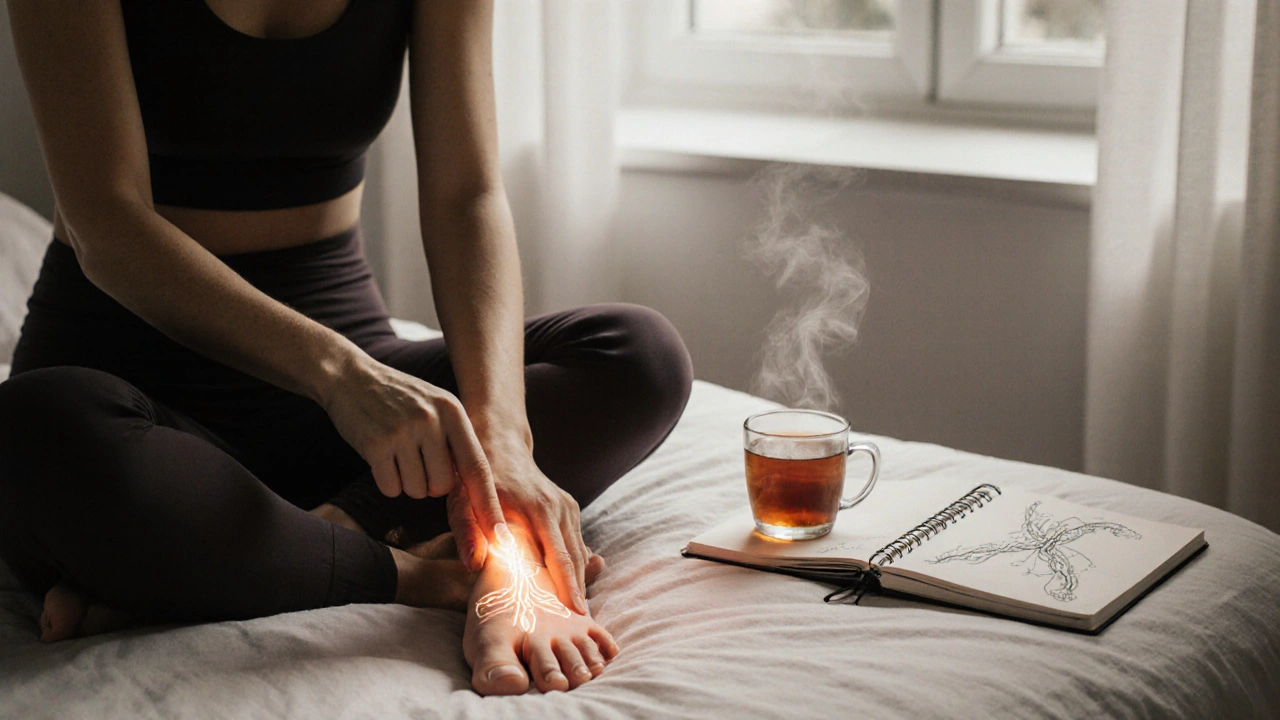
- Press firmly with your thumb on the space between your big toe and second toe (Liver 3 point) for 30 seconds on each foot. Helps calm stress.
- Massage your lower abdomen in a circular motion for two minutes. Supports digestion.
- Use your knuckles to gently roll along your spine from the neck down to the lower back. Releases tension in the Governing Vessel meridian.
These aren’t replacements for professional care, but they’re great for maintenance. Do them daily, and you’ll start noticing subtle shifts in your energy and mood.
Frequently Asked Questions
Is tuina massage painful?
It can feel intense, especially if you have deep tension, but it shouldn’t hurt. A good practitioner will adjust pressure based on your feedback. You might feel a dull ache or a quick pinch, but sharp pain means you should speak up. Tuina works with your body’s response, not against it.
How many sessions do I need to see results?
For acute issues like a stiff neck or recent injury, 2-4 sessions may help. For chronic conditions-like ongoing back pain, insomnia, or digestive problems-you’ll likely need 6-10 sessions over several weeks. Many people start with weekly sessions, then move to biweekly or monthly for maintenance.
Can tuina help with anxiety and depression?
Yes. In Traditional Chinese Medicine, anxiety and depression are often linked to blocked liver or heart energy. Tuina helps release those blockages physically, which can calm the nervous system and improve mood. While it’s not a replacement for therapy or medication, many people find it a powerful complement-especially when they feel stuck in their heads and need a body-based approach.
Does tuina use oils or lotions?
No. Tuina is performed over clothing, so no oils are used. This makes it cleaner and more focused than Swedish or aromatherapy massage. You’ll wear loose, comfortable clothes-like sweatpants and a T-shirt-so the practitioner can access key areas without needing to uncover your body.
Is tuina the same as acupressure?
Acupressure is one part of tuina, but tuina is much broader. Acupressure only presses on specific points. Tuina includes those points, but also uses kneading, rolling, stretching, and joint mobilization to affect muscles, fascia, and energy pathways. Think of acupressure as a single note, and tuina as a full symphony.
Ready to Feel the Difference?
If you’ve tried everything-physical therapy, yoga, meditation-and still feel like something’s off inside, tuina might be the missing piece. It doesn’t promise instant miracles. But if you’re willing to give it a few sessions, you might just find that the heaviness you’ve carried for years begins to lift-not because you forced it away, but because your body finally remembered how to heal itself.