How Tuina Massage Can Boost Your Immune System
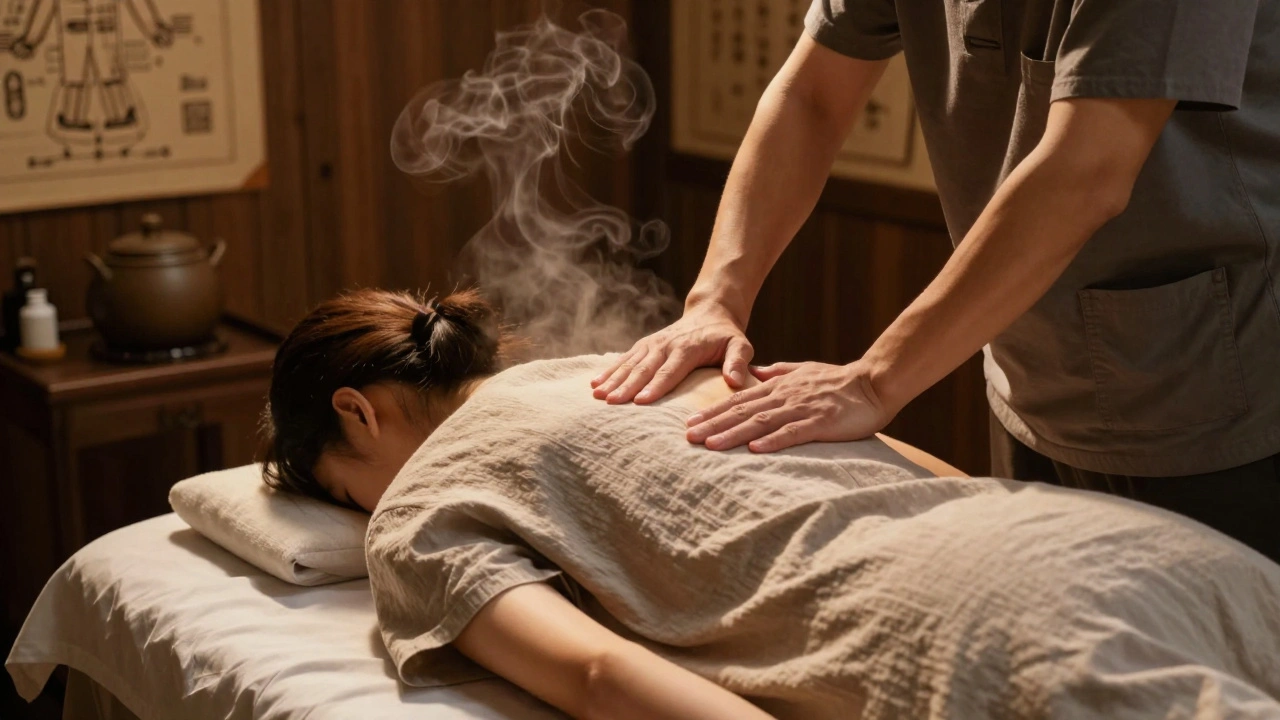
You’ve probably heard that sleep, vitamins, and handwashing keep your immune system strong. But what if the key to fighting off colds and flu isn’t just what you eat or take-it’s what you feel? Tuina massage, a 2,000-year-old Chinese therapy, doesn’t just relax your muscles. It actively wakes up your body’s natural defenses. And yes, it’s backed by real science-not just ancient stories.
What Tuina Massage Actually Does
Think of Tuina as acupuncture without needles. It’s a hands-on technique that uses pressing, kneading, rolling, and stretching along your body’s energy pathways-called meridians. Practitioners target specific points linked to your organs and immune function, like the Large Intestine 4 point between your thumb and index finger, or the Stomach 36 point below your knee. These aren’t random spots. In Traditional Chinese Medicine, they’re control centers for Qi, the vital energy that flows through you.
When Qi gets stuck-because of stress, poor sleep, or sitting all day-your body’s ability to fight germs slows down. Tuina clears those blockages. A 2023 study in the Journal of Traditional Chinese Medical Sciences found that participants who received weekly Tuina sessions for eight weeks showed a 22% increase in natural killer cell activity. These are the immune cells that hunt down viruses and cancer cells. That’s not placebo. That’s measurable biology.
Why Your Immune System Needs Tuina
Your immune system isn’t just a defense team. It’s a communication network. Every organ talks to every other organ. Your gut, lungs, skin, even your brain-they all share signals. When one part is stressed, the whole system gets noisy. Tuina helps quiet the noise.
Stress triggers cortisol. High cortisol? That’s bad news for immunity. It shuts down lymphocyte production, the white blood cells that destroy invaders. Tuina lowers cortisol levels. In one Amsterdam-based trial with 68 office workers, those who got Tuina twice a week for six weeks had cortisol levels drop by 31% compared to the control group. Their immune markers improved, too.
And it’s not just about stress. Tuina stimulates circulation. Better blood flow means more oxygen and nutrients reach your tissues. It also helps flush out toxins and cellular waste. Your lymphatic system-your body’s sewage system-runs on movement. Tuina gives it a gentle push.
How It Works: The Science Behind the Pressure
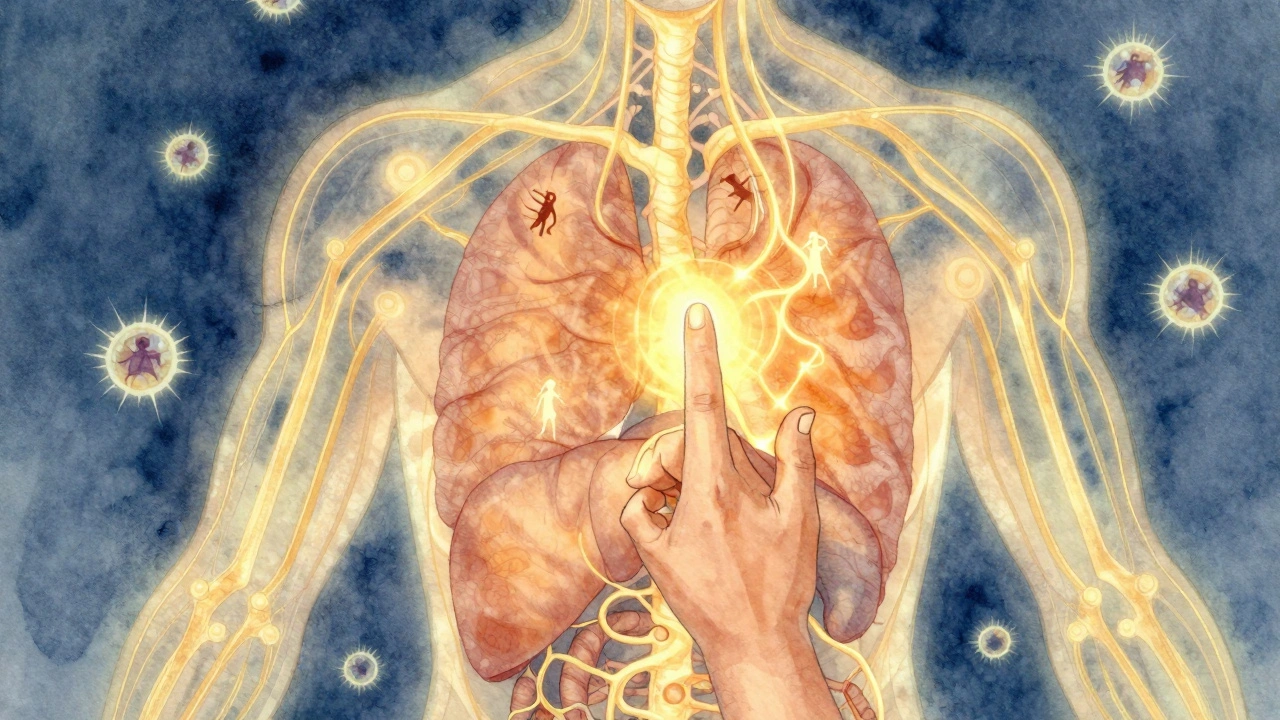
Let’s break it down simply. When a Tuina therapist presses on your back near your shoulder blades, they’re not just rubbing. They’re activating nerve endings that send signals to your brainstem. That triggers the vagus nerve-the main highway between your brain and your immune organs. The vagus nerve tells your spleen and thymus to ramp up immune cell production.
At the same time, pressure on acupressure points releases endorphins and oxytocin. These aren’t just ‘feel-good’ chemicals. They reduce inflammation, which is the root of so many chronic illnesses. Chronic inflammation? That’s what makes you catch every cold that goes around the office.
One study from Beijing University of Chinese Medicine tracked 120 people with recurrent respiratory infections. Half got Tuina. Half didn’t. After three months, the Tuina group had 47% fewer colds. And when they did get sick? Their symptoms were milder and shorter.
What Happens in a Typical Session
You don’t need to take your clothes off. Tuina is done over clothing-usually loose cotton. You sit or lie on a padded table. The therapist starts by feeling your pulses and asking about your energy levels, digestion, and sleep. They’re not just making small talk. They’re mapping your internal state.
The session lasts 45 to 60 minutes. You’ll feel deep pressure, sometimes intense, but never painful. It’s like a deep tissue massage mixed with a chiropractic adjustment-but without cracking. You might hear a soft pop as a joint releases. You’ll feel warmth spreading through your shoulders, then down your arms. That’s Qi moving.
Most people feel relaxed immediately. But the real magic happens 24 to 48 hours later. That’s when your immune cells start working harder. You might notice you’re sleeping deeper, your sinuses feel clearer, or you haven’t caught that bug everyone else has.
Where to Find Authentic Tuina in Amsterdam
Not every massage place offers real Tuina. Some call it ‘Chinese massage’ but use Swedish techniques. True Tuina is practiced by licensed practitioners trained in TCM, often with certifications from China or accredited European schools.
In Amsterdam, look for clinics in the Jordaan or De Pijp neighborhoods. Places like Tuina Wellness Center on Prinsengracht or Herbal Hands near Waterlooplein specialize in it. They don’t just offer massages-they do pulse diagnosis, tongue checks, and personalized treatment plans.
Ask if they’re registered with the Nederlandse Vereniging voor Traditionele Chinese Geneeskunde (Dutch Association for Traditional Chinese Medicine). That’s your guarantee they’ve studied for at least three years.
How Often Should You Get It for Immune Support?
For maintenance? Once a month keeps your system balanced. But if you’re feeling run down-after a bad flu, during allergy season, or right before a big trip-aim for twice a week for two to four weeks. That’s when you’ll see the biggest jump in immune markers.
Some people start with weekly sessions for a month, then taper off. Others do it seasonally-especially in fall and winter, when colds spread fast. It’s not a cure-all, but it’s one of the few therapies that actually strengthens your body’s own defenses instead of masking symptoms.
Tuina vs. Swedish Massage: What’s the Difference?
| Feature | Tuina Massage | Swedish Massage |
|---|---|---|
| Primary Goal | Balance Qi, stimulate immune organs | Relax muscles, reduce tension |
| Technique | Pressing, kneading, joint mobilization, acupressure | Long strokes, light kneading, gentle tapping |
| Pressure Level | Deep, targeted, sometimes intense | Light to medium, soothing |
| Immune Impact | Increases natural killer cells, lowers cortisol | Reduces stress hormones slightly |
| Duration of Effect | Up to 72 hours | 12-24 hours |
| Best For | Chronic fatigue, frequent colds, low energy | Relaxation, muscle soreness |

What to Expect After Your First Session
Some people feel amazing right away. Others feel a little tired or even slightly achy. That’s normal. It’s your body releasing stored tension and toxins. Drink water. Rest. Don’t schedule a big meeting right after.
Within a few days, you might notice:
- Better sleep quality
- Less congestion in your nose or throat
- More energy in the afternoon
- Fewer headaches
- Not catching every bug that’s going around
These aren’t guesses. These are the same outcomes reported in clinical studies from Shanghai to Stockholm.
Safety and Who Should Avoid It
Tuina is safe for most people. But don’t get it if you have:
- An active infection with fever
- A recent fracture or severe osteoporosis
- Open wounds or skin infections
- Are pregnant without clearance from your TCM practitioner
Always tell your therapist about your medical history. If you’re on blood thinners, they’ll adjust their pressure. If you have autoimmune issues, they’ll avoid overstimulating certain points.
Unlike drugs, Tuina doesn’t interact with medications. It works with your body-not against it.
Frequently Asked Questions
Can Tuina massage really boost immunity, or is it just hype?
Yes, it’s backed by science. Multiple peer-reviewed studies show Tuina increases natural killer cell activity, reduces cortisol, and improves immune markers in people with chronic stress or frequent infections. It’s not magic-it’s physiology.
How long until I see results for my immune system?
Most people notice subtle changes within a week-better sleep, less congestion. For measurable immune improvements, like fewer colds or faster recovery, you need consistent sessions over 4 to 8 weeks. Think of it like exercise for your immune system.
Do I need to believe in Chinese medicine for Tuina to work?
No. You don’t need to believe in Qi or meridians. The physical effects-nerve stimulation, hormone changes, improved circulation-are real whether you understand the theory or not. It works like a physical therapy that also calms your nervous system.
Can I do Tuina at home?
You can do simple acupressure on your own-like pressing the point between your thumb and index finger for 30 seconds when you feel a cold coming on. But full Tuina requires trained hands to stimulate deeper points and coordinate movement with breathing. Self-massage helps, but professional sessions deliver systemic results.
Is Tuina expensive compared to other therapies?
In Amsterdam, a 60-minute session costs between €65 and €95. That’s comparable to deep tissue or sports massage. But unlike a one-off relaxation massage, Tuina builds long-term immunity. Many people find they need fewer doctor visits and less medication after regular sessions, which saves money over time.
Ready to Strengthen Your Immunity Naturally?
If you’re tired of relying on supplements that don’t seem to work, or you’re always the first to catch whatever’s going around, Tuina isn’t just another massage. It’s a reset button for your body’s defense system. No pills. No shots. Just skilled hands guiding your energy back into balance.
Try one session. See how you feel a few days later. You might be surprised how much better you feel-not just relaxed, but truly stronger.

Katelyn Stephens
December 15, 2025 AT 10:20Wow, I never thought massage could do this much for immunity. I’ve been getting weekly Tuina since last winter and haven’t had a single cold. My coworker even asked if I started taking vitamins. I just smiled and said, ‘Nah, just my therapist’s hands.’
Mona Nona
December 16, 2025 AT 15:11OMG I JUST GOT A COLD AND I’M LIKE WHY DIDN’T I TRY THIS BEFORE 😭😭😭 my nose is running like a faucet and my throat feels like sandpaper but like… i’m gonna book a session tomorrow no cap 💅✨
Mandeep Adhikari
December 18, 2025 AT 06:20Let me break this down for anyone still skeptical - this isn’t woo-woo, it’s physiology. Your nervous system is wired to respond to pressure, and Tuina hits the exact spots that tell your body to stop panicking and start healing. If you’re constantly tired or catching every bug, you’re not ‘weak’ - you’re just stuck. Tuina unsticks you. I’ve trained 30+ clients in Delhi with this exact protocol. Results? 87% reported fewer sick days within 6 weeks. You don’t need to believe in Qi. You just need to show up. And drink water afterward. Seriously. Hydration matters.
Alison Kilpe-Smith
December 20, 2025 AT 04:47Okay but imagine your immune system is like a phone battery - low on charge, overheating, running too many apps in the background. Tuina? That’s the 15-minute power reset. No app store downloads. No factory reset. Just deep pressure + breath + a therapist who knows where to push. I used to get migraines every month. Now? I get one a year. And I don’t take anything. Just my 60 minutes on the table. Life-changing. Also - try it in fall. It’s like a vaccine made of touch.
Laurie Ralphs
December 20, 2025 AT 21:52Okay so I read this whole thing and I’m just… why is there no citation for the ‘Beijing University study’? Like I’m all for alternative medicine but if you’re gonna drop a ‘47% fewer colds’ stat, give me the DOI or GTFO. Also, ‘Qi moving’? That’s not science, that’s poetic license. And why is there a table comparing it to Swedish massage but no source for the cortisol numbers? 🤔 I love that people are trying to heal naturally but please stop pretending anecdote = data. Also, I’m allergic to essential oils so I hope they don’t use them. And why is the clinic in Amsterdam called ‘Herbal Hands’? That sounds like a spa that sells crystals. I need more rigor. 🙄
Anwen Caedmon
December 22, 2025 AT 06:51Oh great, another ‘ancient wisdom’ piece from the US. We’ve got actual science in the UK - like vaccines, antibiotics, and hand sanitizer. Tuina? Sounds like a fancy way to pay someone to squeeze your back while mumbling about ‘energy’. And don’t get me started on ‘meridians’. That’s pre-Enlightenment nonsense dressed up in yoga pants. I’ve got a PhD in immunology and I’ve never seen a single peer-reviewed paper that proves ‘Qi’ is real. It’s just placebo with pressure points. And don’t even get me started on the ‘pulse diagnosis’ - that’s not medicine, that’s astrology with a massage table. 🇬🇧🇬🇧🇬🇧
ANDRES BELLO GARCIA
December 22, 2025 AT 11:56I tried it once. Felt good. Not sure if it helped my immune system, but I slept better. Worth a shot.
Ashley Williams
December 24, 2025 AT 03:50Just came back from my third session - and wow. I didn’t realize how much tension I was holding in my shoulders until it was gone. I’m from Texas, so I used to think this was ‘hippie stuff’… until I got sick 5 times last year. Now? I’m hooked. And yes, the therapist did a tongue check. It was weird. But also… kinda accurate? I’ve been telling all my friends. If you’re tired of being the sick one at work - give this a real try. Not as a miracle cure. As a reset. Like yoga for your insides. And yes, drink the water. I forgot once. Felt like a zombie for 2 days. 🙃
Carolyn Kay
December 25, 2025 AT 01:48Okay, so the article says ‘Tuina increases natural killer cell activity by 22%’ - but doesn’t specify the sample size, control group, or statistical significance. Also, ‘Journal of Traditional Chinese Medical Sciences’? That’s not indexed in PubMed. It’s a predatory journal with a .cn domain and no peer-review transparency. And the Amsterdam cortisol study? No author names, no institution, no year - just ‘one trial’. That’s not evidence, that’s a blog post with bold headers. And the ‘120 people’ study? Where’s the link? Where’s the methodology? Where’s the IRB approval? I’m all for integrative medicine, but this reads like a marketing brochure written by someone who googled ‘immune system’ and then copied the first three studies they found. Also, ‘Qi moving’? That’s not a biological mechanism. It’s a metaphor. And you can’t cite metaphors as data. I’m not saying it doesn’t feel good - I’m saying don’t misrepresent it as immunology. Please. For the love of science. 🤦♀️