From Aches to Ease: The Power of Deep Tissue Massage
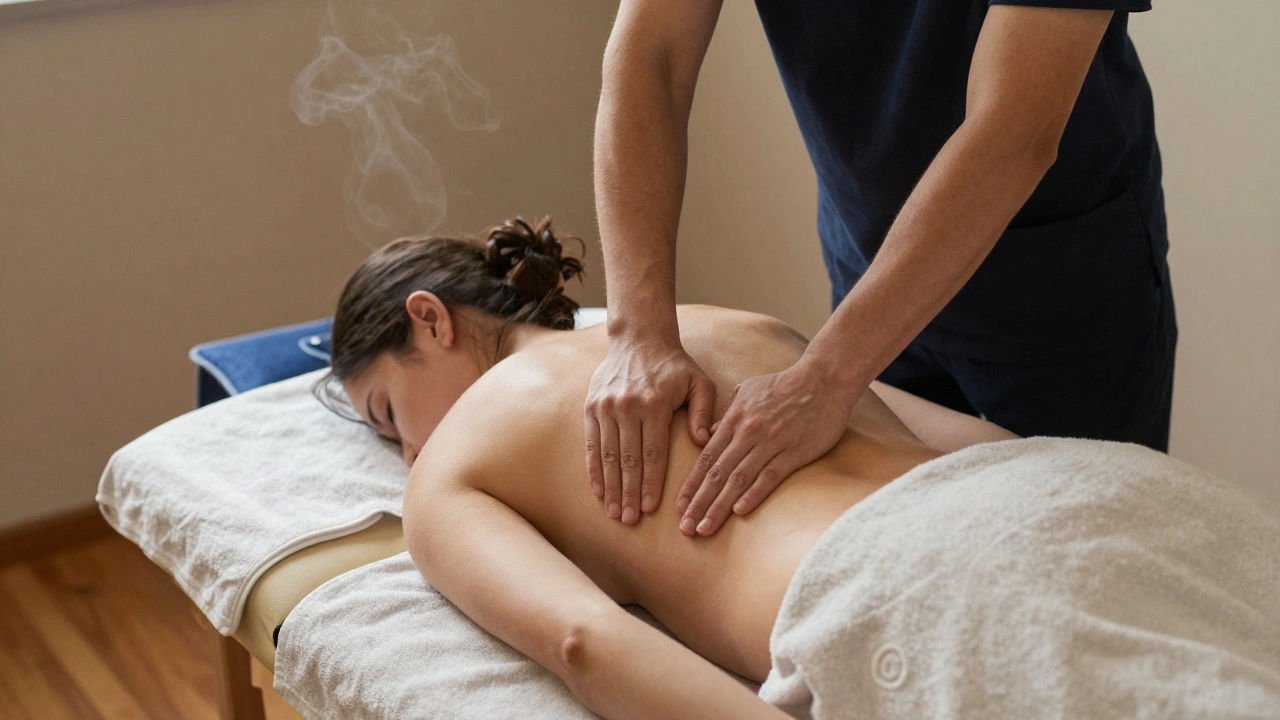
You know that tightness in your shoulders that won’t quit? Or the dull throb in your lower back after sitting all day? Maybe you’ve tried stretching, foam rolling, even heat packs-but nothing sticks. That’s not just stress. That’s your muscles screaming for deeper help. Deep tissue massage isn’t just another spa treat. It’s a targeted, therapeutic tool that digs into the layers of muscle and connective tissue to release chronic tension, break up scar tissue, and bring real relief where other methods fall short.
What Deep Tissue Massage Actually Does
Let’s clear up a myth first: deep tissue massage isn’t about pain. It’s about precision. While Swedish massage glides over the surface to relax you, deep tissue works below the top layer-targeting the deeper muscles, fascia, and adhesions that form from injury, overuse, or poor posture. Think of it like untangling a knot in a rope. You don’t pull harder-you find the right spot, apply steady pressure, and gently work it loose.
This technique uses slower strokes, deeper finger pressure, and sometimes elbows or forearms to reach muscles that are stuck in a constant state of contraction. It’s especially effective for areas like the lower back, neck, shoulders, and hips-places that take the brunt of daily stress, sitting, or physical activity.
Studies from the Journal of Clinical Psychiatry and the Annals of Internal Medicine show that people with chronic lower back pain who received regular deep tissue massage reported significant reductions in pain and improved mobility within just a few weeks. Not magic. Just physics and physiology working together.
Why You Might Need It
Who benefits most? If any of this sounds familiar, you’re likely a good candidate:
- You sit at a desk 8+ hours a day and your shoulders feel like they’re welded shut
- You’re an athlete or fitness enthusiast with nagging muscle soreness that doesn’t go away
- You’ve had an injury-car accident, surgery, fall-and scar tissue is limiting your movement
- You’ve tried yoga, stretching, or physical therapy but still feel tight and restricted
- You wake up stiff and it takes 20 minutes just to get out of bed
It’s not just for athletes or people in pain. Even if you don’t have a diagnosed issue, deep tissue massage can prevent problems. Tight muscles pull on joints, change your posture, and create imbalances that lead to bigger issues down the line. Fixing them early saves you from physical therapy bills and missed workouts later.
What Happens During a Session
First, you’ll talk. A good therapist will ask about your pain points, medical history, and goals. No rush. No judgment. Then you’ll lie on the table, covered with a towel. The room will be warm, the music soft. You’ll feel the therapist’s hands begin-light at first, then gradually deeper.
You might feel some discomfort, especially in areas with knots or scar tissue. But it should never feel like sharp, burning, or unbearable pain. If it does, speak up. This isn’t a test of endurance. It’s a collaboration. The therapist will adjust pressure based on your feedback.
They’ll use techniques like friction (cross-fiber strokes to break up adhesions), stripping (long, slow strokes along muscle fibers), and trigger point therapy (focused pressure on tight spots). Each movement is intentional. There’s no random rubbing here.
Afterward, you might feel a little sore-like after a good workout. That’s normal. Drink water. Move gently. Your body is processing the release. Most people feel looser, lighter, and more mobile within 24 hours.
Deep Tissue vs. Swedish Massage: What’s the Difference?
| Feature | Deep Tissue Massage | Swedish Massage |
|---|---|---|
| Primary Goal | Release chronic muscle tension, break up scar tissue | Relax muscles, improve circulation, reduce stress |
| Pressure | Deep, firm, focused | Light to medium, flowing |
| Speed of Strokes | Slow, deliberate | Smooth, rhythmic |
| Best For | Chronic pain, injury recovery, posture issues | Relaxation, stress relief, general wellness |
| After Effects | Mild soreness for 1-2 days | Immediate relaxation, no soreness |
| Duration of Relief | Days to weeks, with regular sessions | Hours to a day |
Swedish massage is like a warm blanket. Deep tissue is like resetting your body’s software. One soothes. The other repairs.

Where to Find It in Amsterdam
Amsterdam has no shortage of massage studios, but not all offer true deep tissue work. Look for therapists who specialize in sports massage, orthopedic massage, or myofascial release. Places like Body & Soul Therapy in De Pijp, Amsterdam Massage Center near the Vondelpark, and Wellness Lab in Oud-Zuid all have certified practitioners trained in deep tissue techniques.
Check their websites or call ahead. Ask: “Do you offer deep tissue massage with a focus on chronic tension and muscle adhesions?” If they say yes and can explain how they do it, you’re on the right track. Avoid places that just say “we do deep pressure”-that’s not the same thing.
What to Expect to Pay
Prices in Amsterdam vary by location and therapist experience. A 60-minute session typically costs between €70 and €110. Longer sessions (90 minutes) range from €95 to €140. Some studios offer package deals-buy five sessions, get one free. That’s often the best value if you’re tackling a chronic issue.
Insurance? Some Dutch health insurers (like Zilveren Kruis or Menzis) cover massage therapy if it’s prescribed by a doctor for a diagnosed condition like chronic back pain or repetitive strain injury. Ask your provider. Even if it’s not covered, think of it as preventive care. Paying €80 now might save you €500 later on physio or doctor visits.
When to Avoid It
Deep tissue massage is powerful-but not for everyone. Skip it if you have:
- Recent injuries (within 48-72 hours)
- Blood clots or are on blood thinners
- Severe osteoporosis
- Open wounds, infections, or skin conditions in the area
- Active cancer or recent chemotherapy
Always tell your therapist about your medical history. Even if you think it’s unrelated. A therapist who knows your full picture can adjust the session-or recommend a better option.

How Often Should You Get It?
There’s no one-size-fits-all. If you’re starting out with chronic pain, weekly sessions for 3-4 weeks often bring noticeable change. Then, taper to every 2-4 weeks for maintenance. Athletes might go weekly during training season, then monthly during off-season.
Think of it like brushing your teeth. You don’t wait until your gums bleed. You do it regularly to prevent bigger problems. Same with your muscles.
FAQ: Your Questions About Deep Tissue Massage Answered
Does deep tissue massage hurt?
It can feel intense, especially in tight areas, but it shouldn’t hurt. The sensation is more like a deep, satisfying pressure-think of it as the good kind of ache, like after a tough workout. If it feels sharp, burning, or unbearable, tell your therapist immediately. They’ll adjust. Pain isn’t progress-it’s a warning sign.
How long does it take to feel results?
Many people feel looser right after. But real, lasting change takes time. For chronic issues, you’ll likely notice improved mobility and reduced pain after 3-5 sessions. Think of it like peeling an onion-each layer takes time to release. Consistency matters more than intensity.
Can I get deep tissue massage if I’m pregnant?
Yes-but only with a therapist trained in prenatal massage. Standard deep tissue techniques aren’t safe during pregnancy, especially in the first trimester. A qualified prenatal therapist can use modified pressure and positioning to relieve lower back pain, hip tension, and swelling without risk.
Is deep tissue massage the same as sports massage?
They overlap a lot. Sports massage often includes deep tissue techniques but is tailored to athletes-focusing on performance, recovery, and injury prevention. Deep tissue is broader, aimed at anyone with chronic muscle tension, whether they’re a runner, a desk worker, or a parent carrying toddlers all day.
What should I do after a session?
Drink plenty of water to help flush out metabolic waste released during the massage. Avoid intense exercise for 24 hours. Gentle movement-like walking or stretching-is good. If you’re sore, a warm bath or light heat pack can help. Listen to your body. If you feel unusually tired or dizzy, rest. Your body is healing.
Ready to Feel the Difference?
Chronic muscle tension isn’t something you just have to live with. It’s not normal to wake up stiff every morning. It’s not okay to avoid lifting your arms because your shoulders ache. Deep tissue massage isn’t a luxury-it’s a reset button for your body. If you’ve been ignoring those aches, now’s the time to act. Book a session. Give your muscles the deep attention they’ve been begging for. You won’t just feel better today. You’ll move better for weeks to come.



Peter Hall
January 9, 2026 AT 00:50Been doing this for six months. Back pain? Gone. No more ibuprofen. Just a 60-minute session every two weeks.
lucy hinde
January 9, 2026 AT 19:02It’s fascinating-how the body holds trauma not in the mind, but in the fascia… the tissue remembers… the muscle forgets nothing… and yet, we call it ‘stress’ as if it’s ephemeral… when in truth, it’s architecture…
Rebecca Pettigrew
January 11, 2026 AT 02:04Okay so I used to think massage was just for rich people who sit around drinking kombucha, but then I got this job where I sit at a desk and my neck started feeling like it was wrapped in concrete and I went to this place in Brooklyn and the therapist was like ‘you’ve got knots like little pebbles’ and I was like ‘oh my god that’s exactly it’ and she worked on my traps for like 20 minutes and I cried a little not from pain but from relief like I hadn’t breathed deep in years and now I go every month and I swear my posture looks better in photos and my cat even sleeps on my back now like she knows I’m finally soft
onyekachukwu Ezenwaka
January 12, 2026 AT 17:41You don’t need massage. Just stretch more. And sit up straight. Everyone knows that. I do 10 minutes of yoga every morning and I never had back pain. Simple solution.
Liana Lorenzato
January 14, 2026 AT 17:31How quaint. I suppose you think deep tissue is ‘therapy’? In Paris, we call it ‘muscular imperialism’-a capitalist attempt to commodify pain. My therapist uses only essential oils and whispered affirmations. No pressure. Just presence. You’re welcome.
Jared Rasmussen
January 15, 2026 AT 17:38Let me be perfectly clear: this isn’t about massage. This is about the pharmaceutical-industrial complex’s covert campaign to make you dependent on ‘relief’ so they can sell you more drugs later. Deep tissue massage? It’s a distraction. They don’t want you to know that chronic pain is caused by 5G frequencies and geoengineering toxins in the water supply. The therapists? They’re paid by the same people who run the CDC. Don’t be fooled. Your body isn’t broken-it’s being sabotaged. And now they want you to pay €110 to ‘feel better’ while they monitor your muscle tension remotely through your phone. Wake up.
Jane Shropshire
January 16, 2026 AT 02:15People think pain is normal. But it’s not. Your body is trying to tell you something. Listen. And then get a massage. That’s all.