Foot Massage for Athletes: Boost Recovery and Performance Naturally
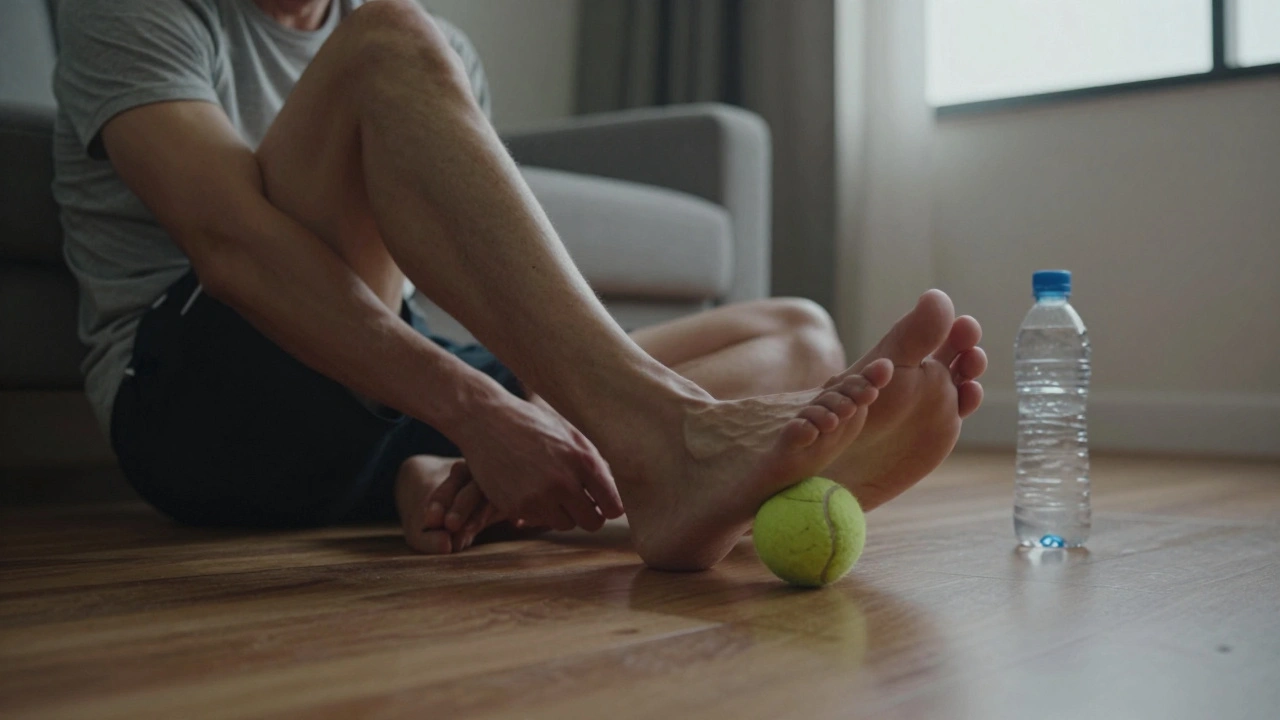
Ever finish a long run and feel like your feet are made of concrete? Or notice your legs are stiff even after a good night’s sleep? If you’re an athlete-whether you run marathons, play soccer, or lift weights-you know your feet carry the weight of everything you do. And yet, most of you skip the one thing that could help you recover faster, train harder, and stay injury-free: foot massage.
It’s not just about feeling good. Foot massage for athletes isn’t a luxury. It’s a tool. A simple, low-cost, science-backed way to speed up recovery, reduce muscle tightness, and even improve your stride. You don’t need expensive gear or a fancy clinic. Just your hands, a tennis ball, and 10 minutes a day can make a difference.
Why Your Feet Are Your Secret Weapon
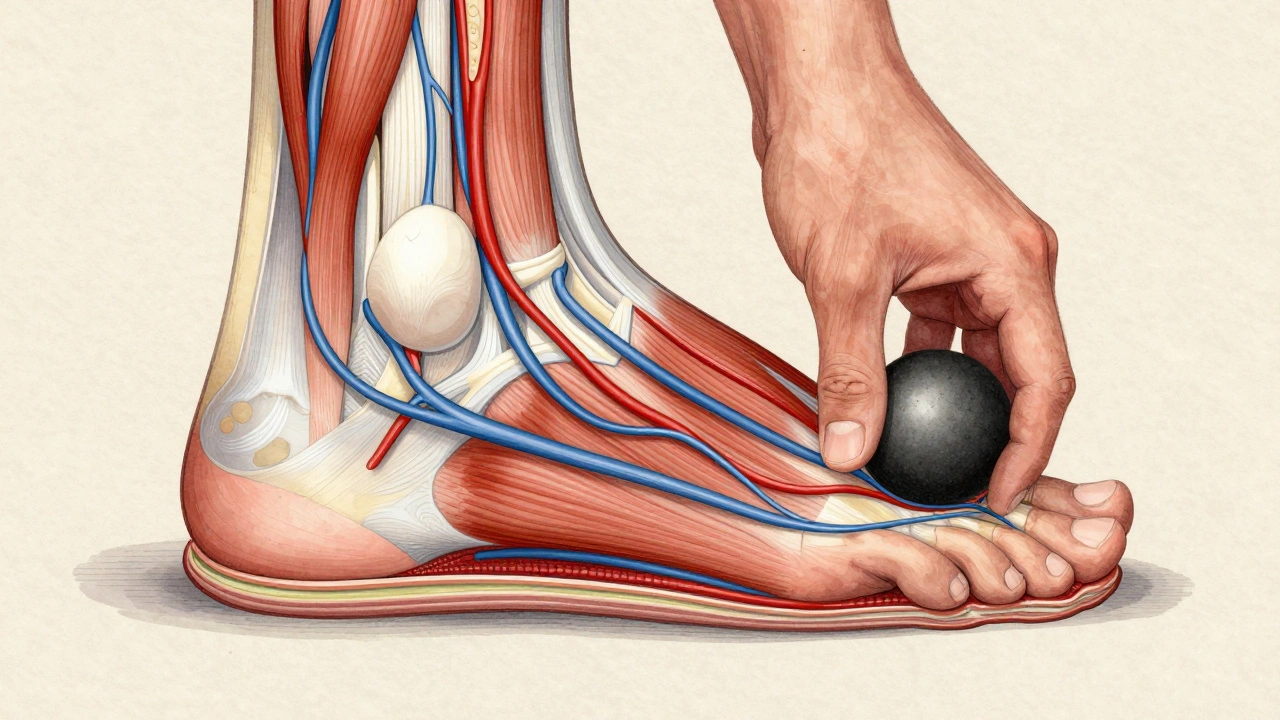
Your feet have over 100 muscles, 26 bones, and more than 7,000 nerve endings. That’s more nerve density than your fingertips. Every step you take, every jump, every sprint-your feet absorb the impact. Over time, that builds up tension, scar tissue, and inflammation. And if you don’t address it, that tension travels up your calves, hamstrings, and even your lower back.
Think of your feet like the foundation of a house. If the foundation cracks or shifts, the whole structure suffers. For athletes, tight or inflamed feet mean reduced power, altered gait, and higher injury risk. A 2023 study in the Journal of Athletic Training found that runners who did daily foot self-massage for four weeks improved their stride efficiency by 12% and reported 30% less calf tightness.
Foot massage doesn’t just relax-it resets. It helps break up adhesions in the plantar fascia, improves blood flow to tired muscles, and calms the nervous system. That means faster recovery between workouts and less downtime from nagging aches.
How Foot Massage Helps Athletes Recover Faster
Let’s break down what actually happens when you massage your feet after a hard session:
- Increases circulation: Blood carries oxygen and nutrients to repair muscle tissue. Massage squeezes out stagnant fluid and pulls fresh blood in. One study showed a 20% increase in foot blood flow after just 15 minutes of targeted massage.
- Reduces muscle soreness: Lactic acid isn’t the main culprit behind DOMS (delayed onset muscle soreness), but inflammation and micro-tears are. Massage helps flush out inflammatory markers and reduces swelling.
- Breaks down scar tissue: Repeated stress causes tiny tears in fascia. Over time, these heal as stiff bands. Massage keeps tissue flexible and prevents those bands from locking up your movement.
- Improves proprioception: That’s your body’s sense of where your feet are in space. Better feedback means better balance, quicker direction changes, and fewer ankle rolls.
- Calms the nervous system: After intense training, your body stays in fight-or-flight mode. Foot massage activates the parasympathetic nervous system-the part that says, “It’s safe to relax now.”
One marathoner from Utrecht told me she started rolling her feet with a frozen water bottle after every long run. Within two weeks, her plantar fasciitis pain vanished. She didn’t change her shoes, her mileage, or her diet. Just added five minutes of foot work. That’s the power of consistency.
Types of Foot Massage for Athletes
Not all foot massages are the same. Depending on your goals, you’ll want different approaches:
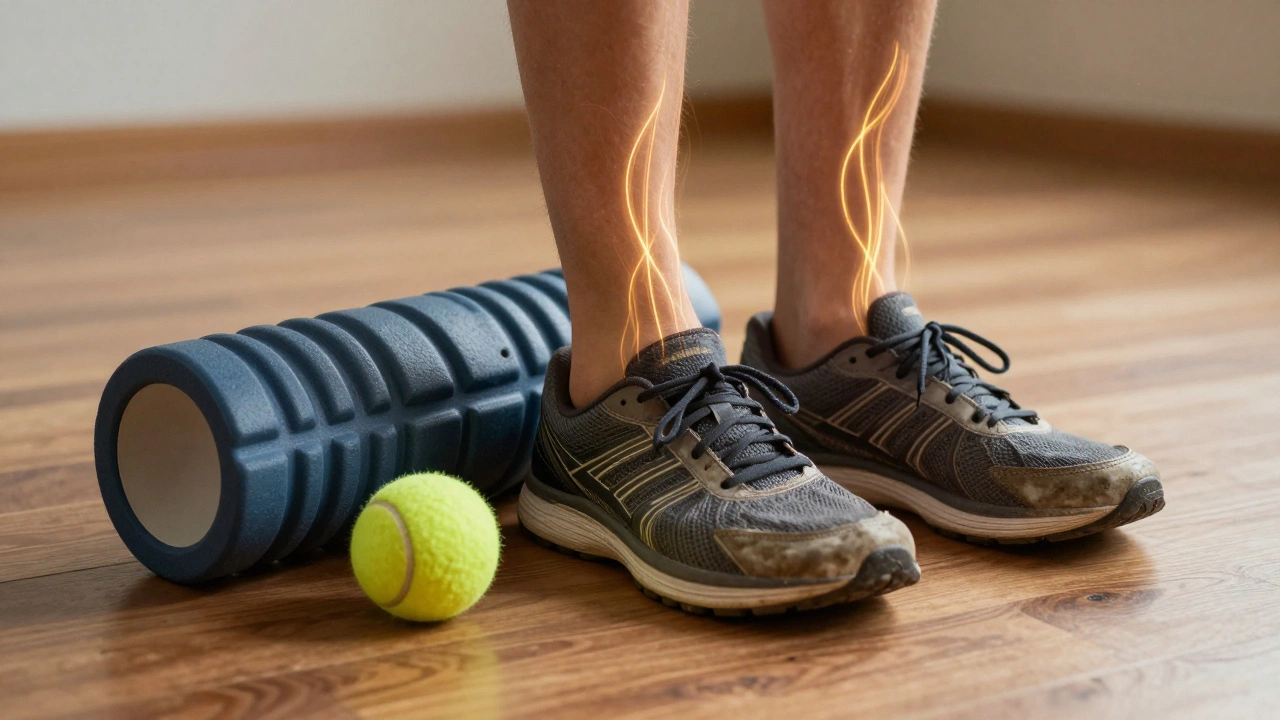
- Self-massage with tools: Perfect for daily use. Use a lacrosse ball, tennis ball, or foam roller. Roll under the arch, heel, and ball of the foot for 2-3 minutes per foot. Cold rolling (with a frozen water bottle) reduces inflammation after hard workouts.
- Myofascial release: Focuses on releasing tight bands in the plantar fascia and calf. Use your thumbs to press and hold tender spots for 20-30 seconds. Don’t push through pain-find the edge of discomfort and breathe into it.
- Reflexology: Based on the idea that specific points on the foot connect to organs and muscles. While the science is debated, many athletes swear by it for reducing fatigue. It’s relaxing, low-risk, and can help with sleep.
- Deep tissue massage: Best done by a professional. Targets deeper layers of muscle and connective tissue. Ideal for athletes with chronic tightness or recurring injuries like Achilles tendinitis.
- Thai foot massage: Combines acupressure, stretching, and compression. Often done on a mat with oils. Great for improving flexibility and circulation. Popular in Amsterdam spas for runners and cyclists.
If you’re just starting out, stick with self-massage. It’s free, fast, and you can do it in your living room after dinner.
How to Do a Simple Foot Massage at Home
You don’t need a degree to give yourself a recovery-boosting foot massage. Here’s a 5-minute routine you can do every day:
- Warm up: Soak your feet in warm water for 5 minutes. Add Epsom salts if you have them. This softens tissues and increases blood flow.
- Roll the arch: Sit on a chair. Place a tennis ball under the arch of your right foot. Apply gentle pressure and roll forward and back for 1 minute. Focus on any tender spots-hold for 10 seconds there.
- Press the heel: Use your thumb to press into the center of your heel. Hold for 15 seconds, then release. Repeat 3 times.
- Stretch the toes: Gently pull each toe one at a time, holding for 10 seconds. This releases tension in the small muscles that control balance.
- Massage the ball of the foot: Use your knuckles to press and circle around the area under your big toe. This helps with push-off power during running.
- Repeat on the other foot.
Do this after training, before bed, or even while watching TV. It takes less time than scrolling through your phone.
What to Expect During a Professional Foot Massage Session
If you decide to try a professional session-say, at a sports therapy clinic in Amsterdam-you’ll typically get this:
- A brief chat about your training, injuries, and goals.
- Warm oil or lotion applied to reduce friction.
- Therapist uses thumbs, knuckles, and sometimes tools to apply pressure to key areas: arch, heel, toes, Achilles tendon.
- Stretching of the foot and ankle to improve range of motion.
- Optional: Cold therapy or compression boots after the session to reduce swelling.
Most sessions last 30-45 minutes. You shouldn’t feel pain-just deep pressure that feels “good sore.” Afterward, you might feel slightly lightheaded or extra relaxed. That’s normal. Drink water. Avoid intense training for the next 12 hours.
Foot Massage vs. Compression Boots: What Works Better?
Many athletes use compression boots after races. But how do they stack up against massage?
| Feature | Foot Massage | Compression Boots |
|---|---|---|
| Cost | $0-$80 per session (or free with self-massage) | $500-$2,000 for home unit |
| Time Required | 5-45 minutes | 20-45 minutes per session |
| Targets Tension | Yes-breaks up knots and scar tissue | No-only moves fluid |
| Improves Flexibility | Yes-stretches fascia and tendons | No |
| Boosts Nervous System Recovery | Yes-calms stress response | Mildly |
| Best For | Preventive care, daily recovery, injury rehab | Post-race swelling, travel recovery |
Compression boots are great for reducing swelling after a 100-mile ultramarathon. But if you’re dealing with tight arches, stiff toes, or recurring plantar fasciitis, massage wins every time. Use both if you can-but massage should be your daily habit.
When to Avoid Foot Massage
Foot massage is safe for most athletes-but not everyone. Skip it if you have:
- Open wounds, cuts, or infections on your feet
- Deep vein thrombosis (DVT) or blood clots
- Severe diabetes with neuropathy (check with your doctor first)
- Recent foot surgery (wait at least 6 weeks)
- Acute inflammation from gout or arthritis flare-ups
If you’re unsure, ask a physical therapist. A good one will know when massage helps-and when it could make things worse.
How to Find Quality Foot Massage Services in Amsterdam
Amsterdam has plenty of options, but not all are created equal. Here’s how to find the right one:
- Look for therapists with sports massage certification-check for credentials like ISM (International Sports Massage) or ASMI.
- Ask if they’ve worked with runners, cyclists, or team athletes. Experience matters.
- Visit clinics near sports hubs: near the Amstel River, in De Pijp, or around the Olympic Training Center.
- Read reviews on Google or Trustpilot. Look for mentions of “recovery,” “injury help,” or “athletes.”
- Book a 30-minute session first. Don’t commit to a package until you know their style.
Some popular spots in Amsterdam that specialize in athlete recovery include Recover Lab in Oud-Zuid and Active Therapy Amsterdam near Vondelpark. Both offer foot-specific protocols and work with local running clubs.
Foot Massage Pricing in Amsterdam (2025)
Here’s what you’ll typically pay:
- 30-minute foot-only session: €40-€60
- 45-minute foot + calf massage: €65-€85
- 60-minute full-body sports massage (includes feet): €90-€120
- Package of 5 sessions: 10-15% discount (so €200-€300 total)
Many clinics offer first-time discounts. Ask about student or athlete rates. Some running clubs have partnerships with local therapists-check your club’s website.
FAQ: Your Questions About Foot Massage for Athletes
Can foot massage prevent injuries?
Yes, if done consistently. Tight feet lead to altered biomechanics, which puts extra stress on knees, hips, and lower back. Regular massage keeps tissue flexible and reduces the risk of plantar fasciitis, shin splints, and Achilles tendinitis. Athletes who massage their feet 3-4 times a week report 40% fewer overuse injuries over a 6-month period.
How often should athletes get a foot massage?
Daily self-massage is ideal, especially on hard training days. For professional or high-volume athletes, 1-2 professional sessions per week help. Weekend warriors can do 2-3 sessions a week. The key is consistency-not intensity.
Is it normal to feel sore after a foot massage?
Mild soreness for 24 hours is normal, especially if it’s your first time or you’ve had tight tissue. It’s like muscle soreness after a workout. But sharp pain, swelling, or bruising isn’t. Tell your therapist if you feel this-it means too much pressure was used.
Can I use a foot massager machine instead of hand massage?
Machine massagers are okay for relaxation, but they can’t replace hands-on work. They don’t adapt to your unique tension points or apply targeted pressure where you need it most. Think of them like a car wash-good for surface dirt, but not for detailing. For recovery, manual massage is superior.
Do I need special oils or lotions for foot massage?
Not really. Water-based lotion or even coconut oil works fine. Avoid heavy oils like mineral oil-they clog pores and don’t absorb well. Some athletes use a drop of peppermint oil for a cooling effect, but test it first-it can irritate sensitive skin.
Start Today-Your Feet Will Thank You
You don’t need a $1,000 recovery system. You don’t need to wait until you’re injured. You just need 10 minutes a day and the willingness to listen to your body.
Grab a tennis ball tonight. Roll your feet while you scroll through your phone. Do it before bed. Do it after your shower. Make it part of your routine-like brushing your teeth.
Because the truth is, your feet carry you. They deserve more than a quick stretch before a run. They deserve care. And when you care for them, everything else-your speed, your endurance, your joy in movement-gets better too.
Erin Martin
December 17, 2025 AT 00:08While I appreciate the scientific grounding in this piece, I find myself wondering how widely accessible these practices are across different socioeconomic groups. The emphasis on self-massage with household items is encouraging, but not everyone has the physical ability, space, or time to incorporate such routines into their daily lives-especially those working multiple jobs or caring for dependents. A more inclusive approach might acknowledge systemic barriers alongside personal habits.
Kirsty Edwards
December 17, 2025 AT 12:13Okay, but… have you seen the price of a decent tennis ball these days? 😅 Also, I tried rolling my foot with a frozen water bottle after a 10-mile run… and ended up on the floor screaming because my arch felt like it was being stabbed by a tiny ice pick. I’m not saying it doesn’t work-I’m saying I’m not the target audience. Also, why is everyone in Amsterdam? Is this a Dutch propaganda piece? 🤔
Kerri Tarrant
December 19, 2025 AT 02:00This is actually really well-researched and clearly written. The breakdown of mechanisms-circulation, proprioception, nervous system modulation-is spot-on. I especially liked the distinction between compression boots and manual massage. One thing I’d add: consistency matters more than duration. Even two minutes a day, done daily, is better than 20 minutes once a week. And yes, coconut oil works fine-just warm it in your hands first. No need to overcomplicate it.
Jamie Baker
December 20, 2025 AT 15:11Of course the government wants you to massage your feet. It’s cheaper than real healthcare. Next they’ll tell you to stretch your spine with a broomstick and call it physical therapy. Meanwhile, the real injuries come from overtraining, poor footwear, and corporate-run sports medicine pushing expensive gadgets. This whole thing smells like a marketing ploy disguised as wellness. Buy a ball. Save your money. And stop letting corporations tell you how to heal.
Mary Chambers
December 21, 2025 AT 02:44i tried the tennis ball thing last night and holy moly it felt so good i cried a little. like, not sad crying, but like ‘ohhhhh my body has been holding onto this for years’ crying. i used to run track in high school and never thought about my feet at all. now i do it every night before bed. my ankles dont crack as much. also, i used a golf ball by accident and it was too intense lol. stick to tennis ball. you’re welcome, future me.