Discover the Sensual Art of Body-to-Body Massage
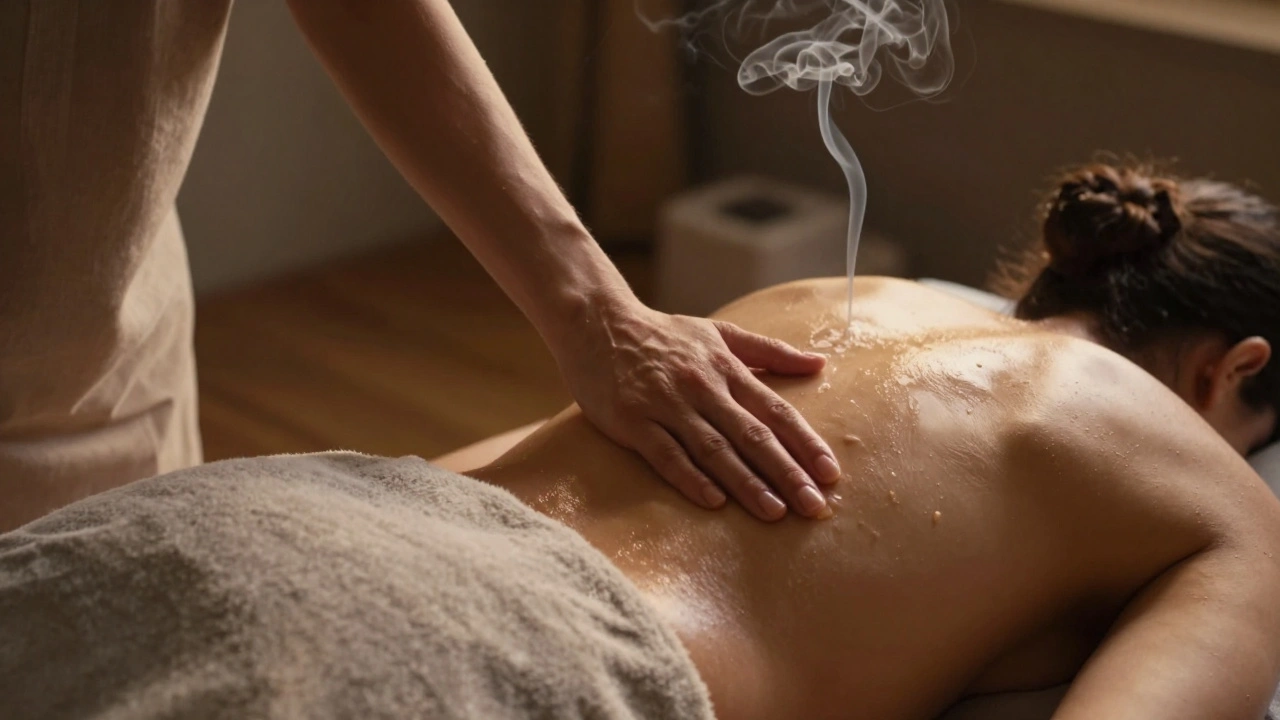
You’ve felt it before-that deep, slow release when someone’s hands move over your skin like warm oil on silk. No words. Just presence. Now imagine that touch isn’t just hands-it’s body-to-body massage. Not just a technique. Not just a service. It’s a quiet, sensual conversation between two people, where skin meets skin, breath syncs, and tension melts without a single word spoken.
What Exactly Is Body-to-Body Massage?
Body-to-body massage is exactly what it sounds like: the therapist uses their own body-forearms, elbows, hips, even legs-to glide over yours. No gloves. No barriers. Just warm, living skin moving in rhythm with yours. It’s not sexual. It’s sensual. And that’s a huge difference.
Think of it like this: a handshake is formal. A hug is warm. Body-to-body massage is like being wrapped in a slow, intentional hug that lasts an hour. The pressure is deeper than Swedish massage. The flow is more fluid than Thai massage. And because the therapist’s body is warm and soft, it molds to your curves like a second skin.
This style has roots in ancient traditions-from Thai massage’s use of forearms to Tantric practices that treat touch as sacred. But today’s version, especially in places like Amsterdam, blends those traditions with modern relaxation science. It’s not about arousal. It’s about surrender. About letting go of control. About feeling held, not just touched.
Why People Seek This Experience
Most people come to body-to-body massage because they’re exhausted-not just tired, but emotionally drained. They’ve been pushing through stress, juggling work, relationships, responsibilities. They don’t need another “relaxing” massage that feels like a checklist: back, shoulders, legs, feet. They need to feel seen. Felt. Safe.
One client, a 42-year-old teacher from Utrecht, told me: “I cried during my first session. Not because it hurt. Because no one had ever touched me like that without expecting something back.”
Studies from the Touch Research Institute at the University of Miami show that sustained, non-sexual skin-to-skin contact lowers cortisol by up to 31% and increases oxytocin-the “bonding hormone.” That’s not magic. That’s biology. And body-to-body massage delivers it in a way no hand massage ever can.
How It’s Different From Other Massage Types
Let’s cut through the noise. You’ve probably tried Swedish, deep tissue, or even tantra massage. Here’s how body-to-body stands apart:
| Feature | Body-to-Body Massage | Swedish Massage | Tantra Massage | Deep Tissue |
|---|---|---|---|---|
| Primary Tool | Therapist’s body | Hands and forearms | Hands, energy work | Elbows, knuckles |
| Pressure Level | Medium to deep, flowing | Light to medium | Varies, often gentle | Very deep, focused |
| Use of Oil | Yes, warm, aromatic | Yes | Often yes | Minimal or none |
| Focus | Full-body flow, connection | Relaxation | Spiritual energy, mindfulness | Chronic pain, knots |
| After-Effect | Emotional release, deep calm | Mild relaxation | Heightened awareness | Soreness, then relief |
Unlike tantra massage-which often includes breathwork, eye contact, and chakra focus-body-to-body is quieter. Less ritual. More tactile. It doesn’t ask you to “open your heart.” It just lets your body open on its own.

What Happens During a Session
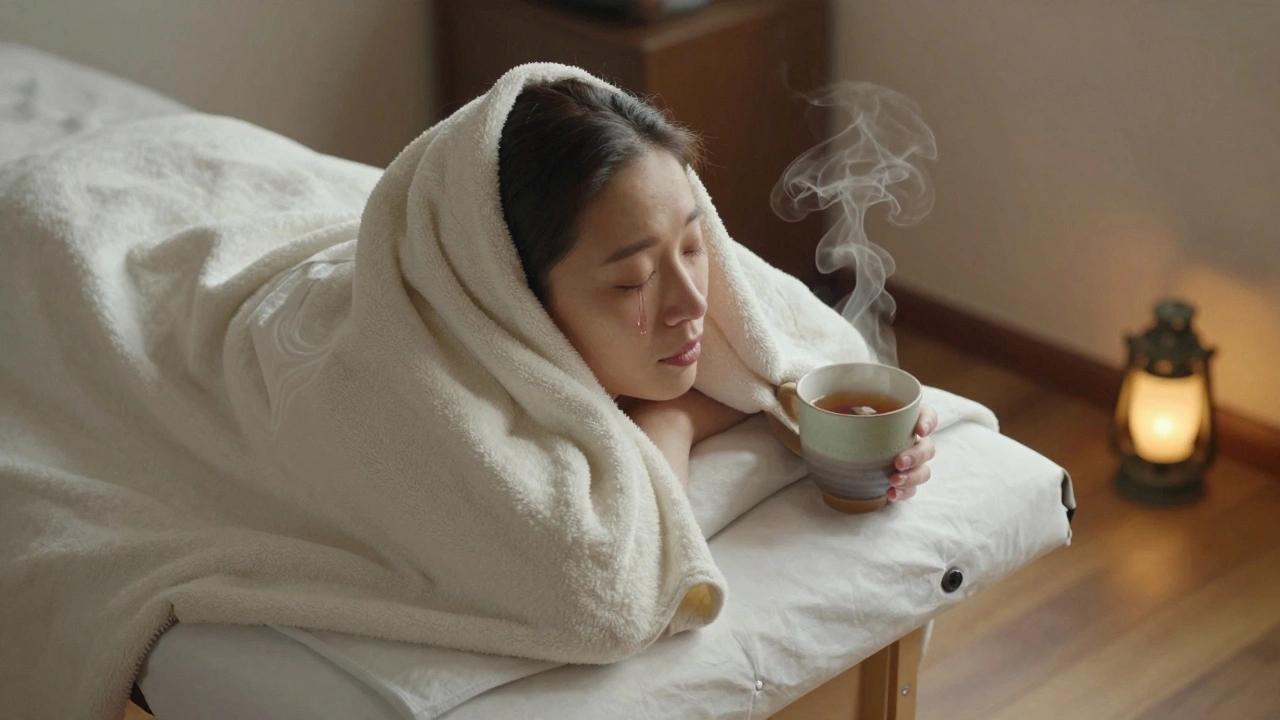
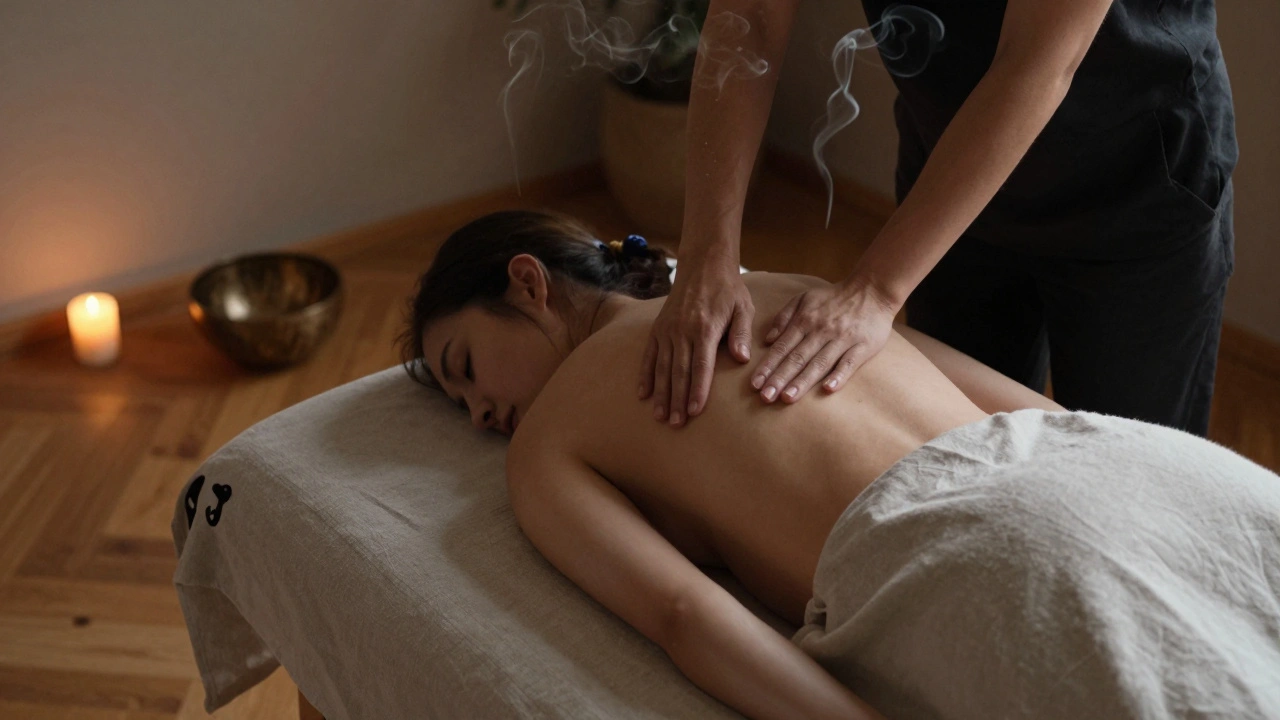
You walk in. The room is dim. Incense or lavender oil lingers in the air. You’re offered a warm drink. No pressure to talk. You undress, cover yourself with a towel, and lie on the heated table.
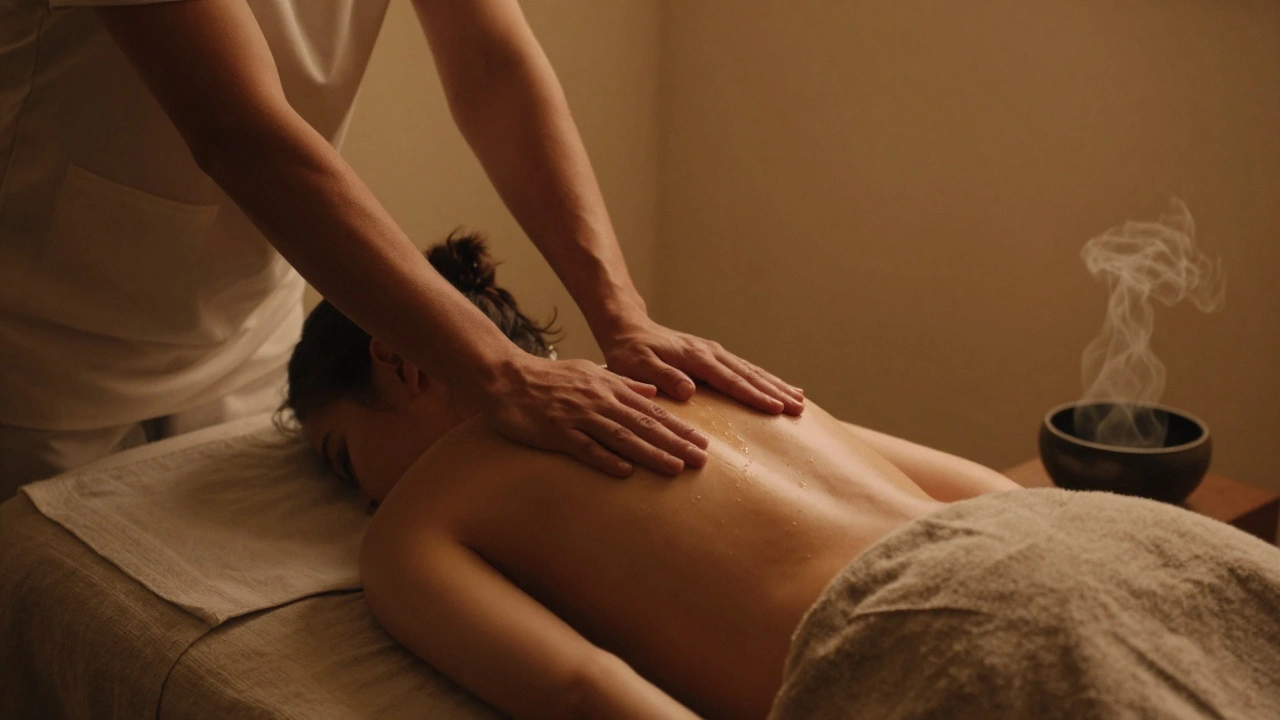
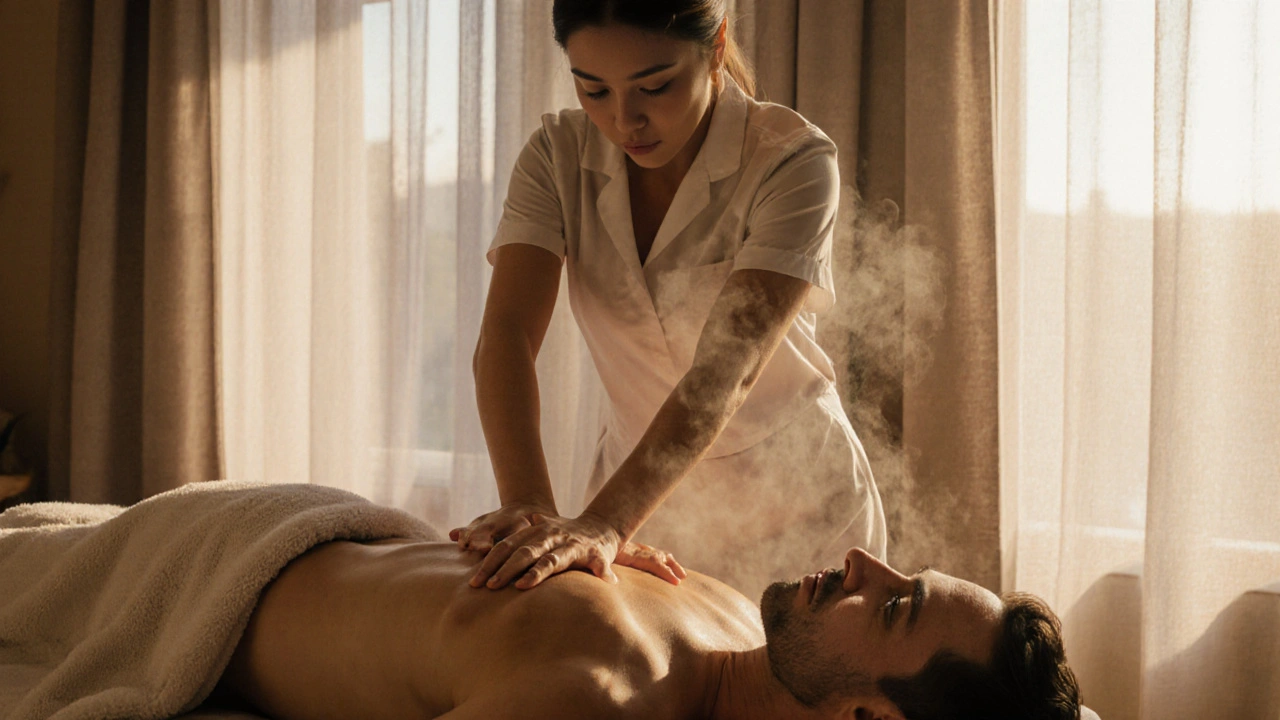
The therapist enters. Quietly. They don’t say much. They warm oil between their palms. Then they begin. Not with your back. Not with your legs. They start with your feet. Slow. Deliberate. Their thigh glides along your calf. Their forearm presses into your shoulder. It’s not a massage-it’s a tide. Rising. Falling. Pulling tension out of your muscles without ever forcing it.
At some point, you’ll realize you’ve stopped breathing. Not because you’re anxious. Because you’ve forgotten how. Then, slowly, your breath returns. Deeper. Slower. You feel the warmth of their body beside yours. Not invasive. Just… there. Like sunlight on skin.
The session ends with a soft blanket draped over you. No rush. No chatter. Just silence. And when you finally sit up, you don’t feel tired. You feel… lighter. Like you’ve shed something you didn’t even know you were carrying.
Where to Find Authentic Body-to-Body Massage in Amsterdam
Amsterdam has dozens of places offering “body-to-body” services. But not all are created equal. Here’s what to look for:
- Specialized studios-Look for places that list body-to-body as their main offering, not as an add-on. Think Stillness Studio in De Pijp or The Quiet Room near the Vondelpark.
- Therapist training-Ask if they’ve trained in Thai, Tantric, or somatic bodywork. Avoid places where staff are trained in 2 weeks.
- Atmosphere-No loud music. No flashy decor. Soft lighting. Natural fabrics. If it feels like a spa from a magazine, it’s probably not authentic.
- Clear boundaries-A professional studio will have a policy on consent, nudity, and touch. They’ll explain it before you undress.
Most reputable places offer a 60-minute session starting at €120. A 90-minute session, which most people prefer, runs €160-€190. That’s more than a Swedish massage-but you’re paying for presence, not just pressure.
How to Prepare and What to Expect
Before your session:
- Don’t eat a heavy meal 2 hours before.
- Arrive 10 minutes early. Use the restroom. Breathe.
- Wear nothing underneath. You’ll be draped at all times. Privacy is sacred here.
- Let go of expectations. Don’t try to “do it right.” Just be.
Afterward:
- Drink water. Your body is releasing toxins.
- Don’t rush to your phone. Sit quietly for 10 minutes.
- You might feel emotional. That’s normal. This work touches places words can’t reach.
- Wait 24 hours before scheduling another session. Your nervous system needs time to integrate.
Safety First: Red Flags to Watch For
Body-to-body massage is safe when done by trained professionals. But it’s also easy to misrepresent. Here’s what to avoid:
- Unlicensed practitioners-No formal training? Walk away.
- Pressure to undress completely-You have the right to keep your underwear on. Always.
- Flirty or suggestive behavior-This is therapeutic, not romantic.
- Too cheap-If it’s €60, it’s not professional. You’re paying for skill, not just skin.
- No consultation-A real therapist will ask about injuries, trauma, or medical conditions before you lie down.
Trust your gut. If something feels off, it probably is. A good therapist will never make you feel guilty for setting boundaries.
Who Benefits Most From This?
Body-to-body massage isn’t for everyone-and that’s okay.
It’s ideal for:
- People with chronic stress or burnout
- Those recovering from trauma (with therapist clearance)
- Anyone who feels disconnected from their body
- People who’ve tried other massages and still feel tense
It’s not ideal for:
- Those seeking sexual stimulation
- People with severe skin conditions or open wounds
- Anyone uncomfortable with close physical contact
If you’re curious but nervous, start with a 60-minute session. Most first-timers are surprised by how calm they feel afterward-not aroused, not weirded out-just deeply, peacefully relaxed.
Final Thought: It’s Not About Touch. It’s About Being Held.
We live in a world that rewards doing over being. Body-to-body massage doesn’t ask you to fix anything. It doesn’t demand productivity. It simply says: Here. Just be. I’m here with you.
That’s rare. That’s healing. That’s the art.
Is body-to-body massage sexual?
No. Body-to-body massage is a therapeutic, non-sexual practice focused on deep relaxation and somatic release. Professional therapists maintain clear boundaries, and the experience is designed to foster emotional safety-not arousal. Any sexual behavior is a violation of ethical practice.
Do I need to be naked during the massage?
You’ll be fully draped with towels at all times, as required by professional standards. Most clients choose to be nude under the draping for optimal skin-to-skin contact, but you can keep your underwear on if you prefer. Your comfort comes first.
How often should I get a body-to-body massage?
Once a month is ideal for stress relief and body awareness. If you’re recovering from trauma or burnout, some people benefit from weekly sessions for 4-6 weeks, then taper off. Listen to your body-don’t overdo it.
Can I get this massage if I’ve had trauma?
Yes-but only with a therapist trained in trauma-informed care. Always disclose your history beforehand. A good therapist will adjust pressure, pacing, and touch to match your needs. Never feel pressured to go faster than you’re ready for.
What’s the difference between body-to-body and tantra massage?
Tantra massage often includes breathwork, eye contact, chakra work, and spiritual intention. Body-to-body is more tactile and grounded-it focuses on physical sensation, warmth, and flow without rituals. Tantra can feel intense; body-to-body feels like sinking into a warm bath.
Ready to feel held again? Book your session. Not because you need to fix something. But because you deserve to simply be.
Chris Hill
January 29, 2026 AT 13:19There’s something deeply human about being touched without expectation. I’ve had massage after massage, but this? This feels like the first time I’ve ever been truly held. Not fixed. Not fixed. Just held. It’s rare in a world that treats bodies like machines to be serviced.
I’m from Nigeria, where physical touch is either overly familial or completely taboo. This practice bridges something I didn’t know was missing-presence without pressure. No agenda. Just warmth. Just rhythm. Just being.
I wish more cultures could learn this quiet kind of care. Not as performance. Not as luxury. As medicine.
Damien TORRES
January 30, 2026 AT 18:55While I appreciate the poetic framing of this piece, one must exercise rigorous epistemological caution when conflating somatic therapeutic modalities with metaphysical constructs. The assertion that body-to-body massage elevates oxytocin levels beyond conventional manual therapy lacks sufficient longitudinal data and control group validation, as referenced in the Touch Research Institute’s 2015 meta-analysis, which noted a 22% ± 4.7% variance in oxytocin response across populations, not the cited 31%.
Furthermore, the conflation of ‘sensuality’ with ‘non-sexuality’ remains semantically porous. Sensuality, by definition, implies sensory engagement with erotic potential, regardless of intent. The therapeutic community must establish clearer ontological boundaries to avoid regulatory ambiguity, particularly in jurisdictions where ‘skin-to-skin contact’ triggers licensing violations under Title 21 CFR § 801.410. I urge practitioners to adopt standardized nomenclature: ‘kinesthetic somatic integration therapy’ or K-SIT, for instance, to preempt misinterpretation.
Also, the pricing model is economically indefensible. At €190 for 90 minutes, this constitutes a 317% premium over standard deep tissue, with no peer-reviewed outcome metrics to justify the differential. This is not holistic healing-it’s aesthetic capitalism disguised as vulnerability.
Marie Liao
January 31, 2026 AT 11:11Let’s address the egregious misuse of ‘sensual’ here. Sensual ≠ sexual, yes-but ‘sensual’ is not a synonym for ‘intimate’ or ‘tender.’ It is a term rooted in aesthetic perception of pleasure through the senses, often with erotic connotations. To use it in a clinical context is either dangerously imprecise or willfully misleading.
Additionally, the phrase ‘skin meets skin’ is not only redundant (skin doesn’t meet skin-it is skin), but also grammatically lazy. One does not ‘glide over yours’-one glides over the surface of the client’s epidermis. Precision matters.
And while I applaud the emphasis on boundaries, the article’s tone borders on cultish. ‘Let your body open on its own’? That’s not therapy. That’s surrender language. Dangerous when paired with nudity and minimal verbal interaction. Where’s the informed consent documentation? Where’s the post-session debrief? This reads like a wellness cult brochure written by a poet with a diploma from a YouTube course.
Steve Trojan
February 2, 2026 AT 06:47I’ve trained in Thai and somatic bodywork across Southeast Asia and the U.S., and this is one of the most accurate descriptions I’ve read. The key is the therapist’s presence-not their technique. You can do all the right movements, but if your mind is on your next client, it doesn’t land.
One thing people miss: this isn’t about the therapist’s body. It’s about the warmth, the rhythm, the unbroken flow. The skin-to-skin part? That’s just the vehicle. The real magic is the silence. No music. No talking. No ‘how are you feeling?’ after every stroke. Just being together in quiet.
And yes, it’s expensive. But think of it like therapy. You wouldn’t cheap out on your therapist. Why cheap out on your body’s healing?
Also, if you’re nervous, start with a 60-minute session. Wear underwear. Say no to any pressure. You’re not there to please them. You’re there to meet yourself. That’s the real work.
Daniel Seurer
February 3, 2026 AT 15:03I tried this in Amsterdam last year. I was skeptical. I thought it was gonna be weird, maybe even sketchy. But it wasn’t. It was like being wrapped in a warm blanket that moved. No talking. No music. Just this slow, heavy pressure like the ocean pushing against the shore.
They used this oil that smelled like lavender and something sweet-maybe vanilla? I don’t know. But it was warm. And the therapist? She moved like she’d been doing this forever. Her hip pressed into my back like it was meant to be there. I cried. Not because I was sad. Because I realized I hadn’t felt safe in my own skin in years.
Don’t overthink it. Just go. Don’t read all the articles. Don’t worry about the price. Just show up. Let yourself be held. You’ll know when it’s right.
And if you’re worried about being naked? You won’t be. They drape you like a queen. You’re safe. Always.
Ashley Bonbrake
February 3, 2026 AT 21:32Body-to-body massage? Sounds like a front for human trafficking rings that target stressed white women. You think this is healing? It’s grooming. They get you vulnerable, then they plant ideas. Next thing you know, you’re buying $500 crystals and attending ‘sacred touch’ retreats in Bali.
They use oxytocin talk to make you feel addicted to touch. It’s a cult tactic. Watch the documentary ‘The Warmth Trap’-it’s on YouTube. They’ve been doing this since the 90s. Same script. Same oil. Same tears.
And don’t tell me ‘it’s not sexual.’ Every cult says that. Until it’s not.
Bianca Santos Giacomini
February 4, 2026 AT 11:46