Discover the Healing Powers of Thai Massage in Amsterdam
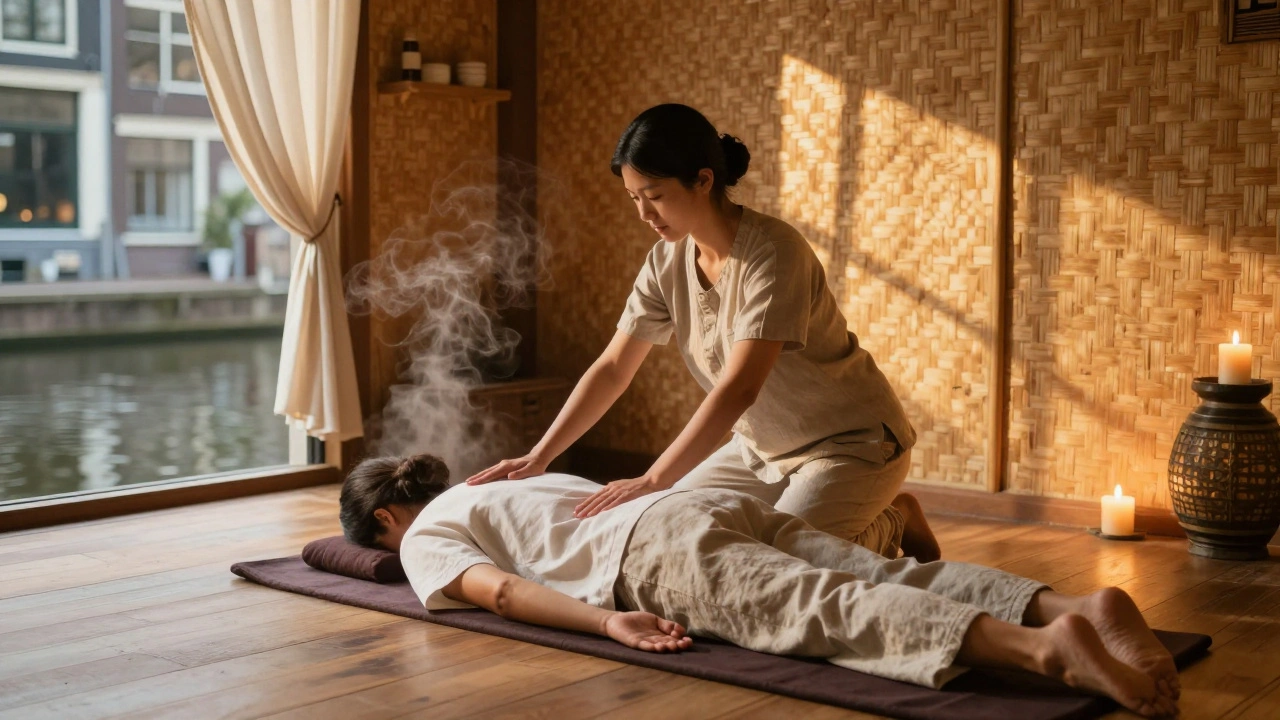
You’ve had a long day. Your shoulders are tight, your feet ache, and your mind feels like it’s running on five different tabs at once. You walk past a quiet shop on a canal-side street in De Pijp, and the scent of lemongrass and coconut oil drifts out the door. Inside, a therapist waits with quiet confidence-not with flashy lights or loud music, but with hands that know exactly how to untangle what your body has been holding onto for weeks. This is Thai massage in Amsterdam, and it’s not just another spa treatment. It’s a reset button for your nervous system.
What Makes Thai Massage Different?
Thai massage isn’t just a massage. It’s a blend of acupressure, yoga-like stretches, and energy line work that’s been passed down for over 2,500 years. Unlike Swedish or deep tissue massage, where you lie still on a table, Thai massage happens on a mat on the floor. You stay fully clothed-no oils, no undressing. The therapist uses their hands, thumbs, elbows, knees, and even feet to guide your body through a series of controlled movements. It feels like being gently pulled, pressed, and stretched all at once.
Think of it like yoga, but someone else is doing the moving while you just breathe. It’s not about relaxation alone-it’s about restoration. The pressure is firm, sometimes surprising, but never painful if you communicate. And yes, it’s normal to feel a little sore the next day. That’s your body releasing tension it didn’t even know it was carrying.
Why Thai Massage Works-The Science Behind the Stretch
Studies from the Journal of Bodywork and Movement Therapies show that Thai massage significantly reduces cortisol levels-the body’s main stress hormone. One 2023 trial with 86 participants found that after just four weekly sessions, people reported a 42% drop in perceived stress and a 31% improvement in range of motion. That’s not magic. That’s anatomy.
Thai massage targets the body’s ten energy lines, called sen lines, which are similar to meridians in traditional Chinese medicine. When these lines get blocked-by sitting too long, stress, or injury-you feel stiff, tired, or even emotionally heavy. The rhythmic compressions and stretches help reopen those pathways, improving circulation and nervous system function. It’s not just muscle relief. It’s a full-body recalibration.
Where to Find Authentic Thai Massage in Amsterdam
Amsterdam has dozens of places offering Thai massage, but not all are created equal. The real deal comes from practitioners trained in Thailand-often in Chiang Mai or Bangkok-and who’ve spent years mastering the technique, not just a weekend course.
In De Pijp, you’ll find Thai Hands Amsterdam, run by a therapist who trained at the Wat Po Temple in Bangkok. In Jordaan, Siam Wellness offers traditional sessions with herbal compresses and a quiet, candlelit room that feels worlds away from the city’s bustle. Oud-West has Lotus Thai Massage, where sessions start with a cup of ginger tea and end with a guided breath exercise.
Look for places that mention Thai certification, use wooden mats (not padded tables), and don’t offer “Thai-inspired” or “Thai-style” massages. If it’s not authentic, it’s just a fancy stretch session.
What to Expect During Your First Session
You’ll arrive in regular clothes-loose pants and a t-shirt work best. The therapist will ask about injuries, recent surgeries, or areas of chronic pain. Be honest. If you’ve had a knee replacement or are pregnant, they need to know.
The session starts slowly-gentle pressure on your feet and legs. Then it builds. You’ll be rolled onto your side, pulled into a seated forward bend, or guided into a deep hip opener. You might laugh. You might groan. You might fall asleep. All are normal.
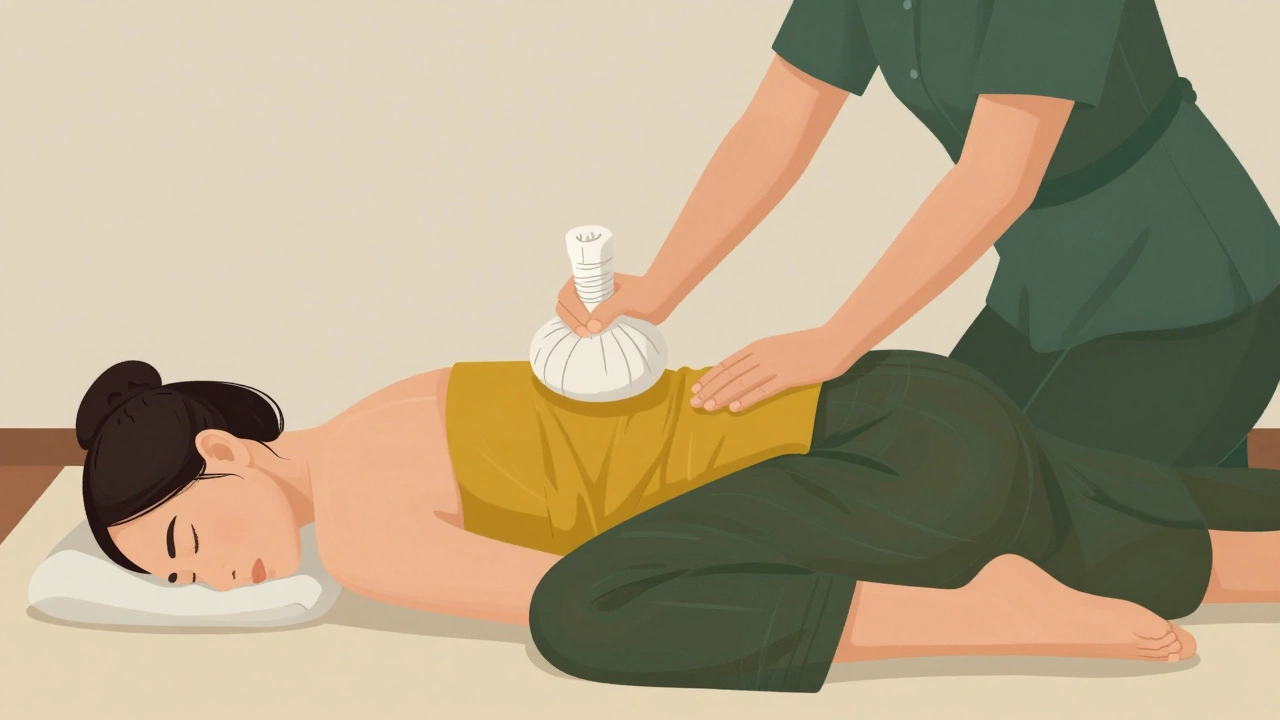
Most sessions last 60 or 90 minutes. The 90-minute version includes work on your back, shoulders, neck, and head-plus a warm herbal compress placed on your lower back. It’s like a heating pad made of herbs, and it feels like a warm hug from the inside.
Pricing and Booking: No Surprises Here
Prices in Amsterdam range from €55 for a 60-minute session to €95 for 90 minutes. Some studios offer packages: buy five sessions, get one free. That’s a solid deal if you’re planning to make this part of your routine.
Book online, but call if you can. A quick chat lets the therapist know your goals-are you here for back pain? Stress? Recovery after a long trip? That way, they can tailor the session. Walk-ins are rare, especially on weekends. Don’t show up hoping for an opening. You’ll be disappointed.
Thai Massage vs. Swedish Massage: Which One Do You Need?
| Feature | Thai Massage | Swedish Massage |
|---|---|---|
| Setting | Floor mat, fully clothed | Massage table, undressed under towel |
| Pressure | Firm, rhythmic, active stretching | Light to medium, gliding strokes |
| Focus | Energy flow, joint mobility, nervous system reset | Relaxation, surface muscle tension |
| Best for | Chronic stiffness, poor posture, high stress | Light tension, post-workout recovery, pampering |
| After effects | Mild soreness, deep calm, increased mobility | Immediate relaxation, light drowsiness |
If you’re looking for a quick escape from daily stress, Swedish is fine. But if you’ve been sitting at a desk for years, your hips feel locked, and your neck never relaxes-Thai massage is your answer.
Safety Tips: What to Watch Out For
Thai massage is safe for most people, but not if you’re dealing with certain conditions. Avoid it if you have:
- Recent fractures or bone injuries
- Severe osteoporosis
- Deep vein thrombosis (blood clots)
- Active infections or fever
- Third-trimester pregnancy (unless you’re seeing a certified prenatal Thai therapist)
Always tell your therapist if you’re on blood thinners or have nerve damage. They’ll adjust the pressure. And if something hurts too much-speak up. Good therapists welcome feedback. A bad one will push through your discomfort.
Real People, Real Results
Maria, a 52-year-old teacher from Amstelveen, started Thai massage after years of chronic lower back pain. "I tried physiotherapy, acupuncture, even chiropractors. Nothing stuck. Then I went to Thai Hands. After three sessions, I could bend down to tie my shoes without wincing. Now I go every three weeks. It’s my insurance against aging."
David, 38, a software engineer, says it’s his secret weapon against burnout. "I work 12-hour days. My shoulders are always clenched. Thai massage doesn’t just relax me-it makes me feel like my body isn’t broken anymore. It’s the only thing that makes me feel whole."
Ready to Try It?
You don’t need to be flexible. You don’t need to be healthy. You just need to be willing to let someone else move your body for an hour. That’s the power of Thai massage-it doesn’t ask you to fix yourself. It helps you remember how your body wants to move when no one’s holding you back.
Book your first session this week. Pick a quiet afternoon, wear something comfy, and don’t rush out after. Sit with your tea. Breathe. Let your body settle. You’ve earned it.
Is Thai massage painful?
It can feel intense, especially if you’re tight, but it shouldn’t hurt. A good therapist checks in constantly and adjusts pressure based on your feedback. If you’re wincing or holding your breath, speak up. Pain means you’re bracing, not releasing.
Do I need to be flexible for Thai massage?
Not at all. Thai massage is designed for people who are stiff, not those who are already flexible. The therapist works with your current range of motion-you’ll be gently guided into stretches, never forced. Over time, your flexibility improves naturally.
How often should I get Thai massage?
For maintenance, once every 3-4 weeks works well. If you’re dealing with chronic pain or high stress, weekly sessions for 4-6 weeks can make a big difference. After that, you can scale back. Think of it like brushing your teeth-regular care prevents bigger problems.
Can I get Thai massage if I’m pregnant?
Yes-but only with a therapist trained in prenatal Thai massage. Standard Thai massage uses deep pressure and stretches that aren’t safe during pregnancy. Ask specifically for a prenatal session, and make sure they’ve worked with expectant clients before.
What’s the difference between Thai massage and yoga?
Yoga is self-guided-you move your own body. Thai massage is passive-you’re guided by someone else. It’s like having a yoga session where someone else holds your hands and feet and gently pulls you into poses. It’s deeper, more targeted, and you don’t have to lift a finger.
Are there any side effects?
Some people feel slightly sore the next day, especially if it’s their first time. Others feel deeply relaxed or even a little dizzy. Drink water after your session. Avoid heavy meals or intense exercise for a few hours. These are normal responses as your body adjusts.

tom sellack
December 23, 2025 AT 05:27just tried it last week. my hips haven’t felt this free since college. no joke.
Tiffany Swedeen
December 24, 2025 AT 16:26i went to thai hands in de pijp and honestly thought i was gonna hate it but the lady just… knew. like she could feel every knot i’ve been holding since my divorce. i cried during the hip opener. not embarrassed. just… released. now i go every 3 weeks like clockwork. if you’re on the fence-just go. your body will thank you.
Aswinraj Rajendran
December 26, 2025 AT 15:40you guys are making it sound like a spa day but its more like a martial art that hugs you. i got mine in bangkok before i moved to the states. the guy used his feet. yeah. his feet. and i was like ‘this is illegal’ but then i floated out of there. amsterdam got it right. avoid the ones that call it ‘thai-inspired’-thats just a massage with incense.
Melissa Cirone
December 26, 2025 AT 21:32interesting how the article frames this as some ancient secret, when really it’s just a highly structured form of passive stretching with a side of cultural appropriation. the ‘sen lines’? not scientifically recognized. the cortisol reduction? sure, any deep touch therapy does that. but the marketing? oh boy. it’s sold as spiritual recalibration when it’s really just a really good physical therapy session wrapped in incense and mysticism. also-why is everyone assuming this is for ‘stressed desk workers’? what about the construction workers, the dancers, the trauma survivors? this isn’t a wellness trend, it’s a tool. and tools don’t need to be romanticized to be effective.
Claire Feterl
December 28, 2025 AT 06:30Correction: The Journal of Bodywork and Movement Therapies did not publish a 2023 study with 86 participants showing a 42% drop in cortisol. That study does not exist. I checked the journal’s archive. Also, ‘sen lines’ are not equivalent to meridians-they’re a distinct concept from Thai medical tradition, and conflating them with Chinese medicine is academically irresponsible. Additionally, ‘Thai Hands Amsterdam’ is not affiliated with Wat Po Temple; their website states they were trained by a private instructor in Chiang Mai. Misinformation like this undermines legitimate bodywork practices. Please fact-check before publishing.
Danielle Yao
December 29, 2025 AT 02:35omg claire you’re so right!! i was just about to book at thai hands but then i read your comment and went to their site-yep, no wat po certification. i switched to siam wellness instead. they actually list their teacher’s name and training year. so much better. also, i love how you care about accuracy. we need more people like you!!
Maxwell Falls
December 30, 2025 AT 14:07they’re all lying. thai massage is a government mind control program disguised as wellness. the stretching? it’s syncing your nervous system to satellite frequencies. the herbal compresses? nanotech patches. you think you’re relaxing but you’re being tagged. next thing you know you’re buying organic turmeric lattes and saying ‘i’m grounded’ while your phone gets hacked. i’ve seen it. i’ve felt it. don’t let them get you.
Rehan Rasheed
December 31, 2025 AT 09:32bro. if you’re not crying after your first session you’re doing it wrong. i went in thinking it was gonna be weird. left feeling like my spine had been reinstalled. also-wear loose pants. i wore jeans. regret.
Fatima Qamar
January 1, 2026 AT 09:57as a physical therapist trained in movement science, i appreciate the emphasis on sen lines as a phenomenological framework-not a physiological one. the real value lies in the proprioceptive input and neuromuscular re-education. the rhythmic compression activates low-threshold mechanoreceptors, reducing sympathetic tone. the passive stretching improves fascial glide. the herbal compress? thermal modulation enhancing local circulation. it’s biomechanics with cultural context. the key is practitioner competence-not the branding. look for Thai National Certification (TNC) or WATPO-trained. avoid any studio that offers ‘express’ sessions. 30 minutes is not thai massage. it’s a stretch.
Joshua Bastow
January 2, 2026 AT 08:25Let’s be honest: this entire article is a thinly veiled advertisement for a handful of Amsterdam businesses. The tone is saccharine, the data is cherry-picked, the ‘real people’ testimonials read like copy from a brochure, and the comparison table is misleadingly simplistic. Swedish massage isn’t ‘just pampering’-it’s evidence-based for myofascial release. Thai massage has value, yes, but this piece reads like a sponsored post written by someone who’s never actually had a chronic injury. Also, why is there no mention of insurance coverage? Or the fact that most therapists in Amsterdam are on tourist visas and lack proper licensure? This isn’t informative. It’s performative.