Enhance Your Wellness Routine with Thai Massage
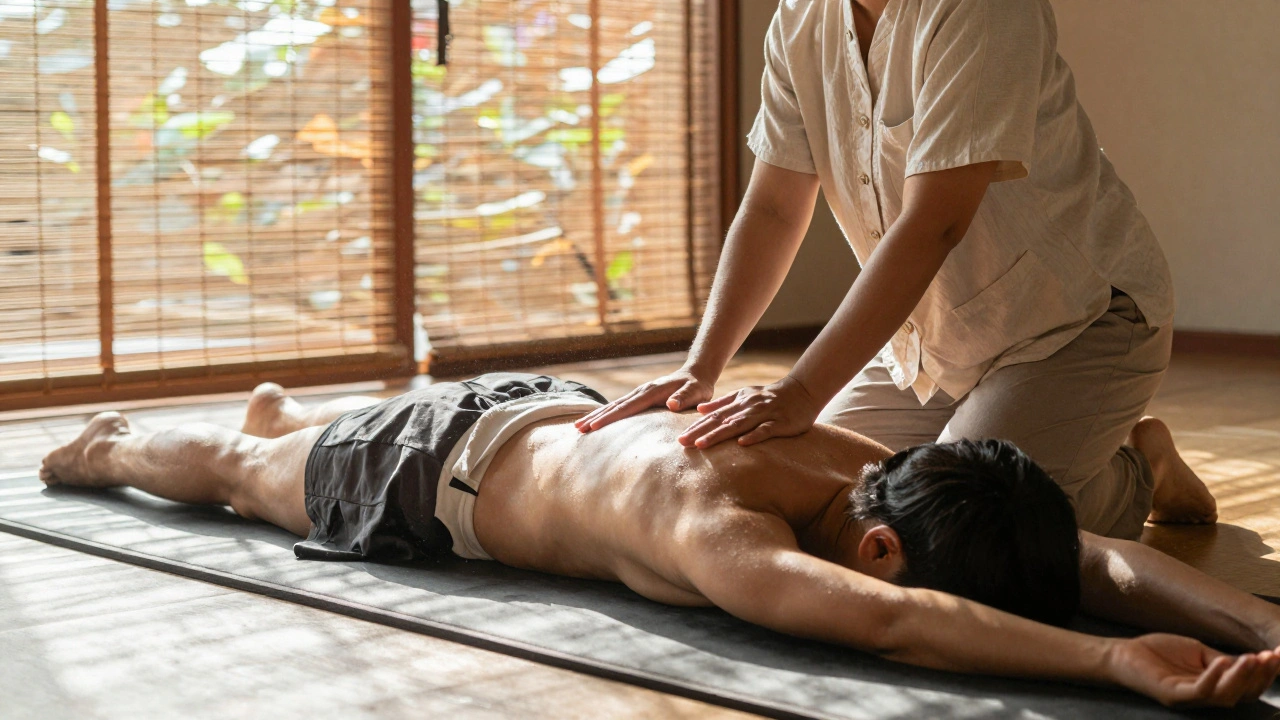
You’ve probably seen it on Instagram: someone lying on a mat, arms stretched wide, a therapist moving like a dancer over them-no oils, no music, just pressure, rhythm, and quiet focus. That’s Thai massage. And if you’re stuck in a cycle of coffee, screens, and stiff shoulders, it might be the missing piece in your wellness routine.
What Exactly Is Thai Massage?
Thai massage isn’t just another type of massage. It’s a 2,500-year-old healing system that blends acupressure, assisted yoga postures, and energy line work. Unlike Swedish or deep tissue, you stay fully clothed-usually in loose cotton pants and a t-shirt. No oils. No table. You lie on a padded mat on the floor, and the therapist uses their hands, thumbs, elbows, knees, and even feet to guide your body through stretches and pressure points.
It’s sometimes called "lazy yoga" because you don’t have to do anything except breathe. The therapist does the work, moving you into positions your body might not reach on its own. Think of it as someone gently pulling your joints back into alignment while pressing out knots you didn’t even know you had.
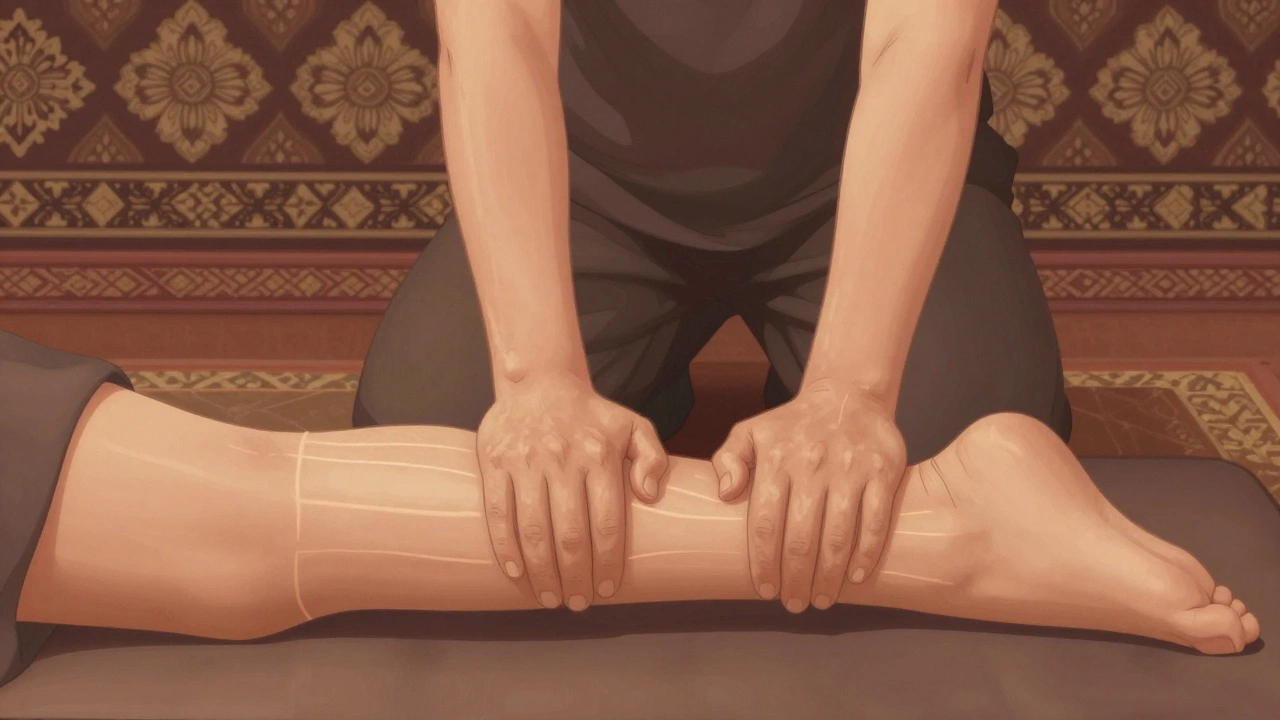
It’s not just physical. Thai massage works along ten energy lines called "sen lines," similar to meridians in traditional Chinese medicine. Blockages here are thought to cause tension, pain, or fatigue. By opening these lines, the massage helps restore balance-not just in your muscles, but in your whole system.
Why Thai Massage Fits Perfectly in Your Wellness Routine
Let’s be real: most wellness routines are a checklist. Morning stretch. Meditate. Drink water. Walk. But what about the stuff that doesn’t fit neatly into a 5-minute app? Thai massage fills that gap.
After a long week of Zoom calls and sitting in traffic, your body doesn’t need another yoga video. It needs someone to physically reset it. Thai massage does that. It doesn’t just relax you-it reprograms your nervous system. Studies show it lowers cortisol by up to 25% and increases serotonin levels, which helps with mood and sleep.
And it’s not just for people with back pain. If you’re a runner, it improves flexibility and reduces injury risk. If you’re a desk worker, it untangles your hips and shoulders. If you’re stressed out and can’t turn off your brain, it gives you a 90-minute reset button.
One client in Amsterdam, a graphic designer who works 60-hour weeks, told me: "I used to need two days to recover from a bad week. Now I get one Thai massage and I’m back. It’s like hitting delete on my tension."
How Thai Massage Is Different from Other Types
Swedish massage? Gentle strokes, oils, relaxation. Deep tissue? Focused pressure on knots, often painful. Hot stone? Warm rocks, soothing but passive.
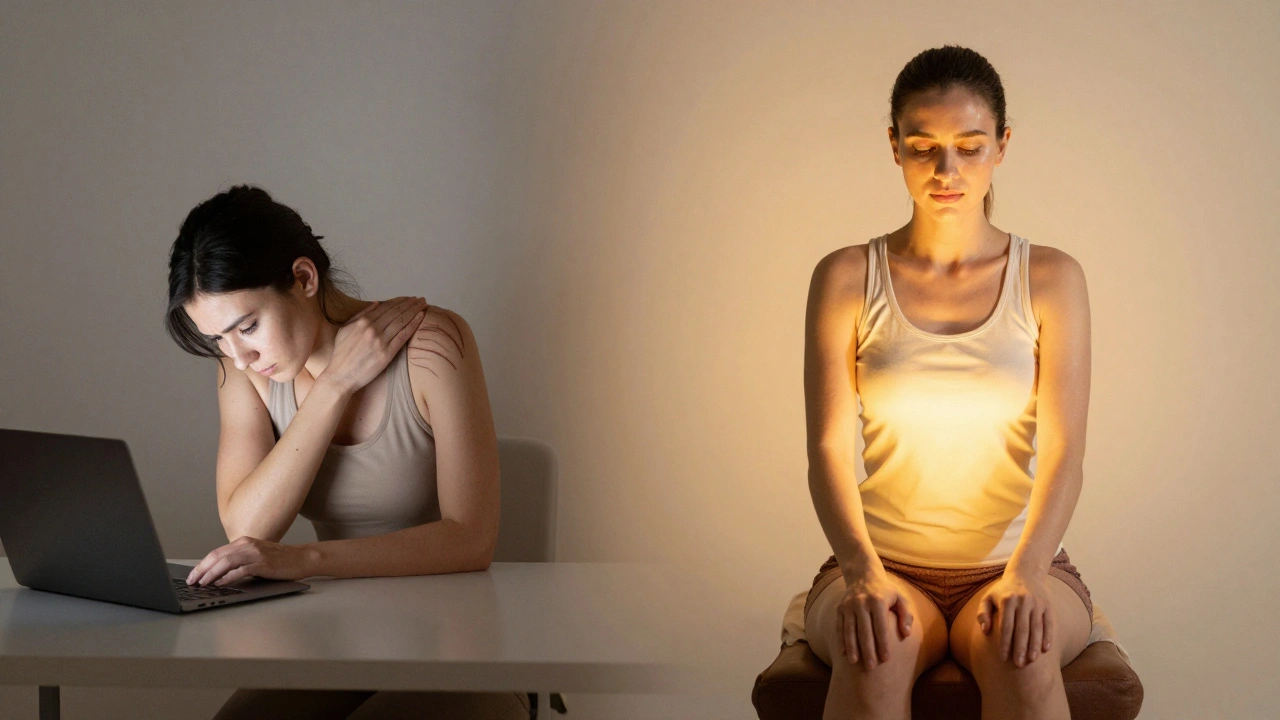
Thai massage is active. You’re moved. You’re stretched. You might even feel a little awkward-like you’re being folded into a pretzel. But that’s the point. It’s not just about releasing muscle; it’s about releasing patterns. Years of hunching over a laptop? Thai massage gently undoes that.
It’s also more energetic. You’ll feel warmth spreading through your limbs afterward-not from heat, but from improved circulation and energy flow. That’s why people often say they feel "lighter," not just "relaxed."
What Happens During a Session?
You walk in. You change into loose clothes (they’ll usually give you some). You lie on a mat. No music. Sometimes soft chanting in the background. The therapist asks if you have any injuries or areas of concern.
Then it starts. They begin at your feet, working up your legs with rhythmic pressure. Then hips-slow, deep, intentional. You’ll feel your pelvis shift. Your spine realigns. They’ll gently pull your arm overhead, like a yoga pose, holding it just long enough to open your shoulder. No sudden jerks. Just steady, confident movement.
At one point, they might kneel on your lower back to help you arch. You’ll gasp. Then breathe. And suddenly, that knot between your shoulder blades? Gone.
It’s not always comfortable. Some stretches feel intense. But it’s never painful. If it hurts, say so. A good therapist will adjust. The goal isn’t to break you open-it’s to help you open yourself.
At the end, you sit up slowly. You feel… different. Calmer. Grounded. Like you’ve been reset.
Where to Find Authentic Thai Massage in Amsterdam
Amsterdam has a lot of "Thai massage" spots. But not all are real. Some are just Swedish with a Thai name. To find the real thing, look for these signs:
- Therapists trained in Thailand-ideally from Wat Pho in Bangkok, the birthplace of Thai massage.
- Mat-based sessions, not massage tables.
- No oils or lotions used.
- Therapists wear loose, practical clothing, not spa robes.
Two places in Amsterdam consistently get high marks from locals:
- Thai Healing Center (De Pijp) - Run by a Thai therapist trained at Wat Pho. Sessions start at €75 for 60 minutes. They also offer Thai herbal compresses.
- Amsterdam Thai Wellness (Oud-West) - Focuses on traditional techniques. Their 90-minute sessions include a head and foot massage, which many say is the highlight.
Book ahead. These places fill up fast, especially on weekends. Most accept walk-ins, but you’ll wait.
What to Expect to Pay
Prices in Amsterdam range from €55 to €120, depending on length and location.
- 60 minutes: €65-€85
- 90 minutes: €90-€120
- 120 minutes (premium): €130-€160
Why the difference? It’s not just time. Longer sessions include more detailed work on the spine, hips, and neck. Some places add herbal poultices or foot soaks. If you’re new, start with 60 minutes. You’ll feel the difference.
Most places accept cash and card. Some take insurance if you have complementary health coverage (check your policy).
How to Prepare and What to Do After
Don’t eat a heavy meal 2 hours before. You’ll be twisted, stretched, and pressed-no one wants a bloated stomach.
Wear something stretchy. Yoga pants. Sweatpants. Anything you can move in. No jeans.
After the session? Drink water. Lots of it. Your body is flushing out toxins. Avoid caffeine or alcohol for a few hours. You might feel sleepy. That’s normal. Let yourself rest. Don’t jump into a meeting or a bike ride right away.
Some people feel sore the next day-like after a good workout. That’s a sign your body is adjusting. A warm shower helps. A gentle stretch helps more.
Thai Massage vs. Swedish Massage: Which One Fits You?
| Feature | Thai Massage | Swedish Massage |
|---|---|---|
| Attire | Fully clothed (loose cotton) | Nude under towel |
| Position | Mat on floor | Massage table |
| Technique | Pressure + assisted stretching | Light to medium strokes |
| Oil/Lotion | No | Yes |
| Energy Work | Yes (sen lines) | No |
| Best For | Stiffness, posture, energy blockages | Relaxation, light tension |
| After Effect | Lighter, energized, sometimes sore | Relaxed, calm, sleepy |
If you’re looking to fix posture or move better, Thai wins. If you just want to melt into a pillow after work, Swedish is fine. But if you want both-deep release and lasting change-Thai massage is the upgrade.
Frequently Asked Questions
Is Thai massage painful?
It can feel intense, especially if you’re tight, but it shouldn’t hurt. A good therapist checks in constantly. If you feel sharp pain, speak up. Thai massage works with your body’s limits, not against them.
Can I get Thai massage if I’m pregnant?
Yes-but only with a therapist trained in prenatal Thai massage. Standard Thai massage includes deep pressure on the lower back and hips, which isn’t safe during pregnancy. Ask specifically for prenatal options.
How often should I get Thai massage?
Once a month is great for maintenance. If you’re dealing with chronic stiffness, pain, or stress, once every two weeks helps. Athletes or desk workers often go weekly for a few weeks, then back off. Listen to your body.
Do I need to be flexible to try Thai massage?
No. In fact, if you’re stiff, that’s exactly why you should try it. The therapist adjusts every stretch to your level. You’re not expected to do anything. You just breathe and let them move you.
Is Thai massage only for adults?
Most places require you to be 18 or older. Some offer gentler sessions for teens with parental consent, especially for posture or sports-related tension. Always check first.
Ready to Reset?
Thai massage isn’t a luxury. It’s a tool. One that’s been used for centuries to help people move better, feel calmer, and live longer. If your wellness routine feels incomplete-like something’s missing-it might be this.
You don’t need to be a yogi. You don’t need to be flexible. You just need to show up. Let someone else take care of your body for an hour. And see what happens.
Book your session. No more waiting for "someday." Your shoulders are already tired. Let them rest.