Deep Tissue Massage: The Ultimate Stress Buster You Need

You know that knot between your shoulder blades? The one that’s been there since last Tuesday, maybe longer? It doesn’t go away with stretching, doesn’t vanish after a hot shower, and no amount of self-massage fixes it. That’s not just tightness-that’s your body screaming for deep tissue massage. And if you’ve been ignoring it, you’re not alone. But here’s the truth: deep tissue massage isn’t just for athletes or people with chronic pain. It’s for anyone who’s ever felt like their body is holding onto stress like a vice.
What Exactly Is Deep Tissue Massage?
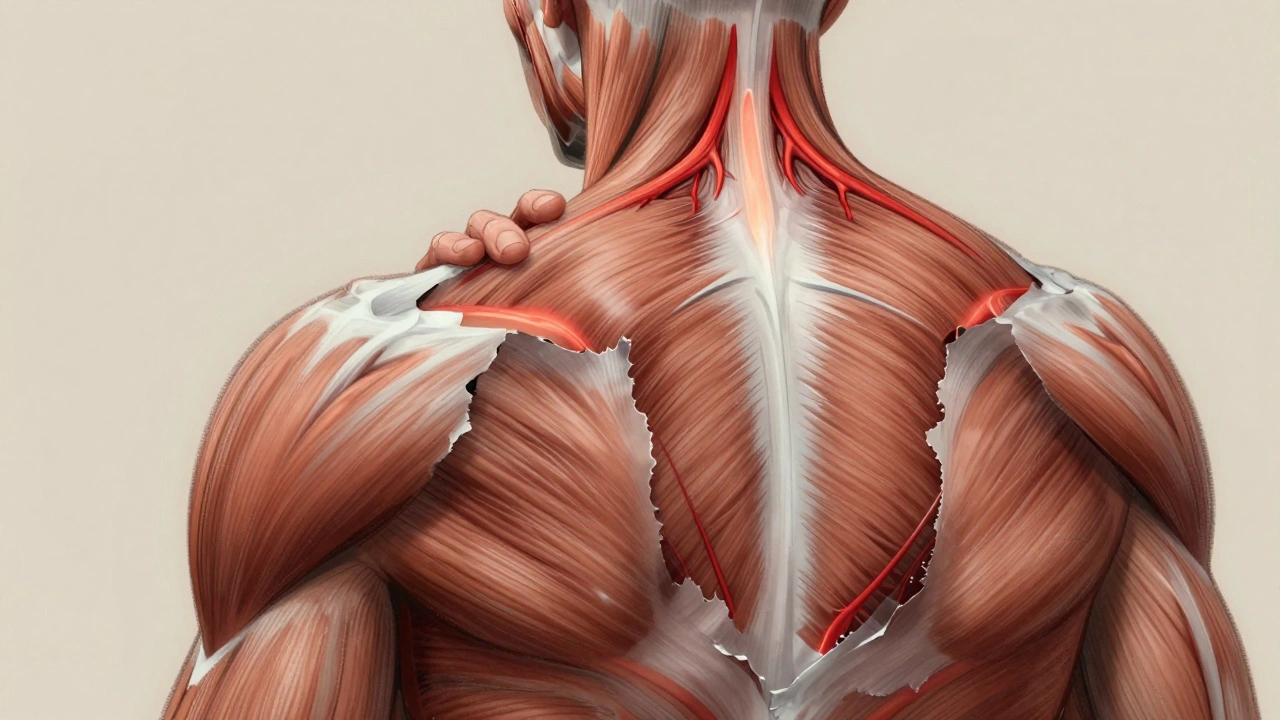
Deep tissue massage isn’t just a stronger version of a Swedish massage. It’s a completely different approach. While Swedish massage glides over the surface to relax you, deep tissue massage works below the surface-targeting the deeper layers of muscle and connective tissue. Think of it like peeling an onion. You start with the outer layer (the skin and superficial muscles), then slowly go deeper, layer by layer, until you reach the tight, knotted areas that are causing pain or restricting movement.
This technique uses slow, deliberate strokes with firm pressure, often using elbows, forearms, or knuckles instead of just fingers. It’s not about making you scream-it’s about helping your body release what it’s been holding onto. The goal? To break up scar tissue, release chronic muscle tension, and improve blood flow to areas that have been starved of oxygen and nutrients.
And yes, it can feel intense. But here’s the thing: if it hurts too much, it’s not working. A good therapist adjusts pressure based on your feedback. You should feel a deep, sometimes uncomfortable stretch-not sharp pain. If it feels like a knife, speak up. This isn’t torture. It’s therapy.
Why Deep Tissue Massage Works for Stress
Stress doesn’t just live in your mind. It lives in your muscles. When you’re anxious, your body tenses up-shoulders hunch, jaw clenches, lower back locks. Over time, this constant tension turns into physical pain. And the more pain you feel, the more stressed you become. It’s a loop.
Deep tissue massage breaks that loop. Here’s how:
- It lowers cortisol, the stress hormone, by up to 31% according to a 2010 study from the University of Miami School of Medicine.
- It boosts serotonin and dopamine-your brain’s natural feel-good chemicals.
- It improves circulation, flushing out lactic acid and other metabolic waste that builds up in tight muscles.
- It resets your nervous system. After a session, your body shifts from fight-or-flight mode to rest-and-digest mode. You breathe deeper. Your heart slows. You actually feel lighter.
One client in Amsterdam, a graphic designer who worked 12-hour days at her desk, told me she used to wake up with headaches every morning. After six weekly deep tissue sessions, she stopped needing painkillers. Not because her job got easier-but because her body finally stopped holding onto the stress.
What You’ll Feel During a Session
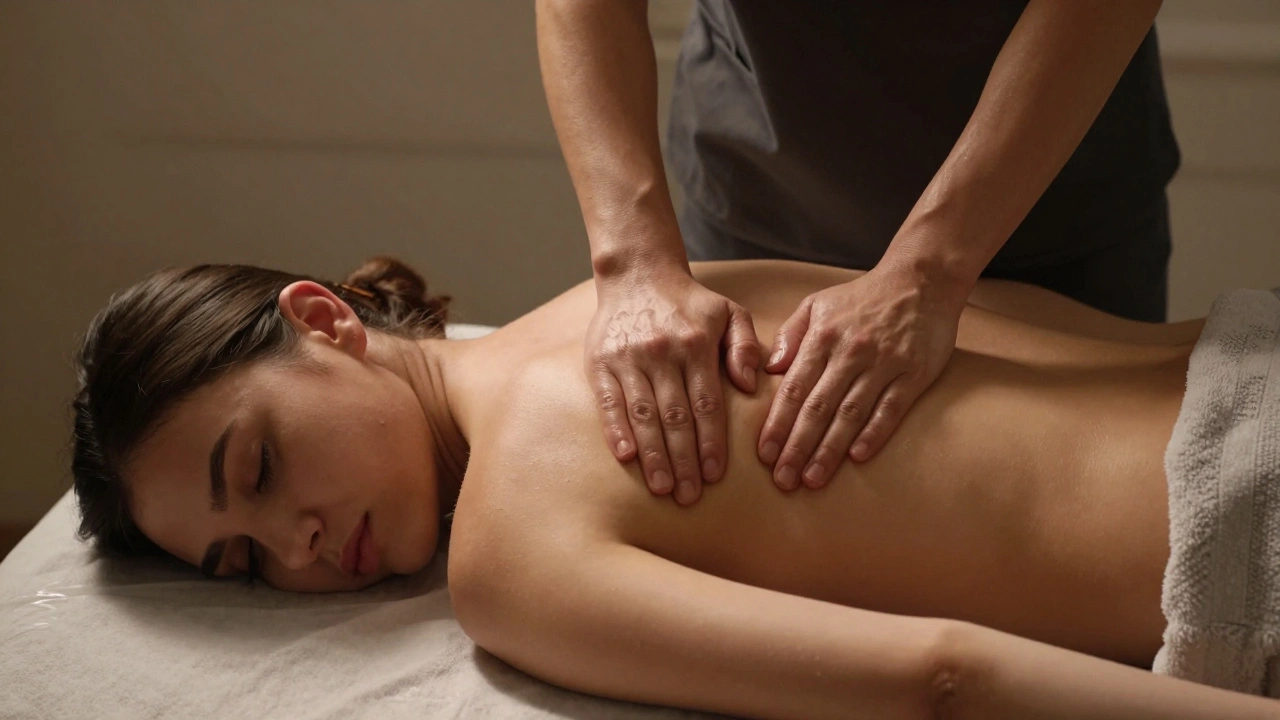
Let’s walk through what actually happens. You’ll lie face down on a warm table, covered with a towel. The therapist starts with lighter strokes to warm up your muscles-this isn’t just prep work, it’s part of the technique. Then comes the pressure.
They’ll work on your back first-starting at the base of your skull, moving down your spine, then over your shoulder blades. If you’ve got knots in your upper traps (those bulging muscles near your neck), they’ll use slow, focused pressure to soften them. You might feel a burning sensation-that’s normal. It’s your muscles releasing.
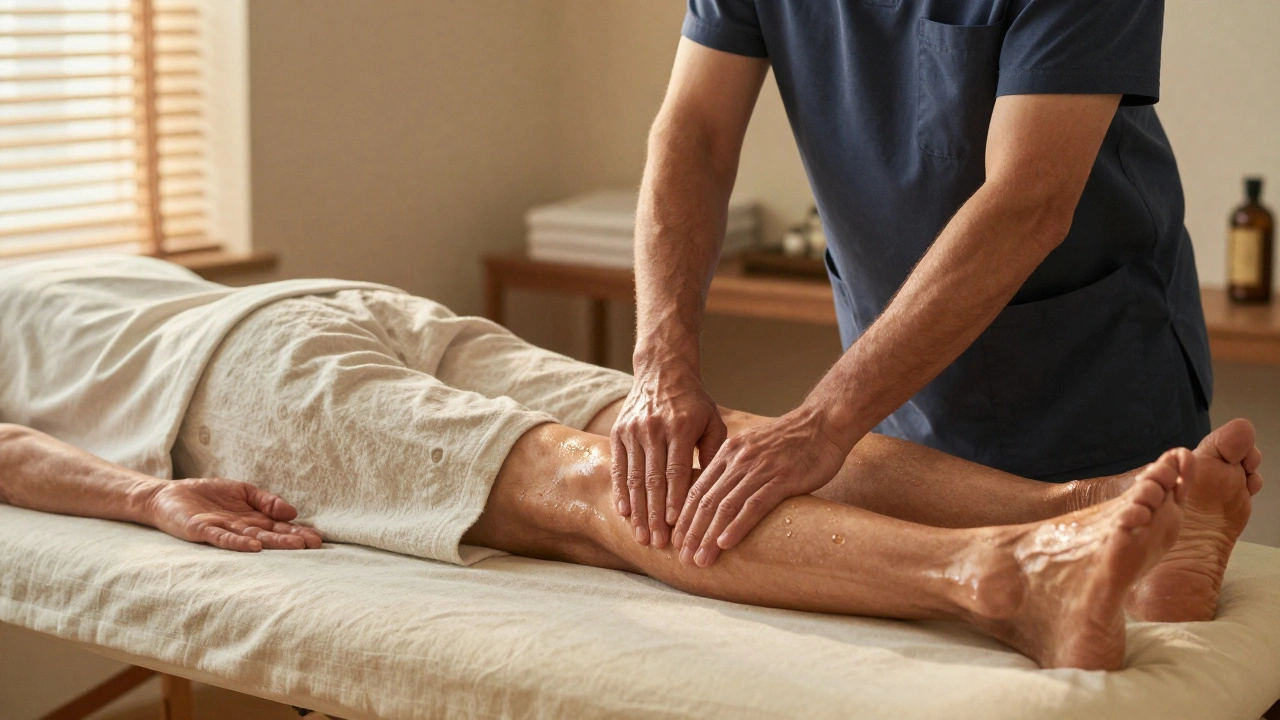
Then they’ll turn you over. Hips, glutes, thighs-these areas often hold tension from sitting too long. If you’ve ever felt like your legs are made of concrete after a long day, that’s where it’s stored. The therapist will use their forearm to press along your IT band, a thick band of tissue running from hip to knee. It’s intense, but when it releases, you’ll feel like you’ve been given a new pair of legs.
Throughout the session, they’ll ask you: “How’s the pressure?” Don’t say “fine” if it’s too much. Say “a little less” or “more.” This isn’t a silent ritual. Communication is key.
And yes, you might feel sore the next day. That’s normal. Think of it like a good workout. But unlike a workout, this soreness fades fast-usually within 48 hours. Drink water. Move gently. Your body is cleaning house.
Deep Tissue vs. Swedish Massage: Which One Do You Need?
| Aspect | Deep Tissue Massage | Swedish Massage |
|---|---|---|
| Pressure | Firm to deep | Light to moderate |
| Goal | Release chronic tension, break down scar tissue | Relax muscles, improve circulation |
| Best for | Chronic pain, posture issues, athletes, desk workers | Stress relief, relaxation, beginners |
| Sensation | Intense, sometimes uncomfortable | Soft, soothing, calming |
| After-effects | Mild soreness for 1-2 days | Immediate relaxation, no soreness |
| Session length | 60-90 minutes recommended | 60 minutes ideal |
If you’re new to massage and just want to unwind, start with Swedish. But if you’ve been carrying stress in your body for months-or years-deep tissue is the reset button you’ve been avoiding.
Where to Find Real Deep Tissue Massage in Amsterdam
Not every spa calls it “deep tissue” and delivers it. Some use the term loosely. Here’s how to find the real deal in Amsterdam:
- Look for therapists with certifications in orthopedic massage or sports massage. These trainings include deep tissue techniques.
- Check reviews that mention “knots released,” “felt the difference,” or “didn’t hold back.” Avoid places where people say “gentle” or “relaxing” if you’re seeking deep work.
- Ask if they use their elbows or forearms. If they only use hands, they’re likely doing Swedish.
- Try places in De Pijp, Jordaan, or Oud-West-these neighborhoods have a higher concentration of experienced bodyworkers.
- Book a 90-minute session. Anything shorter won’t give them enough time to work deeply.
One clinic in De Pijp, run by a former physiotherapist, specializes in treating office workers. They don’t play music during sessions-just silence. Because sometimes, the most powerful thing you can do is listen to your body.
What to Expect After Your First Session
Some people feel euphoric. Others feel wiped out. Both are normal.
Within 24 hours, you might feel:
- A sudden surge of energy
- Improved sleep quality
- Less stiffness when you stand up
- Emotional release-some people cry, laugh, or feel oddly calm
That emotional release? It’s real. Tension isn’t just physical. It’s stored trauma, unspoken worries, suppressed emotions. When your muscles finally let go, your mind sometimes follows.
Don’t rush back to your desk. Give yourself the rest of the day. Walk. Sit outside. Drink tea. Your nervous system is recalibrating. Don’t sabotage it.
Who Should Avoid Deep Tissue Massage?
It’s not for everyone. Skip it if you have:
- Recent injuries or fractures
- Blood clots or are on blood thinners
- Severe osteoporosis
- Active inflammation or infections
- Are pregnant (unless you see a certified prenatal therapist)
If you’re unsure, talk to your doctor first. A good therapist will ask about your medical history before starting. If they don’t, walk out.

How Often Should You Get It?
There’s no one-size-fits-all answer. But here’s a practical guide:
- For acute tension (e.g., after a big project): 1-2 sessions over 2 weeks.
- For chronic stress or posture issues: Once every 3-4 weeks.
- For maintenance: Once every 6-8 weeks.
Think of it like brushing your teeth. You don’t wait until your gums bleed to do it. Same with your muscles. Regular deep tissue work prevents breakdown.
Frequently Asked Questions
Does deep tissue massage hurt?
It should feel intense, not painful. A good therapist works within your comfort zone. If you’re wincing or holding your breath, speak up. The goal is release, not punishment. Some discomfort is normal as knots break down, but sharp pain is a red flag.
Can deep tissue massage help with back pain?
Yes-especially if it’s caused by muscle tightness, not a herniated disc. Deep tissue massage loosens the muscles that pull on your spine, reducing pressure on nerves. Many people with chronic lower back pain report significant improvement after 4-6 sessions.
Is deep tissue massage worth the cost?
If you’re spending money on painkillers, physical therapy, or gym memberships just to manage daily discomfort, then yes. A single session costs between €70-€110 in Amsterdam, but the long-term benefits-better sleep, less pain, improved posture-add up fast. It’s an investment in your daily quality of life.
How long do the effects last?
The immediate relaxation lasts 2-3 days. The real changes-reduced muscle tension, improved mobility, better posture-build over time. After 3-4 regular sessions, many people notice lasting improvements that stick for weeks or months, especially if they combine massage with movement and posture awareness.
Can I do deep tissue massage on myself?
You can use foam rollers or massage balls to target some areas, but you can’t replicate the precision of a trained therapist. Your own muscles won’t relax the way they do when someone else applies pressure. Plus, you can’t reach your own upper back or shoulder blades effectively. Self-massage helps, but it’s not a replacement.
Ready to Let Go?
You don’t have to live with that constant tightness. You don’t have to numb it with caffeine or ignore it until it becomes pain. Deep tissue massage isn’t a luxury-it’s a tool for staying human in a world that keeps asking you to push harder.
Book your session. Show up. Breathe. Let someone else hold the pressure so you don’t have to.

j t
January 26, 2026 AT 16:26you ever just sit there and think about how your body is basically a storage unit for every bad day you’ve ever had? like, your shoulders? they’re not just tight-they’re a museum of your ex’s words, your boss’s yelling, that one time you cried in the car because the radio station cut out right as your song started. deep tissue massage isn’t about muscles, it’s about archaeology. you dig and dig and suddenly there’s a 2018 trauma wrapped in fascia, still breathing. i got mine last month and i cried for 40 minutes after. not because it hurt-because it remembered. and i didn’t even know i’d been holding it.
now i keep a journal next to my massage table. write down what i feel before, during, after. last time i wrote: ‘i didn’t know i was angry until my trapezius unclenched.’ weird? yeah. true? absolutely.
you think you’re paying for pressure. you’re not. you’re paying for permission-to finally let go without being judged for it. and that? that’s worth every cent.
also, if you’ve ever had a dream where you’re running but your legs are concrete? that’s your body screaming. go get it done. now. before your spine turns into a paperclip.
Kiana Rigney
January 27, 2026 AT 18:33Okay but let’s be real-this is just glorified physical therapy with a spa aesthetic. The ‘deep tissue’ label is now used by every mid-tier massage parlor trying to charge $120 for what’s basically a firm Swedish with extra elbow pressure. I’ve had therapists say ‘I do deep tissue’ and then proceed to knead my calves like dough. The science? Overhyped. Cortisol reduction? Sure, if you’re getting a 90-minute nap. Dopamine boost? Try a walk in the sun or a good cry. This is performative wellness culture masquerading as science. Also, ‘orthopedic massage’ certifications? Half of them are online courses you finish while eating cereal.
And don’t get me started on ‘emotional release.’ That’s just your therapist’s transference therapy bleeding into your session. You’re not storing trauma in your IT band. You’re storing it in your brain. Which, by the way, no amount of forearm pressure is going to fix. Go see a psychologist. Or better yet-stop buying into this $80/hour placebo.
Hannah Johnson
January 28, 2026 AT 03:47Y’all, I’m a physical therapy assistant and I’ve seen the magic of deep tissue firsthand. This post? Spot on. The key is finding the right therapist-not just any place with ‘massage’ in the name. Look for someone who asks about your medical history, who doesn’t play music, who uses their forearms (not just thumbs), and who actually adjusts pressure based on your feedback. That’s the real deal.
And yes, it can be intense-but the soreness the next day? Totally worth it. I had a client who couldn’t lift her arms above her head from years of hunching over a laptop. After 4 sessions, she cried because she could finally reach the top shelf without pain. That’s not magic. That’s anatomy.
Also, drink water after. Seriously. Your muscles are flushing out lactic acid and toxins. Skip the water and you’ll feel like a zombie. And if you’re new to it? Start with 60 minutes. Don’t jump straight to 90. Your body needs to adjust. You got this. 💪
Anna Krol
January 28, 2026 AT 07:37honestly i used to think this was all just hype til i tried it after my dad passed. i didn’t even know i was holding onto grief until my shoulders just… gave. like, i was sitting there and the therapist pressed on my upper back and i started sobbing quietly and she didn’t say anything, just kept going. it felt like my body had been holding my sadness hostage for months.
now i go every 6 weeks like clockwork. not because i’m in pain-but because i need to remember how to be soft again. also, the place in de pijp they mentioned? i went there. no music. just silence. and honestly? that silence was the loudest thing i’d heard in years.
also, side note: i’m from poland and we have this thing called ‘masaż głęboki’-same thing. they don’t call it ‘wellness’ there. they just do it. like brushing your teeth. maybe we’re just better at taking care of our bodies here. 🇵🇱❤️
Chaunt Elyza
January 30, 2026 AT 01:15OMG YES 😭 I’ve been going for 8 months and I can’t believe I waited this long. I used to wake up like a robot with no neck. Now? I stretch like a cat. And the emotional stuff? Real. I laughed so hard I peed a little after one session. No joke. My therapist said, ‘That’s your nervous system resetting.’ 🤯
Also, if you’re scared it’ll hurt-just say ‘start slow.’ I did. Now I ask for ‘more.’ I’m obsessed. Book it. Do it. Don’t think. Just go. 💅💆♀️🔥
Katie Schiffer
January 30, 2026 AT 11:43Listen. If you’re reading this and you’ve been putting this off because ‘it’s too expensive’ or ‘I’m not that stressed’-I’m here to tell you: you’re lying to yourself. Your body doesn’t lie. That knot? That headache? That feeling like you’re always one breath away from crying? That’s your body begging for help.
I used to think massage was for spa days. Then I got fired, broke up with my partner, and started sleeping on the couch. One session later? I slept through the night for the first time in 11 months. That’s not a coincidence. That’s science. That’s healing.
Don’t wait until you’re broken. Book it now. Treat yourself like someone you love. Because you are. And you deserve to feel light again. I believe in you. 💖
John Irving
February 1, 2026 AT 01:17Look, I’ve had massage in Australia, Canada, and the UK. This whole ‘deep tissue’ thing is just American hype. In Oz, we just call it ‘therapeutic massage’ and we don’t need a 90-minute session to fix a stiff back. Also, ‘orthopedic certification’? Half the people claiming it haven’t touched an anatomy textbook since 2015. And don’t get me started on ‘emotional release’-that’s just bad therapy wrapped in wellness jargon.
Also, the writer mentions Amsterdam like it’s some sacred massage Mecca. Mate, I’ve had better in Melbourne. And no, you don’t need to pay €110 for it. A decent physio in Sydney charges half that and actually knows their scapular stabilizers. This post reads like a sponsored blog. And ‘listen to your body’? That’s not advice-that’s a cliché. Do your research. Don’t fall for the marketing.
Hannah Johnson
February 2, 2026 AT 13:18John, I hear you. And you’re right-there’s a lot of bad actors out there. That’s why I always check credentials and ask for references. I’ve had therapists who didn’t even know what the teres major was. But the good ones? They’re out there. And they’re not in the mall kiosks. They’re in quiet studios with no music, asking questions, adjusting pressure, and actually listening.
Also, I’ve had Aussie therapists. They’re great. But the thing about deep tissue isn’t just the technique-it’s the intention. If you go in expecting to be ‘fixed,’ you’ll miss the point. You go in to reconnect. That’s the real value. And yeah, it’s an investment. But so is a therapist, a gym membership, or a new mattress. Which one actually makes you feel like you’ve been given your body back?
Just sayin’. 😊