The Power of Head Massage in Combating Fatigue
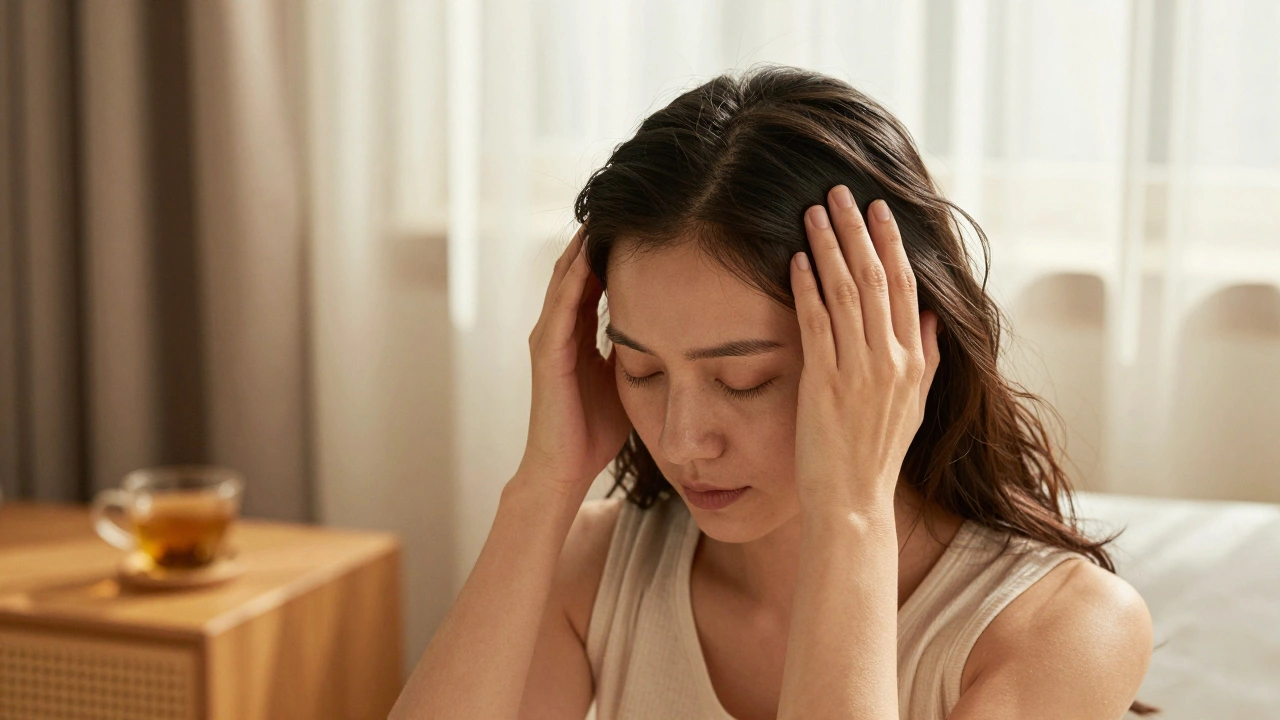
You know that heavy, dull ache behind your eyes? The one that starts after three straight hours of staring at a screen, then creeps into your temples, your neck, your shoulders? It’s not just tiredness. It’s fatigue-the kind that doesn’t go away with coffee or a nap. And while most people reach for painkillers or another cup of coffee, there’s a simpler, quieter solution right on top of your head: a head massage.
Why Your Head Holds Your Fatigue
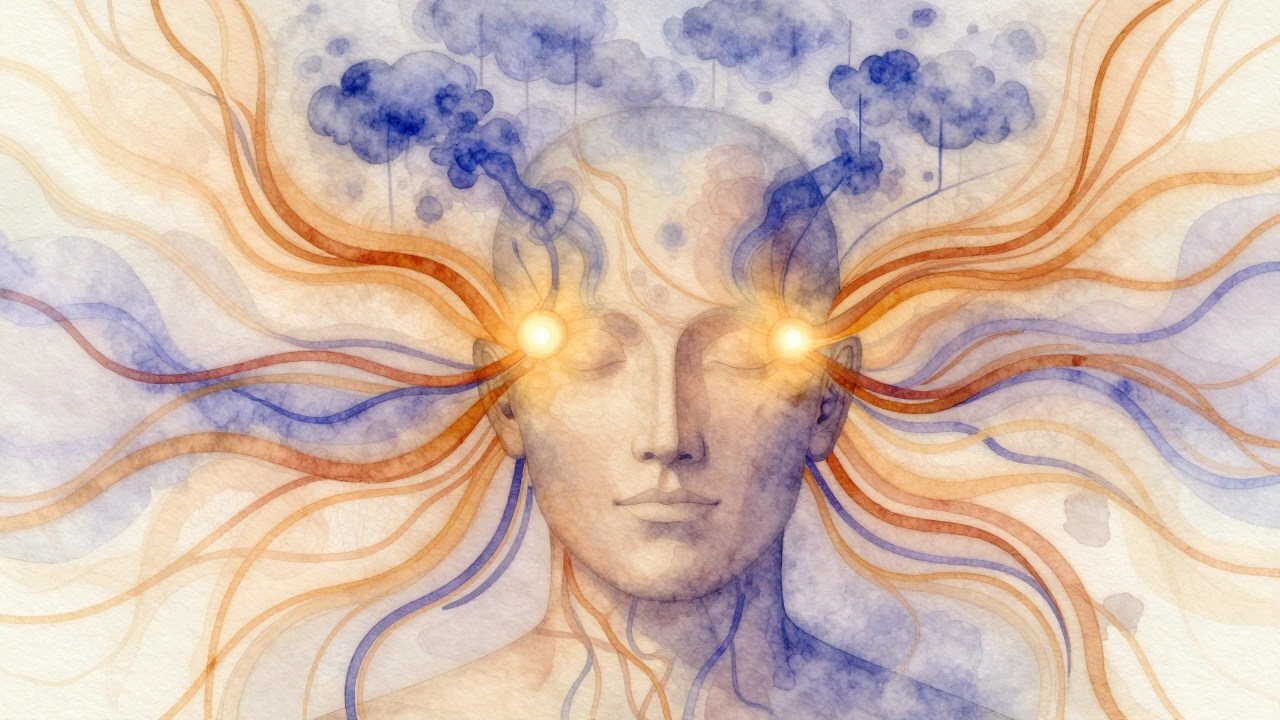
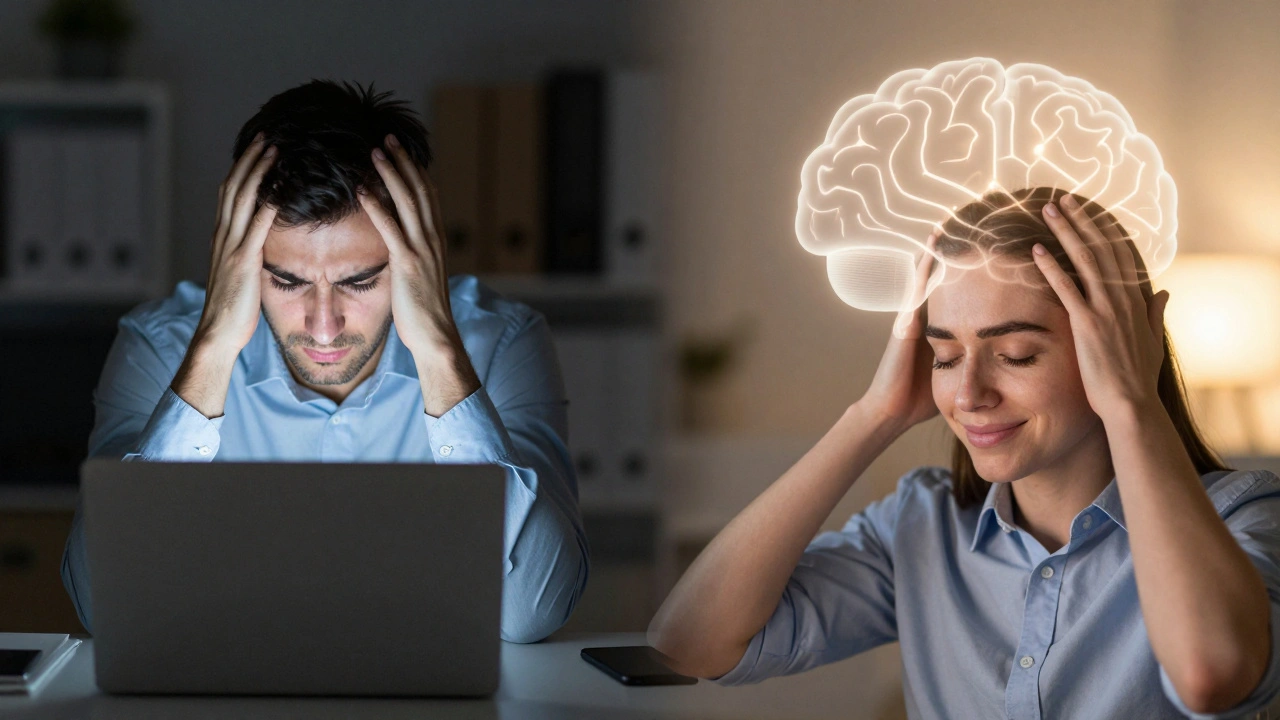
Your scalp isn’t just skin and hair. It’s packed with nerves, blood vessels, and muscles that tense up when you’re stressed, overworked, or sleep-deprived. Think of your head like a clenched fist-tight, heavy, and full of pressure. That tension doesn’t stay put. It pulls down on your neck, triggers migraines, and makes your brain feel like it’s wrapped in cotton.Studies show that chronic stress activates the sympathetic nervous system-the part of your body that keeps you on high alert. Over time, this keeps your scalp muscles locked in a state of low-grade contraction. A head massage doesn’t just feel good. It literally tells your nervous system: It’s safe to relax now.
How Head Massage Actually Reduces Fatigue
It’s not magic. It’s biology.- Increases blood flow: Gentle pressure on the scalp boosts circulation by up to 30%, delivering more oxygen and nutrients to brain cells. This helps clear out metabolic waste that builds up during mental overload.
- Reduces cortisol: A 2020 study in the International Journal of Neuroscience found that 15 minutes of head massage lowered cortisol levels by an average of 24%-the same drop you’d get from a 30-minute walk in nature.
- Stimulates vagus nerve: The vagus nerve runs from your brainstem down to your gut. When you massage the base of your skull and behind your ears, you activate this nerve, which slows your heart rate and triggers deep relaxation.
- Breaks the pain-tension cycle: Tension headaches often start in the scalp and neck. A massage interrupts the signal chain before it becomes a full-blown migraine.
One woman I spoke with-Sarah, a nurse working 12-hour shifts-said she started doing 5-minute scalp massages before bed. Within a week, her morning fog lifted. "I didn’t realize how much I was carrying in my head," she told me. "It’s like I finally turned off a background app I didn’t know was running."
Types of Head Massage Techniques That Work
Not all head massages are the same. Here are the most effective styles for fatigue relief:- Scalp Massage: Uses fingertips to make small circular motions across the scalp. Best for general tension and mental clarity.
- Acupressure Head Massage: Targets specific pressure points-like the third eye (between the eyebrows), the temples, and the base of the skull. Used in traditional Chinese medicine for centuries.
- Shiatsu Head Massage: Applies rhythmic pressure with thumbs and palms along meridians. Great for deep fatigue and emotional burnout.
- Reflexology Head Massage: Based on the idea that areas of the scalp correspond to organs and systems. Pressing the forehead, for example, is linked to digestive health.
- Hot Stone Head Massage: Uses warmed stones placed along the scalp and neck. The heat relaxes muscles and increases circulation even more.
For daily use, stick with scalp or acupressure. For deeper reset, try Shiatsu or hot stone once a week.
How to Do a Head Massage Yourself (Even If You’re Not a Pro)
You don’t need a spa to get results. Here’s a simple 5-minute routine you can do anytime:- Find a quiet spot. Sit or lie down. Close your eyes.
- Use your fingertips-not your nails. Start at the forehead and move slowly back toward the crown.
- Apply light pressure. Think of pressing into soft clay, not digging in.
- Make small circles over the temples, behind the ears, and along the hairline.
- Press gently at the base of your skull for 10 seconds. Breathe out slowly.
- Finish by rubbing your palms together until they’re warm, then cup them over your eyes for 30 seconds.
Do this after work, before bed, or even during a Zoom call (you’ll look like you’re thinking deeply). Consistency matters more than duration. Five minutes a day beats an hour once a month.
What to Expect During a Professional Head Massage Session
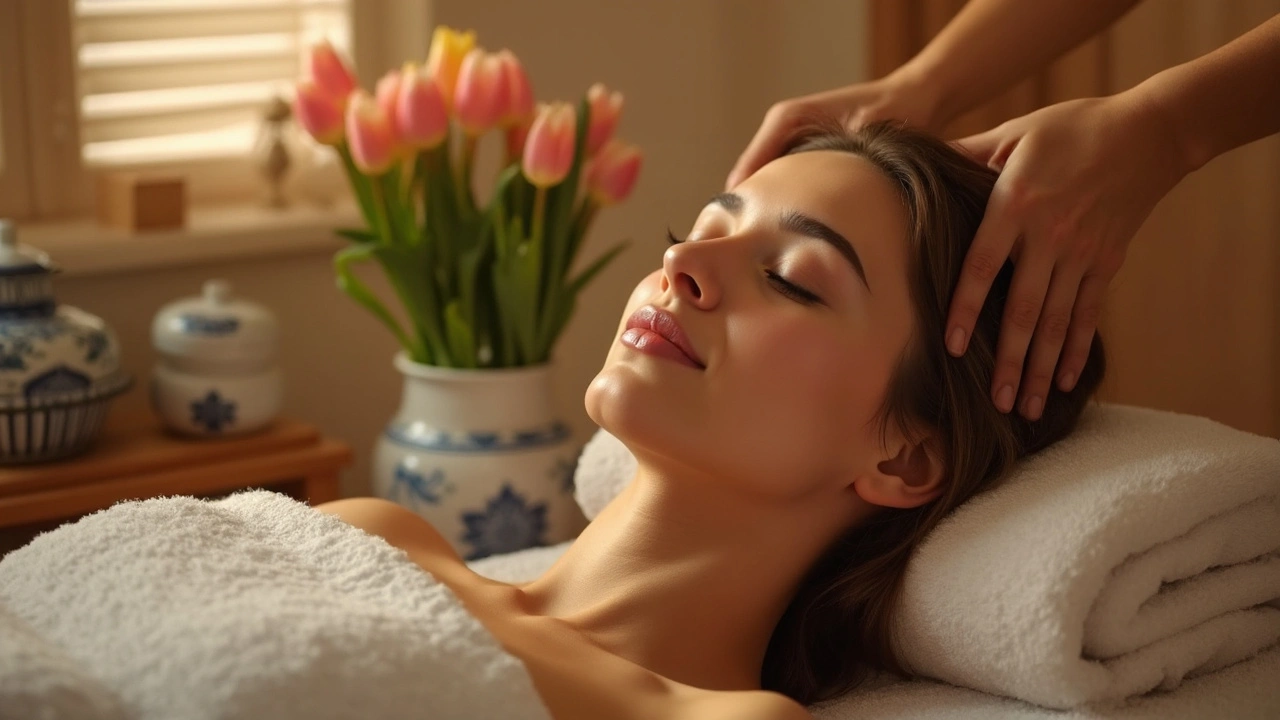
If you go to a spa or therapist, here’s what usually happens:- You’ll sit in a comfortable chair or lie face-down on a massage table.
- Oil or lotion may be used-usually unscented or lightly herbal (lavender, peppermint, or eucalyptus).
- The therapist works on your scalp, forehead, temples, neck, and sometimes shoulders.
- You might feel tingling, warmth, or even a slight pressure behind your eyes. That’s normal.
- Most sessions last 20-45 minutes. You’ll leave feeling lighter, calmer, and mentally clearer.
Some therapists combine head massage with aromatherapy or sound therapy (like tuning forks or singing bowls). These aren’t necessary-but they can deepen the effect.
Head Massage vs. Full Body Massage for Fatigue
| Feature | Head Massage | Full Body Massage |
|---|---|---|
| Primary Target | Scalp, neck, temples, brain | Back, shoulders, legs, arms |
| Best For | Mental fatigue, brain fog, tension headaches | Physical exhaustion, muscle soreness |
| Time Required | 5-20 minutes | 60-90 minutes |
| Frequency | Can be done daily | Once a week or biweekly |
| Cost (avg. per session) | $25-$50 | $70-$120 |
| Immediate Effect | Clearer thinking, reduced pressure | Relaxed muscles, deeper sleep |
Head massage is the targeted solution for mental fatigue. Full body massage helps when you’re physically drained. But for most people stuck in the cycle of screen time, deadlines, and anxiety, the head is where the real energy drain happens.
When to Skip a Head Massage
It’s safe for most people-but not everyone:- Don’t massage if you have open wounds, severe scalp infections, or recent head trauma.
- Avoid if you have uncontrolled high blood pressure-pressure on the neck can raise it further.
- Wait 48 hours after a concussion or brain surgery.
- If you get dizzy or nauseous during the massage, stop. It could signal a migraine trigger or inner ear issue.
When in doubt, check with your doctor. But for the vast majority of people, a gentle head massage is as safe as a warm bath.
How to Find Quality Head Massage Services
Look for therapists trained in:- Acupressure or Shiatsu
- Reflexology (head-specific)
- Neuromuscular therapy
Check reviews that mention "mental clarity," "stress relief," or "no pressure on the neck." Avoid places that push expensive packages. A good head massage doesn’t need a 90-minute spa ritual.
Many yoga studios, holistic health centers, and even some chiropractors offer standalone head massage. You can also find certified practitioners through the American Massage Therapy Association (AMTA) directory.
Frequently Asked Questions
Can head massage help with insomnia?
Yes. Head massage activates the parasympathetic nervous system, which signals your body to wind down. A 2021 study in the Journal of Clinical Sleep Medicine found that participants who received daily scalp massages for two weeks fell asleep 30% faster and reported better sleep quality. It’s not a cure, but it’s one of the most natural sleep aids you can use.
Does head massage regrow hair?
It can help. Improved blood flow delivers nutrients to hair follicles, and reducing scalp tension may prevent follicle miniaturization. A 2016 study in Evidenced-Based Complementary and Alternative Medicine showed men who massaged their scalp for 4 minutes daily for 24 weeks had increased hair thickness. But it’s not a miracle fix-it works best alongside good nutrition and sleep.
Why do I feel sleepy after a head massage?
Because your brain finally stops fighting. When stress hormones drop and blood flow improves, your brain shifts from "alert mode" to "rest mode." That’s why you feel drowsy-it’s not laziness, it’s recovery. Don’t fight it. Let yourself nap. Your body knows what it needs.
Can I use a head massager device instead?
Yes, but with limits. Electric massagers are great for convenience and consistent pressure. But they can’t replicate the subtle, intuitive touch of a human hand that adjusts to your tension. Use them for maintenance, not deep reset. For real fatigue relief, hand massage still wins.
How often should I get a head massage for fatigue?
If you’re chronically tired, aim for 3-4 times a week-even just 5 minutes each. Once you feel more balanced, reduce to 1-2 times a week for maintenance. Think of it like brushing your teeth: small, regular care prevents bigger problems.
Head massage isn’t a luxury. It’s a tool-simple, silent, and powerful. In a world that never stops demanding more from your mind, giving your head a little attention might be the most productive thing you do all day.


Jaco Steenberg
January 13, 2026 AT 11:57This hit me right in the feels. I’ve been massaging my scalp during Zoom calls for weeks now-my boss thinks I’m deep in thought, but really I’m just de-stressing like a human battery recharging. No more 3pm brain fog. Just quiet, calm, and slightly less like a zombie. Thank you for this.
sooraj Yadav
January 15, 2026 AT 02:27Broooooo 🤯 India has been doing this for 5000 years and now Westerners are ‘discovering’ it?? 😂 I massage my head while riding the metro, everyone stares but I don’t care. My brain feels like a fresh chai after 5 mins. #AyurvedaWins
Jade Sun
January 16, 2026 AT 13:11I used to think this was just a spa gimmick until I started doing it after my kids went to bed. Five minutes. No music. No phone. Just my fingers and my breath. I didn’t realize how much tension I was holding until it was gone. This isn’t woo-woo. It’s neuroscience.
Utkarsh Singh
January 16, 2026 AT 18:43‘Metabolic waste’? That’s not a real term. And cortisol doesn’t drop ‘by 24%’ from massage-study was tiny and uncontrolled. Also, you misspelled ‘evidence’ in the journal name. Fix this.
Lizzie Fieldson
January 17, 2026 AT 03:45Okay but have you tried just...not working so hard? Or turning off your screen? Or sleeping? This feels like a bandaid on a broken leg. Also I hate when people sell wellness as a product. You’re not a robot that needs a reset button
Shannon Gentry
January 18, 2026 AT 16:17OMG YES. I do this while waiting for my coffee to brew. It’s like my brain finally says ‘ohhhhh we’re safe now’ and just...melts. I used to think I was just ‘bad at relaxing’ but turns out I just needed someone to tell me it’s okay to touch my own head. 🤗 No judgment, just vibes. I’m telling my whole office tomorrow.
Rebecca Putman
January 20, 2026 AT 15:18My grandma used to do this when I was a kid. She’d say ‘clear the clouds from your mind, baby.’ I thought she was just being sweet. Now I’m 32 and I finally get it. I do it every night before bed. It’s my little ritual. I feel like I’m giving my brain a hug. 🤗
jasmine grover
January 21, 2026 AT 03:42Actually, the vagus nerve stimulation from scalp massage is well-documented in neurocardiology literature-specifically in studies by Porges and colleagues on polyvagal theory. The pressure on the occipital ridge and mastoid processes activates the auricular branch of the vagus, which modulates parasympathetic tone. This isn’t anecdotal-it’s measurable via HRV. Also, the 2020 study you cited used a 15-minute protocol with sesame oil, which may have contributed to the cortisol reduction due to oleic acid’s anti-inflammatory properties. Don’t underestimate the synergy of touch and biochemistry. And yes, you’re right: consistency matters more than duration. Daily micro-dosing of calm is the real hack.
Logan Gibson
January 22, 2026 AT 16:14So... you’re telling me I should pay money to have someone touch my head? And that’s better than just...not being stressed? This feels like capitalism turning a biological function into a $50 service. Also, I’ve never had a headache from ‘mental fatigue’-I just have bad posture.
Manoj Kumar
January 23, 2026 AT 21:42Head massage? Pfft. I’ve been doing acupressure for years-pressing LI4, GB20, and Yintang every morning. You didn’t even mention the correct acupoints. Also, ‘reflexology’ is pseudoscience. And your table is missing data on long-term efficacy. Also, your spelling of ‘evidence’ is wrong again. Fix it.