The Mind-Body Connection: How Wellness Massage Boosts Mental Health
You know that heavy feeling in your chest after a long week? Or how your shoulders climb up toward your ears when you’re overwhelmed? That’s not just tension-it’s your mind screaming for help, and your body is the messenger. What if the answer isn’t another cup of coffee or another scroll through your phone, but something far simpler: a quiet hour with your hands on your skin, and someone else’s hands on yours?
What Wellness Massage Really Does for Your Mind
Wellness massage isn’t just about loosening tight muscles. It’s a direct line to your nervous system. When your therapist applies steady pressure, your body releases oxytocin-the bonding hormone-and drops cortisol, the stress chemical, by up to 30% in a single session, according to research from the Touch Research Institute at the University of Miami. That’s not a placebo. That’s biology.
Think of your nervous system like a car with two pedals: gas (sympathetic) and brake (parasympathetic). Most of us live with our foot jammed on the gas-emails piling up, deadlines looming, notifications buzzing. A wellness massage flips the switch. It tells your brain: It’s safe to slow down. And once that happens, your heart rate drops, your breathing deepens, and the constant mental chatter starts to fade.
People who get regular wellness massages report better sleep, fewer panic attacks, and less rumination. One woman in Amsterdam told me she stopped taking anxiety medication after six weeks of weekly sessions. Not because the massage cured her, but because it gave her space to breathe again. And sometimes, that’s all the mind needs to heal itself.
Why the Mind-Body Link Matters More Than You Think
For decades, medicine treated the body and mind like separate rooms. But modern science says they’re the same house. Chronic stress doesn’t just make you feel tired-it inflames your gut, weakens your immune system, and even shrinks parts of your brain responsible for memory and emotional control. Massage doesn’t just relax your muscles. It interrupts this cycle.
Studies from Harvard Medical School show that regular massage therapy reduces inflammatory markers like IL-6 and TNF-alpha, which are linked to depression and anxiety. It also increases serotonin and dopamine-your brain’s natural mood lifters. So when you feel calmer after a massage, it’s not just because you were pampered. It’s because your brain chemistry actually changed.
This isn’t luxury. It’s prevention. If you’re constantly stressed, your body is slowly wearing itself down. A weekly wellness massage is like giving your nervous system a tune-up before it breaks down.
Types of Wellness Massage That Support Mental Health
Not all massages are created equal when it comes to calming the mind. Here are the top three types proven to help with anxiety, depression, and emotional overload:
- Swedish Massage - Long, flowing strokes with light to medium pressure. Perfect for beginners. It’s the gentlest way to trigger the parasympathetic nervous system. Think of it as a lullaby for your nerves.
- Lymphatic Drainage Massage - Super light, rhythmic touches that move fluid through your body. Great if you feel bloated, swollen, or emotionally “stuck.” It helps your body detox physically and emotionally.
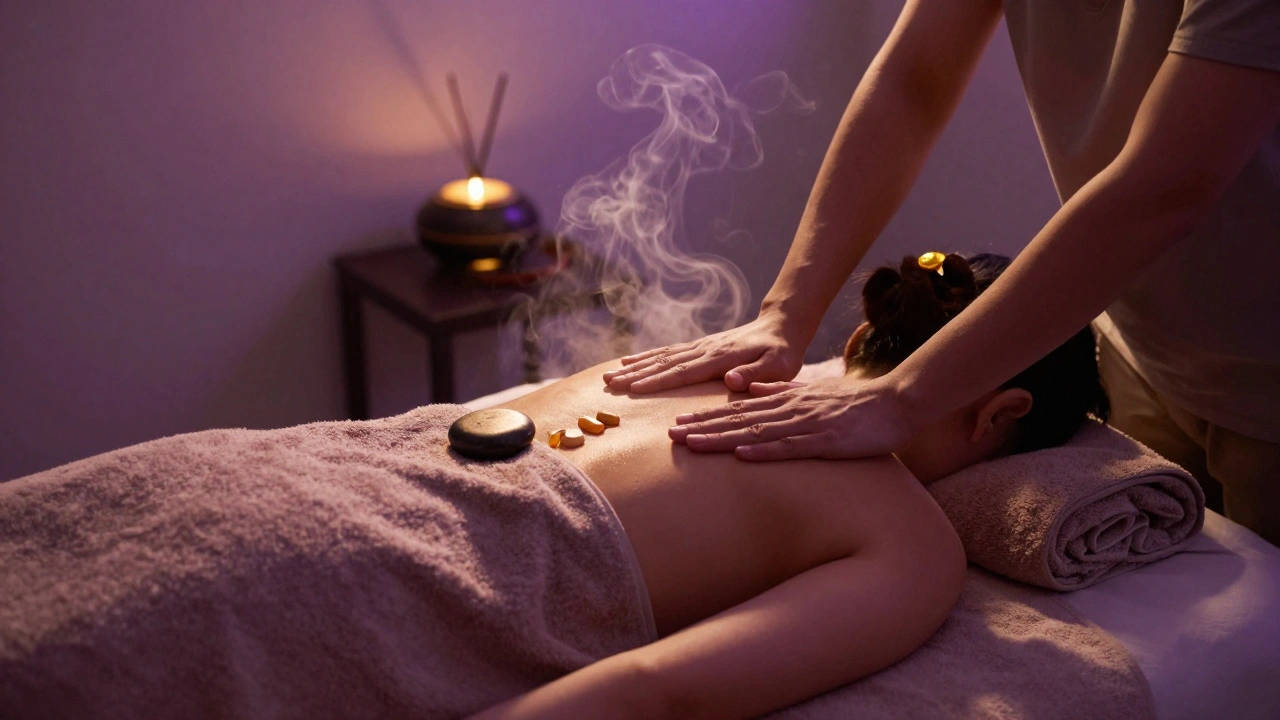
- Hot Stone Massage - Smooth, heated stones placed along your spine and energy points. The warmth penetrates deep, melting tension and creating a meditative state. Many clients say it feels like being hugged by the earth.
Thai massage and deep tissue are powerful, but they’re more for physical pain. If your goal is mental calm, stick with the softer, slower styles. The goal isn’t to fix your back-it’s to quiet your mind.
What Happens During a Wellness Massage Session
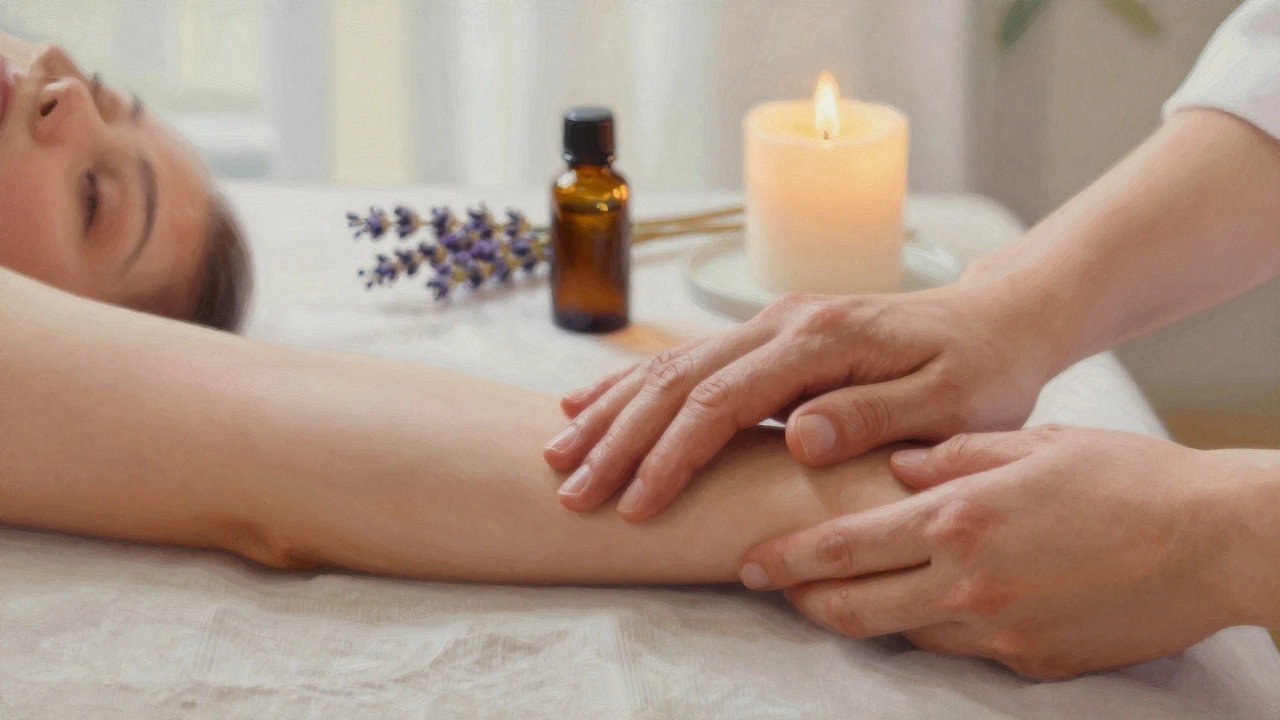
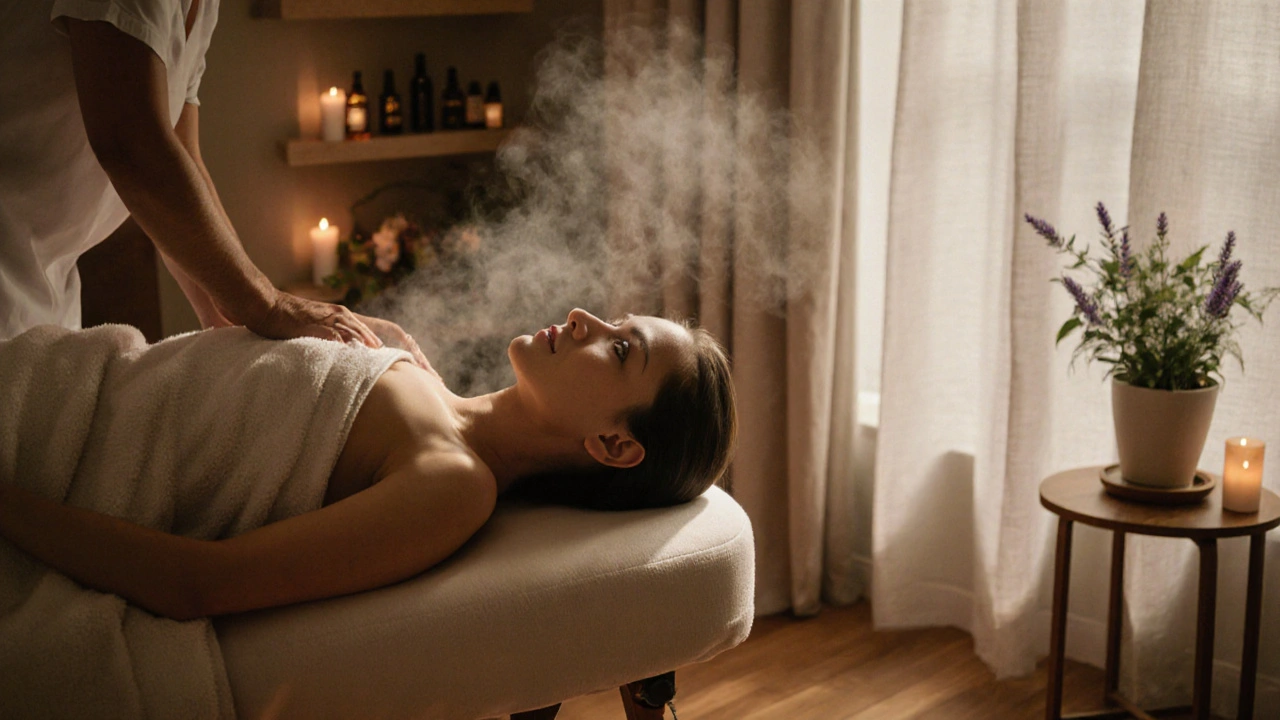
You walk into a quiet room, maybe with soft lighting and the scent of lavender. You lie down, covered in warm towels. The therapist doesn’t talk much-just asks if the pressure feels right. Then, their hands begin.
At first, you might notice every thought: Did I lock the door? What’s that email I forgot to send? But after 10 minutes, something shifts. Your breath gets slower. Your jaw unclenches. You stop thinking about tomorrow. You’re just here. In your body. In this moment.
That’s the magic. It’s not about what the therapist does-it’s about what you allow yourself to feel. You’re not being fixed. You’re being held. And sometimes, that’s enough.
Most sessions last 60 to 90 minutes. No music? No talking? That’s fine. Silence is part of the therapy. The best massages don’t need words-they just need presence.
How to Find the Right Wellness Massage in Amsterdam
Not every spa is built for mental health. Look for places that emphasize calm over luxury. In Amsterdam, the best wellness-focused studios are often tucked away in quiet neighborhoods-Noord, Oud-West, or near the Amstel River.
Ask these questions before booking:
- Do they use essential oils? (Lavender, chamomile, bergamot are best for anxiety.)
- Is the room quiet and dim? (No loud music, no TV screens.)
- Do they offer a pre-session check-in? (Good therapists ask how you’re feeling emotionally, not just where it hurts.)
Check reviews for words like “peaceful,” “safe space,” or “I left feeling lighter.” Avoid places that sound like spas for Instagram-glitter, neon lights, and champagne don’t equal healing.
What to Expect: Pricing and Booking
A 60-minute wellness massage in Amsterdam typically costs between €70 and €110. That’s more than a haircut, but less than a therapy session. And unlike therapy, you don’t need to talk about your childhood. You just lie down and let your body reset.
Many studios offer packages: buy five sessions, get one free. That brings the cost down to around €60 per session. If you’re struggling with anxiety or burnout, that’s a small price to pay for real relief.
Book online or call ahead. Don’t wait until you’re at your breaking point. The best time to start is when you’re just starting to feel off-not when you’re completely overwhelmed.
Wellness Massage vs. Therapy: Which Do You Need?
People often ask: Should I see a therapist or get a massage? The answer? Both. They’re not competitors-they’re teammates.
| Aspect | Wellness Massage | Talk Therapy |
|---|---|---|
| Primary Goal | Reset the nervous system, reduce physical stress | Process emotions, change thought patterns |
| Time to Feel Better | During or right after session | Weeks or months |
| Best For | Chronic tension, burnout, insomnia, anxiety spikes | Depression, trauma, relationship issues, deep-seated patterns |
| How Often | Weekly or biweekly | Weekly |
| Cost (Amsterdam) | €70-€110/session | €90-€130/session |
Massage doesn’t replace therapy. But it makes therapy easier. When your body isn’t screaming with stress, your mind can finally listen.

Safety Tips: What to Avoid
Massage is safe for most people-but not if you’re not careful.
- Don’t book if you have an active infection, fever, or recent injury. Your body needs rest, not pressure.
- Always tell your therapist if you’re pregnant, have high blood pressure, or take blood thinners.
- Avoid deep pressure if you’re emotionally sensitive. Too much pressure can trigger overwhelm instead of calm.
- Never feel pressured to undress more than you’re comfortable with. Your boundaries are part of the healing.
The best therapists don’t push. They wait. They read your silence. They adjust. That’s the sign of someone who understands this isn’t just about muscles-it’s about trust.
Frequently Asked Questions
Can wellness massage help with depression?
Yes, but not as a standalone cure. Massage helps by lowering cortisol, increasing serotonin, and improving sleep-all factors that support recovery from depression. Many therapists work alongside psychologists and recommend massage as a complementary tool. One 2023 study in the Journal of Clinical Psychology found that patients receiving weekly massage alongside therapy showed 40% greater improvement in mood than those in therapy alone.
How many sessions do I need to feel a difference?
Most people feel calmer after one session. But lasting change? That takes consistency. Think of it like exercise. One run won’t transform your fitness. But three times a week for a month? That changes your body. Same with massage. Six to eight sessions over two months can reset your stress response and help you stay calmer day-to-day.
Is wellness massage the same as a relaxation massage?
Almost. A relaxation massage focuses on feeling good in the moment. A wellness massage is intentional-it’s designed to support mental health. The therapist may use specific techniques, like slow rhythmic strokes or targeted pressure on the vagus nerve (behind the ear), to activate the body’s rest-and-digest mode. It’s not just about comfort-it’s about healing.
Can I do this at home?
You can try self-massage with a foam roller or tennis ball, but it’s not the same. The real power of wellness massage comes from being held by someone else. When another person touches you with care, your brain releases oxytocin-something you can’t trigger alone. That’s why even a 20-minute head massage from a partner can be more effective than 60 minutes of self-massage.
What if I’m not comfortable being touched?
That’s completely normal. Many people feel this way, especially after trauma or chronic stress. Good therapists start with light touch and let you guide the pace. You can keep your clothes on, request no face touch, or even lie face down with the towel pulled up. Your comfort is non-negotiable. The massage is yours-not theirs.
Ready to Begin?
You don’t need to wait until you’re broken to start caring for your mind. You don’t need to be rich, or perfect, or “ready.” All you need is one hour. One quiet hour where you stop fixing, stop doing, and just let yourself be held.
Book that session. Turn off your phone. Let your body remember what peace feels like. Because healing doesn’t always come from talking. Sometimes, it comes from silence-and the gentle weight of another person’s hands.

Carli Lowry
December 6, 2025 AT 00:57I used to think massage was just for rich people who could afford to nap in silence. Then I got laid off, my anxiety hit a new personal record, and I tried a $60 session at a little studio near the canal. I didn’t cry. I didn’t talk. I just breathed. And for the first time in months, I didn’t feel like my skin was too tight. I went back every week. Now I bring my sister. She says it’s the only thing that makes her feel human again. No hype. Just hands. Just quiet. Just healing.
Turns out, peace doesn’t cost a fortune. It just costs you showing up.
Also, lavender oil? Yes. Always yes.
Enuma Eris
December 7, 2025 AT 00:46Back home in Lagos we don’t have fancy spas but we have aunty’s hands. She rubs coconut oil on your back after church, presses just right behind your ears, and says nothing. No music. No candles. Just warmth and silence. I didn’t know it had a name but I knew it worked. You don’t need a diploma to hold someone gently. Sometimes the oldest medicine is the truest.
Massage isn’t new. It’s just been repackaged.
Cody Deitz
December 8, 2025 AT 22:05There’s real science here and I appreciate that. The cortisol drop is documented. The oxytocin release is measurable. The vagus nerve stimulation? Solid neurobiology. But what’s missing is the cultural context. In Japan, it’s anma. In India, it’s abhyanga. In Indigenous cultures, healing touch is woven into ritual. This isn’t just a wellness trend-it’s a return to something ancient that modern life tried to erase. We’ve been taught to fix ourselves with apps and pills, but the body remembers touch. It remembers safety. And that’s why this works. Not because it’s trendy. Because it’s human.
Also, the comparison table with therapy? Spot on. They’re not rivals. They’re partners. One calms the body. The other cleans the mind. You need both if you’re serious about surviving this century.
Ronnie Chuang
December 8, 2025 AT 23:34LMAO this is so woke. Next they’ll say breathing counts as therapy. You think some spa in Amsterdam is gonna fix America’s mental health crisis? You pay 100 bucks for someone to touch you and call it healing? What about getting a job? What about stopping the doomscroll? What about not being a snowflake? My grandpa worked 12 hours a day with calloused hands and never once got a massage. He didn’t need one. He had grit. You people need to stop treating your bodies like fragile porcelain dolls. Get off your couch. Go for a run. Drink water. Stop paying strangers to hold you.
Also, ‘vagus nerve’? Sounds like a sci-fi villain. I’m not buying it.
j t
December 10, 2025 AT 20:10What if the real problem isn’t that we need massage but that we’ve been taught to distrust our own bodies? We’ve been conditioned to believe that pain is normal, that exhaustion is a badge of honor, that silence is weakness. So we reach for caffeine, for distractions, for pills, for validation in comments and likes-anything to avoid the quiet. But the quiet is where the truth lives. And massage? It’s not about the hands. It’s about surrender. It’s about letting go of the lie that you have to earn peace. You don’t need to be productive to be worthy of stillness. You don’t need to explain your tears or justify your fatigue. You just need to lie down. And let someone else hold you while you remember you’re alive. Not as a worker. Not as a parent. Not as a user of apps. But as a body. A breathing, trembling, beautiful body that deserves to be held without condition. And if that sounds soft? Good. Because softness is the revolution we’ve been too afraid to name.
And yes, I’ve cried during a massage. And no, I’m not ashamed.
Also, the woman in Amsterdam who stopped her meds? She didn’t stop because massage cured her. She stopped because for the first time, she felt safe enough inside herself to heal. That’s the real miracle. Not the oil. Not the stones. The safety.