How to Incorporate Thai Massage into Your Self-Care Routine
You know that feeling when your body feels like it’s been dragged through a week of meetings, traffic, and endless screens? Your shoulders are locked, your neck is tight, and your legs feel like they’ve forgotten how to relax. That’s not just stress-it’s your body begging for a reset. And guess what? Thai massage isn’t just something you book at a spa in Bangkok. It’s a powerful tool you can bring into your daily life, no travel required.
Key Takeaways
- Thai massage combines acupressure, yoga-like stretches, and rhythmic compression to release tension
- You don’t need a professional to experience real benefits-simple at-home techniques work wonders
- Doing Thai massage on yourself or with a partner takes less than 20 minutes and fits into any schedule
- It improves flexibility, reduces stress, and helps with chronic pain like lower back tightness
- Pair it with deep breathing for maximum relaxation and nervous system reset
What Is Thai Massage, Really?
Thai massage isn’t just another type of bodywork. It’s a living tradition that’s been passed down for over 2,500 years in Thailand. Unlike Swedish massage, where you lie still under oil, Thai massage is active. You’re guided through stretches, pressed along energy lines, and moved like a human puppet-except it feels amazing, not weird.The core idea? Your body has 10 energy lines (called sen lines) that run from your toes to your head. When these get blocked-by sitting too long, stress, or injury-you feel stiff, tired, or even achy. Thai massage clears those lines using pressure, stretches, and rhythm. Think of it as yoga, physical therapy, and deep tissue work all rolled into one.
It’s done on a mat on the floor, fully clothed. No oils. No undressing. Just you, your clothes, and someone (or something) gently guiding your body into release.
Why Thai Massage Belongs in Your Self-Care Routine
Self-care isn’t just bubble baths and face masks. Real self-care fixes what’s broken inside. And if you’re constantly hunched over a keyboard, commuting in tight spaces, or sleeping funny, your body is holding tension like a clenched fist.
Thai massage tackles that. Here’s what it actually does:
- Unlocks stiff joints-especially hips, shoulders, and spine. After a week of sitting, your hips get stuck. A few minutes of gentle hip openers can change that.
- Reduces headaches-pressure on the neck and scalp releases tension that causes migraines.
- Improves circulation-the rhythmic pressing moves blood and lymph, helping your body heal faster.
- Calms your nervous system-it triggers the parasympathetic response. That’s the ‘rest and digest’ mode your body craves but rarely gets.
- Boosts mobility-you’ll notice you can bend farther, turn your head easier, and walk without that low back twinge.
One woman in Amsterdam I spoke with started doing 15 minutes of self-Thai massage after work. Within two weeks, her chronic lower back pain dropped by 70%. She didn’t change her job, her diet, or her sleep. She just started moving her body the way it was meant to move.
How to Do Thai Massage on Yourself (No Experience Needed)
You don’t need a certification to start. Here’s how to begin today:
- Find a quiet space-a carpeted floor, yoga mat, or even your bed works. Remove shoes and loosen tight clothes.
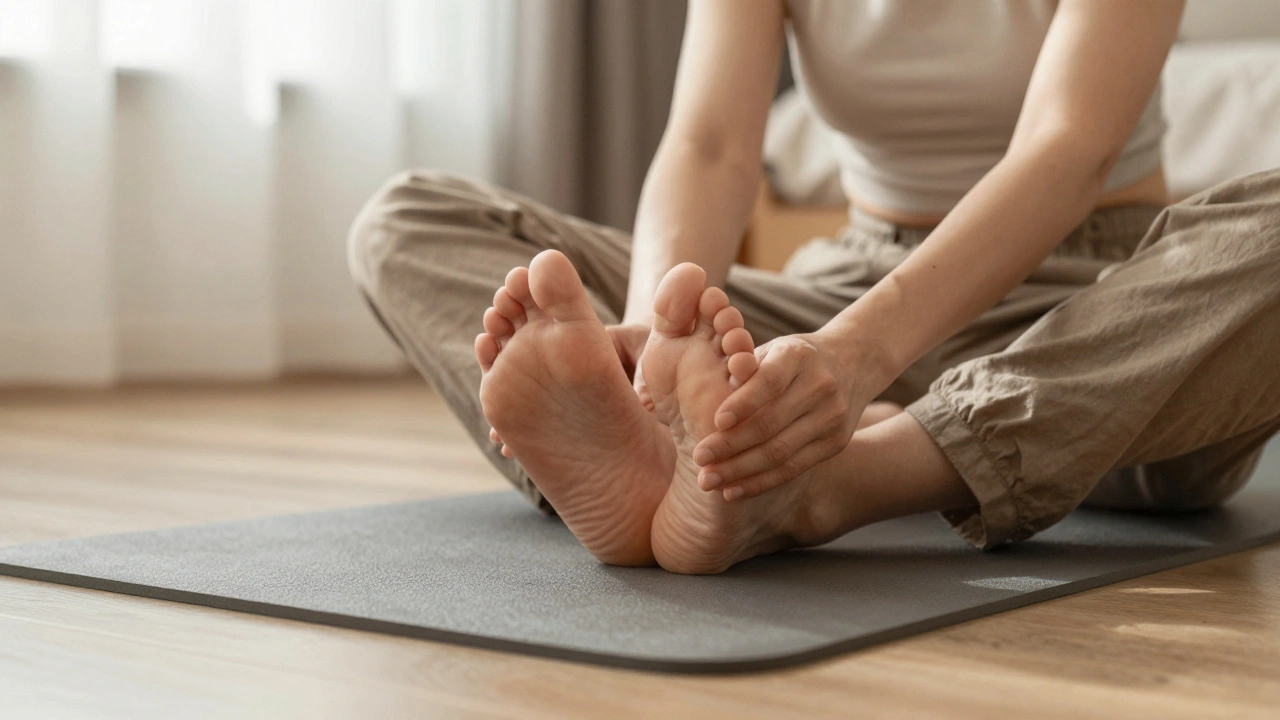
- Start with your feet-use your thumbs to press along the sole, from heel to toes. Do this for 2 minutes. It’s surprising how much tension lives here.
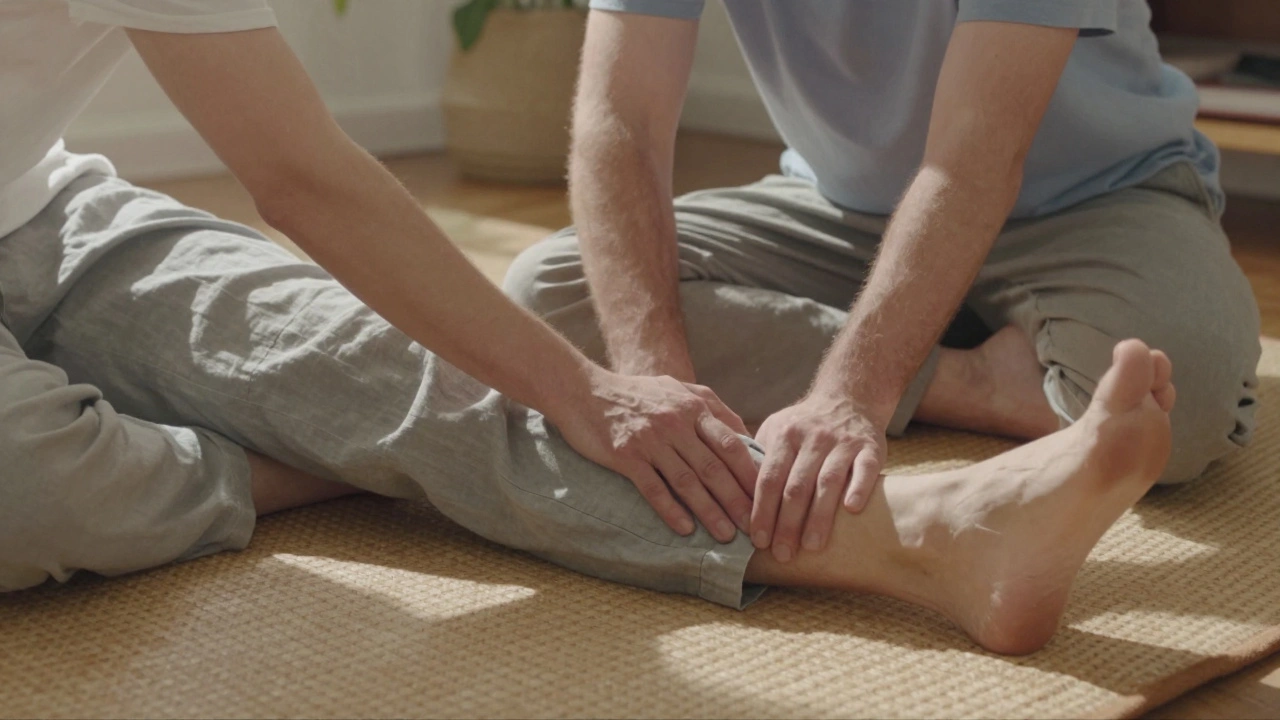
- Move to your calves-use both palms to squeeze and roll up from ankle to knee. Think of kneading dough. Repeat 5 times per leg.
- Work on your hips-lie on your back, bend one knee, and gently pull it toward your chest. Hold for 20 seconds. Switch sides. Do this 3 times each.
- Open your shoulders-clasp your hands behind your back, straighten your arms, and lift gently. Breathe into the stretch. Hold for 30 seconds.
- Finish with your neck-use your fingers to press lightly along the sides of your neck, from base of skull down to shoulders. Move slowly. Don’t force it.
That’s it. 15 minutes. Done. You can do this before bed, after waking up, or even during a lunch break. No equipment. No apps. Just you and your body.
What About Thai Massage With a Partner?
Want to go deeper? Ask someone you trust-a partner, friend, or roommate-to help. You don’t need to be a pro. Just follow these simple rules:
- Communicate constantly. Say ‘softer’ or ‘more’ as you go.
- Use your body weight, not just your arms. Lean into the pressure.
- Focus on areas they complain about: neck, lower back, shoulders.
- Keep it slow. Rushing defeats the purpose.
One couple in Utrecht started doing this once a week. They call it ‘our quiet hour.’ No talking. Just touch. They say it’s improved their sleep, their mood, and even how they talk to each other.
What to Expect During a Professional Session
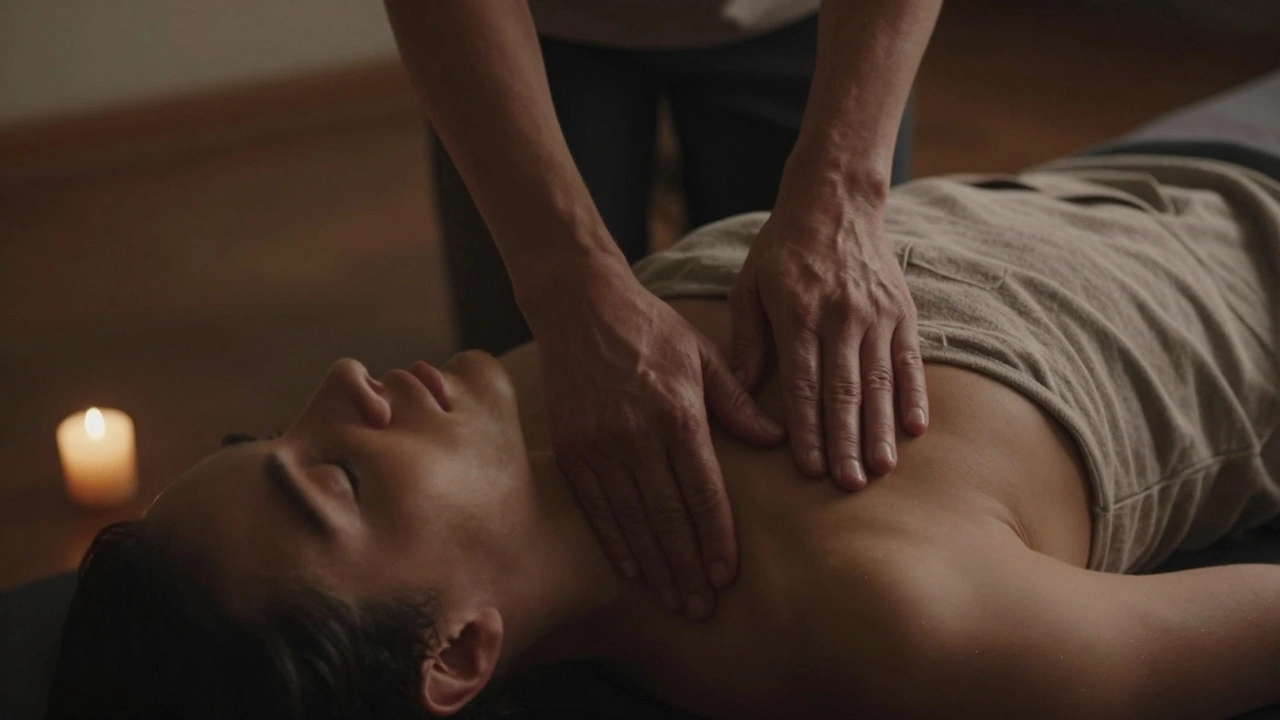
If you decide to visit a studio-like one in Amsterdam’s Jordaan or De Pijp-you’ll usually be asked to wear loose, stretchy clothes. The therapist will guide you through poses, applying pressure with thumbs, palms, elbows, and even feet. You’ll be stretched, compressed, and rocked. It might feel intense at first, but it should never hurt.
Most sessions last 60 to 90 minutes. You’ll leave feeling loose, light, and oddly energized. Not sleepy. Not zoned out. Just… balanced.
Thai Massage vs. Swedish Massage
| Feature | Thai Massage | Swedish Massage |
|---|---|---|
| Setting | Mat on floor | Table, usually with oils |
| Clothing | Fully clothed | Undressed under towel |
| Technique | Stretching, compression, acupressure | Long strokes, kneading, light pressure |
| Goal | Energy flow, mobility, structural release | Relaxation, surface tension relief |
| After Effects | Light, energized, flexible | Deeply relaxed, sometimes sleepy |
If you want to melt into a pillow, go for Swedish. If you want to wake your body up and move better, Thai is the way.
Frequently Asked Questions
Can I do Thai massage if I’m not flexible?
Absolutely. Thai massage isn’t about how far you can stretch-it’s about releasing tension. The therapist or your own hands will work within your limits. In fact, people with tight bodies benefit the most. You’ll get more flexible over time, not before you start.
How often should I do Thai massage for self-care?
Three times a week is ideal for noticeable results. Even once a week helps. If you’re dealing with chronic pain or high stress, daily 10-minute sessions can be a game-changer. Think of it like brushing your teeth-you don’t wait until your mouth hurts to do it.
Is Thai massage safe during pregnancy?
Yes, with modifications. Avoid deep pressure on the abdomen and lower back. Focus on gentle stretches for the legs, feet, and shoulders. Always check with your provider first, but many pregnant women find it helps with swelling and sleep.
Can Thai massage help with sciatica?
It can. Sciatica often comes from tight glutes and piriformis muscles. Thai massage targets those areas directly with compression and stretching. Many people report relief after just a few sessions. But if pain is sharp or radiating, see a physical therapist too.
Do I need special equipment?
No. A yoga mat, towel, or even a carpeted floor is enough. A cushion for your head or knees helps comfort, but it’s optional. The power is in your hands and your breath-not your gear.
Next Steps
Start small. Tonight, spend 5 minutes pressing your feet. Tomorrow, add the hip stretch. In a week, try the shoulder opener. You don’t need to master it. You just need to begin.
And if you ever want to go deeper-book a session at a Thai massage studio in Amsterdam. Look for places that train in the traditional Wat Pho style. That’s the real deal. But even if you never step into a studio, you’ve already unlocked the most powerful part: your own hands.