How Foot Massage Can Help Alleviate Arthritis Pain
You know that dull, aching grind in your feet when you’ve been on your feet all day? Now imagine that feeling never really goes away-because your joints are swollen, stiff, and sore from arthritis. It’s not just about walking differently. It’s about living differently. But what if something as simple as a foot massage could actually help ease that pain? It’s not magic. It’s science-and you don’t need to spend thousands on treatments to try it.
Key Takeaways
- Foot massage reduces inflammation and improves circulation in arthritic joints
- Regular sessions can decrease reliance on pain medication
- Reflexology and Swedish techniques are the most effective for arthritis
- You can do effective self-massage at home with just a tennis ball and 10 minutes a day
- Always consult your doctor before starting, especially if you have open sores or severe swelling
Direct Answer
Yes, foot massage can help alleviate arthritis pain. Studies show it reduces inflammation, improves blood flow to affected joints, and lowers perceived pain levels by up to 40% in regular users. It works best when combined with gentle movement and proper footwear.
Why Foot Massage Works for Arthritis
Arthritis doesn’t just attack your knees or hands. Your feet? They’re ground zero. With 26 bones, 33 joints, and over 100 muscles, tendons, and ligaments, your feet carry your whole body. When arthritis hits those joints, every step becomes a battle. Swelling, stiffness, and nerve pain make even standing unbearable.
Foot massage doesn’t cure arthritis-but it interrupts the pain cycle. How? By increasing circulation. When you massage your feet, you’re not just rubbing skin. You’re gently squeezing blood vessels, encouraging oxygen-rich blood to flood into inflamed tissues. That means less swelling. Less stiffness. Less burning pain.
There’s also the nervous system effect. Gentle pressure on the soles sends calming signals to your brain, overriding the pain messages coming from your joints. Think of it like hitting a mute button on your body’s alarm system.
A 2022 study in the Journal of Bodywork and Movement Therapies tracked 68 people with osteoarthritis in their feet. After eight weeks of twice-weekly 30-minute foot massages, 73% reported noticeably less pain. Half of them cut their painkiller use by at least half.
Types of Foot Massage That Help Arthritis
Not all foot massages are created equal. If you’re dealing with arthritis, some techniques work better than others.
- Swedish Foot Massage: Long, flowing strokes with light to moderate pressure. Perfect for easing general stiffness and improving circulation. Best for early-stage arthritis.
- Reflexology: Targets specific pressure points on the feet believed to connect to joints and organs. While the science behind reflexology is debated, many arthritis patients swear by its pain-reducing effect-especially on the ball of the foot, which corresponds to the toe joints.
- Therapeutic Massage with Heat: Warm towels or heated stones applied to the feet before massage help relax tight muscles and soften inflamed tissues. Especially helpful in colder months.
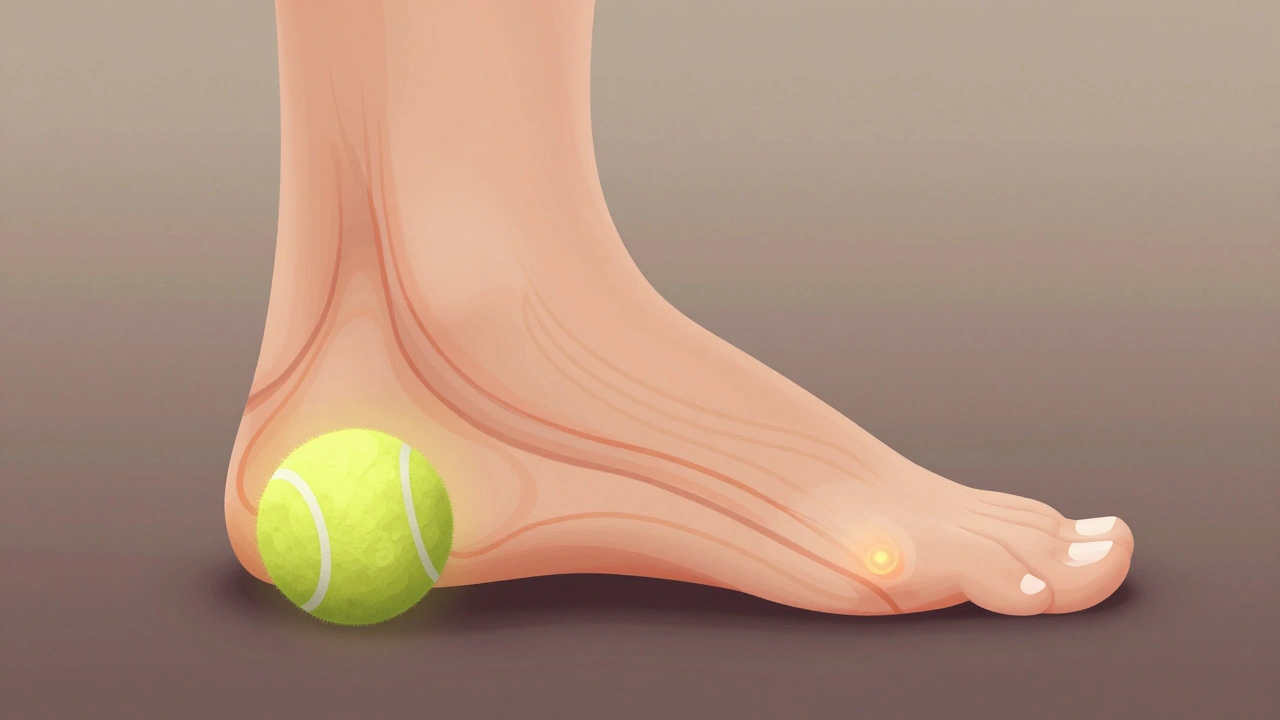
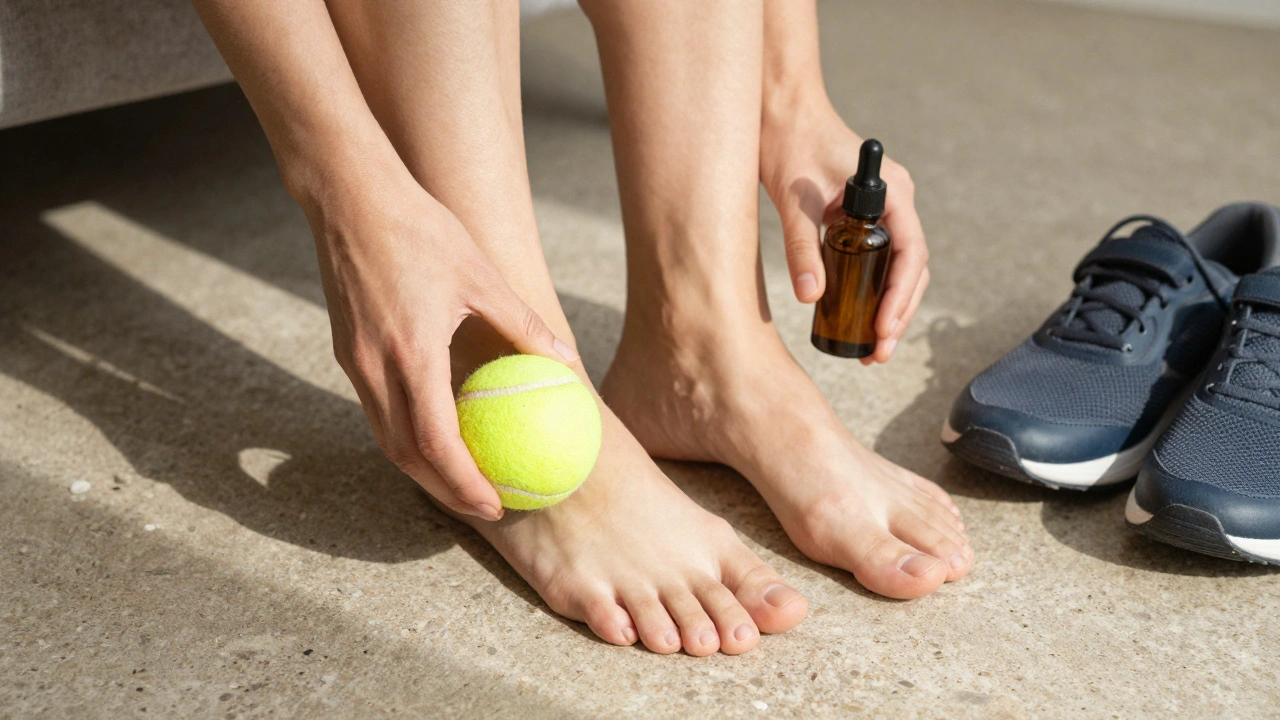
- Self-Massage with Tools: A golf ball or tennis ball rolled under the foot for 5-10 minutes daily can be just as effective as a professional session. No need to spend money if you’re consistent.
Avoid deep tissue or aggressive pressure. If your joints are already inflamed, too much force can make things worse. Think gentle, not hard.
What to Expect During a Foot Massage Session
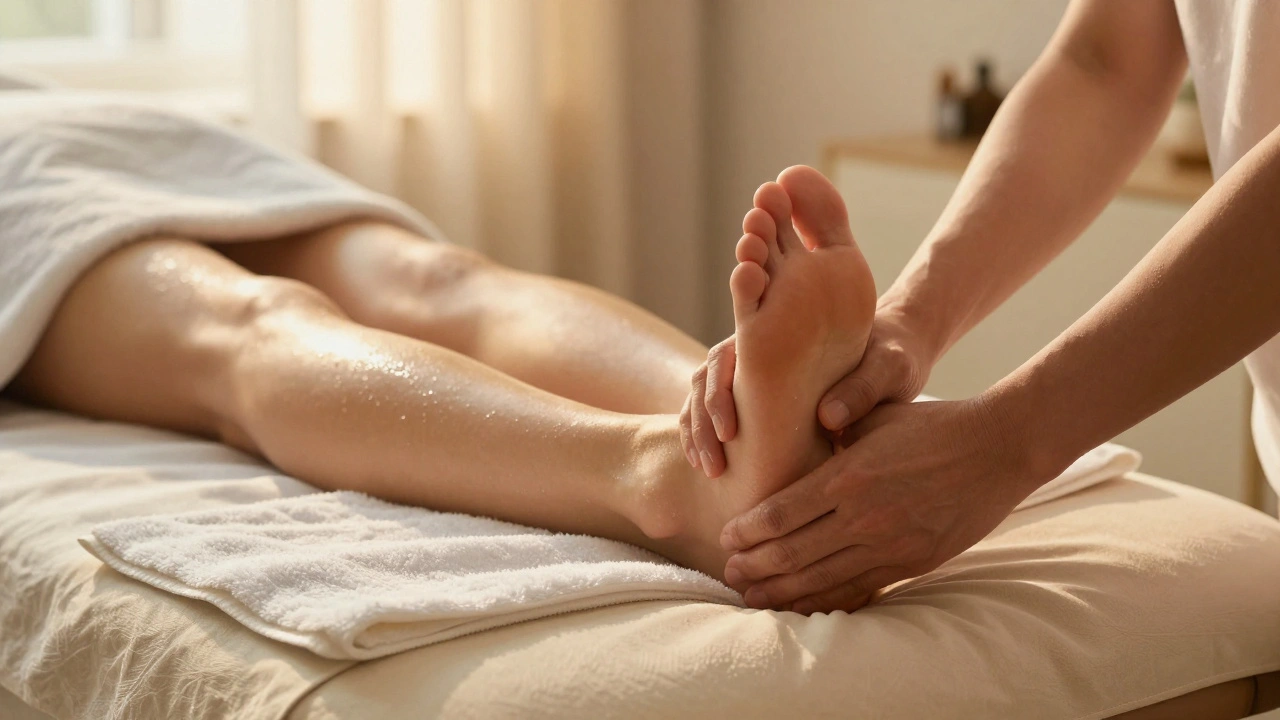
Picture this: You’re lying back on a padded table, barefoot, in a quiet room with soft lighting. The therapist starts with warm, damp towels to relax your skin. Then comes the oil-scented with lavender or eucalyptus, never greasy. Their hands move slowly, starting at your heels, gliding up to your toes, circling each joint gently.
They won’t dig into your arches like they’re trying to crack a nut. Instead, they’ll use the pads of their thumbs to apply steady, rhythmic pressure. You might feel a slight ache where your arthritis is worst-but it should never be sharp. If it is, speak up.
Most sessions last 30 to 60 minutes. You’ll leave with warmer feet, lighter steps, and a sense of calm that lingers for hours. Some people even sleep better afterward.
How to Do Foot Massage at Home
You don’t need a spa to get relief. Here’s how to do it yourself, five days a week:
- Soak your feet in warm water with Epsom salts for 10 minutes. This loosens stiff joints.
- Dry them thoroughly. Apply a natural oil like coconut, almond, or jojoba.
- Use your thumbs to press and roll along the sole, from heel to ball of the foot. Repeat 10 times.
- Circle each toe joint gently-clockwise, then counterclockwise. Do this for each toe.
- Roll a tennis ball under your arch for 2 minutes. Apply body weight, but don’t force it.
- Finish by massaging your ankles in slow circles, both directions.
Do this before bed or after a long walk. You’ll be surprised how much difference 10 minutes makes.
Where to Find Foot Massage in Amsterdam
Amsterdam has no shortage of places that specialize in therapeutic foot care. Look for therapists trained in physiotherapy-based massage or reflexology with a medical background. Avoid purely relaxation-focused spas if you’re seeking pain relief.
Some trusted spots:
- De Voetenspecialist (Amsterdam Zuid): Focuses on foot health for chronic pain patients. Offers custom massage plans.
- Therapia (De Pijp): Combines reflexology with gentle joint mobilization. Therapists consult with your doctor.
- Wellness at the Canals (Centrum): Offers heated foot therapy with aromatherapy oils. Great for beginners.
Always ask: “Do you have experience working with arthritis patients?” If they look confused, move on.
Pricing and Booking
Foot massage in Amsterdam typically costs between €45 and €85 per hour. For arthritis-specific sessions, expect to pay €60-€75. Some clinics offer package deals: 5 sessions for €275, which saves you about 20%.
Booking is easy. Most places let you book online. Look for filters like “chronic pain,” “arthritis,” or “therapeutic massage.” Don’t hesitate to call and ask if they tailor their technique for joint conditions. Most do.
Safety Tips
Foot massage is safe for most people with arthritis-but not if you ignore red flags.
- Avoid massage if you have open sores, infections, or unhealed ulcers. Arthritis can cause skin breakdown. Massage over broken skin risks infection.
- Don’t massage swollen joints directly. Focus on surrounding muscles and tendons instead.
- Check with your doctor if you’re on blood thinners. Massage increases circulation, which can raise bleeding risk.
- Stop if you feel sharp pain, numbness, or tingling. That’s your body saying, “Too much.”
- Wear supportive shoes after. Don’t undo your progress by stepping into flats or flip-flops.
Foot Massage vs. Other Therapies for Arthritis
| Therapy | Effectiveness for Joint Pain | Cost per Session | Frequency Needed | Home-Friendly? |
|---|---|---|---|---|
| Foot Massage | High (especially for foot/ankle arthritis) | €45-€85 | 2-3 times/week | Yes |
| Physical Therapy | Very High | €70-€110 | 1-2 times/week | Partially |
| Hot Stone Therapy | Moderate | €80-€120 | 1-2 times/month | No |
| Acupuncture | Moderate to High | €65-€90 | 1-2 times/week | No |
| Ultrasound Therapy | High (clinical only) | €50-€80 | 2-3 times/week | No |
Foot massage wins for accessibility. You can do it at home. It’s affordable. And it doesn’t require a prescription. It’s not a replacement for physical therapy or medication-but it’s a powerful companion.
Frequently Asked Questions
Can foot massage make arthritis worse?
Only if it’s done too aggressively. Deep pressure on swollen joints can irritate them further. Always use light to moderate pressure, and avoid massaging directly over red, hot, or severely swollen areas. If in doubt, ask your physiotherapist for guidance.
How long until I feel relief from foot massage?
Some people feel better after one session-especially in terms of relaxation and temporary pain reduction. For lasting improvement in joint stiffness and swelling, most people need 2-4 weeks of consistent sessions (at least twice a week). Think of it like exercise: results build over time.
Is reflexology better than regular foot massage for arthritis?
Reflexology targets specific points linked to joints, which some find deeply soothing. But there’s no strong evidence it’s more effective than gentle Swedish massage for reducing arthritis pain. The real benefit comes from consistent pressure, warmth, and improved circulation-regardless of whether it follows a reflexology map. Choose what feels best to you.
Can I use a foot massager machine instead of manual massage?
Electric massagers can help, but they’re not ideal for arthritis. Most are designed for relaxation, not therapeutic relief. They often apply uneven pressure or vibrate too intensely, which can irritate inflamed joints. If you use one, stick to low settings and limit use to 10 minutes. Manual massage with your hands or a ball is safer and more effective.
Should I combine foot massage with other treatments?
Absolutely. Foot massage works best as part of a broader plan: supportive shoes, low-impact exercise like swimming or cycling, anti-inflammatory diet, and prescribed medication if needed. Think of massage as the daily reset button for your feet-not the whole cure.
Final Thought
You don’t have to accept pain as part of aging. Arthritis changes your life-but it doesn’t have to take away your comfort. A few minutes a day with your own hands, or a quiet hour with a skilled therapist, can bring back the simple joy of walking without wincing. It’s not a miracle. But it’s real. And it’s waiting for you-right under your feet.


Charles Mitchell
February 14, 2026 AT 13:01Stephanie Suttle
February 15, 2026 AT 14:47rafael marcus
February 17, 2026 AT 03:08Michaela Bublitz
February 17, 2026 AT 07:52Haseena Budhan
February 18, 2026 AT 16:55Shelley Ploos
February 19, 2026 AT 05:25Abagail Lofgren
February 19, 2026 AT 19:25