Hot Stone Massage Benefits: Gentle Relief for Muscle Tension
Key Takeaways
- Hot stone massage uses heated basalt stones to melt away muscle tension.
- It’s a low‑impact alternative to deep‑tissue work, perfect for beginners.
- Amsterdam offers a range of studios, from boutique spa rooms to luxury hotel suites.
- Typical sessions cost €70‑€120 and last 60‑90 minutes.
- Safety hinges on proper stone temperature (45‑55°C) and therapist training.
Direct Answer
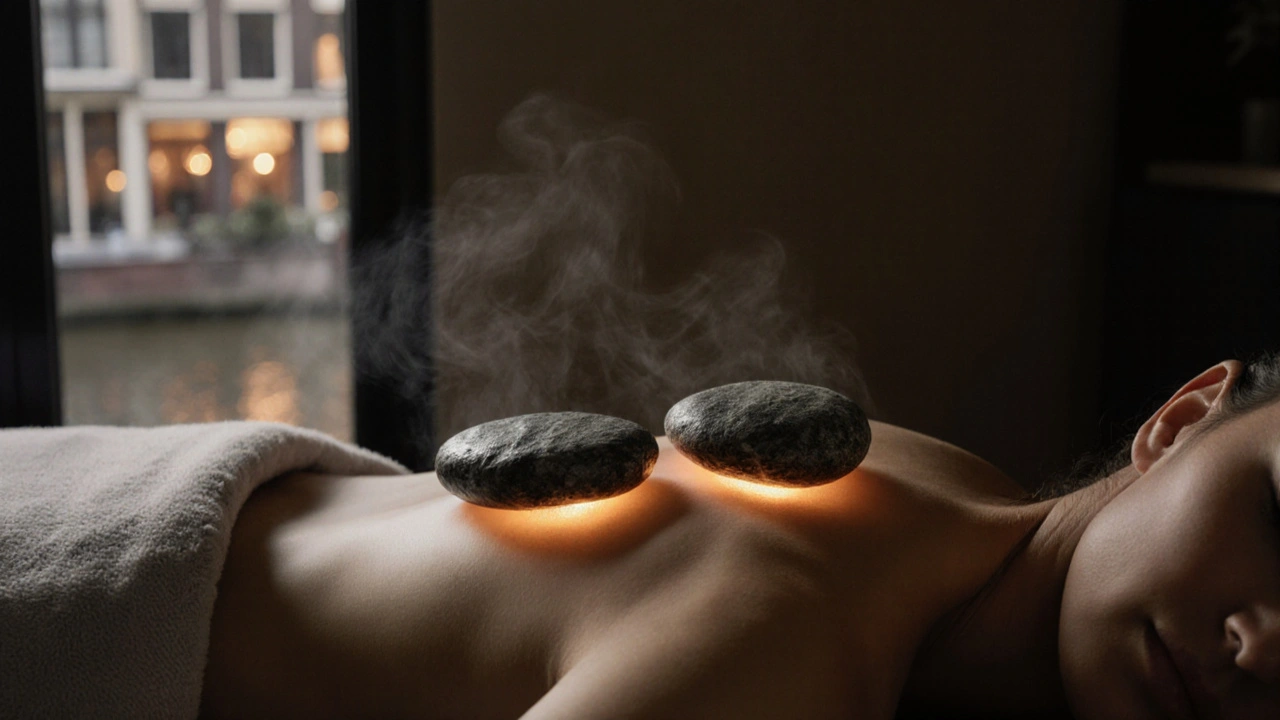
Hot stone massage is a therapeutic technique where smooth, heated stones are placed on key muscle groups and used as extensions of the therapist’s hands to ease tightness and improve circulation. The warmth relaxes fibers, allowing a gentle stretch without the intense pressure of a deep‑tissue massage.
Comprehensive Guide to Hot Stone Massage
Imagine stepping into a calm room, the faint scent of lavender drifting in, and a warm stone pressed against your shoulder. That’s the essence of hot stone massage - a blend of heat therapy and traditional bodywork that feels both soothing and restorative. Whether you’re an athlete nursing sore muscles or someone who spends hours at a desk, this treatment offers a pathway to loosen up without aggressive pressure.
Definition and Context
When we talk about Hot Stone Massage is a therapy that uses heated stones, typically basalt, to relax muscles and improve blood flow. The practice originated in the United States during the 1970s, inspired by ancient Native American traditions that used heated rocks for healing. Today, it’s a staple in many spa environments, especially in wellness‑focused cities like Amsterdam.
Unlike a standard Swedish massage that relies purely on manual strokes, hot stone massage adds the element of sustained heat. This heat penetrates deeper into tissue, making it easier for the therapist to work on tight spots without resorting to high pressure.
Benefits of Hot Stone Massage
Here’s why you might choose this treatment over other modalities:
- Deep relaxation: The constant warmth triggers the parasympathetic nervous system, lowering heart rate and reducing stress hormones.
- Improved circulation: Heat dilates blood vessels, delivering oxygen‑rich blood to tired muscles.
- Reduced muscle stiffness: Warmed muscles are more pliable, so tension eases faster.
- Enhanced flexibility: Gentle stretching while the stones stay warm can improve range of motion.
- Pain relief for chronic conditions like arthritis or fibromyalgia, as the temperature helps soothe inflamed joints.
Clients often report feeling like they’ve shed a layer of mental and physical fatigue after a single session.
Types of Hot Stone Massage Available in Amsterdam
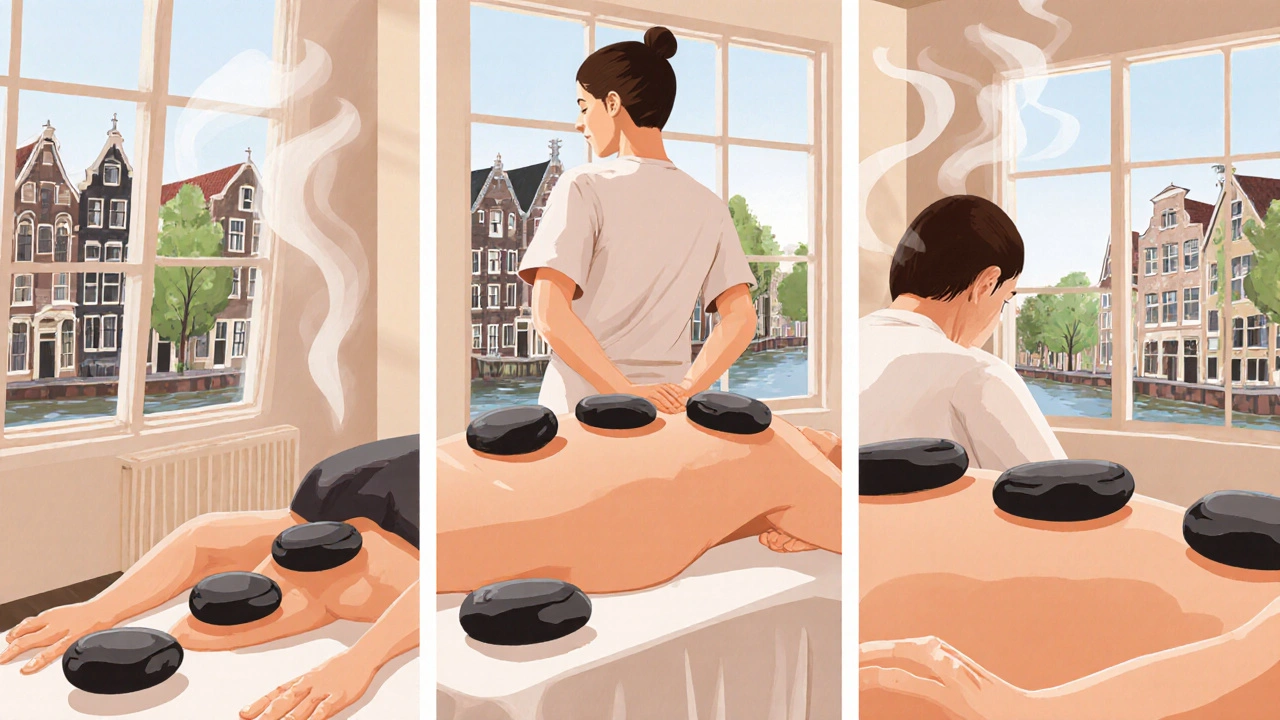
Amsterdam’s diverse wellness scene means you’ll find several variations:
- Full‑body hot stone: Stones are placed along the spine, hands, feet, and back, with the therapist using them for kneading.
- Back‑focused stones: Ideal for office workers; only the back receives stone placement while the rest of the body gets a light Swedish massage.
- Hot stone & aromatherapy combo: Adds essential oils (often lavender or eucalyptus) to amplify relaxation.
- Stone foot massage: Warm stones glide over the soles, perfect after a long day of walking the canals.
Most studios use basalt stone, prized for its ability to retain heat for long periods. Some upscale spas also experiment with jade or marble for a cooler touch, but basalt remains the standard.
How to Find Hot Stone Massage Services in Amsterdam
Finding a reputable place is easier than you think. Follow these practical steps:
- Search “hot stone massage Amsterdam” on Google Maps. Look for locations with high star ratings (4.5+) and recent reviews mentioning stone temperature and therapist professionalism.
- Check local wellness directories such as “Amsterdam Spa Guide” or “Wellness Amsterdam”. They often list certified therapists and detail the stone‑therapy credentials.
- Ask for recommendations on community forums like Reddit’s r/Amsterdam or local Facebook groups. Residents love sharing hidden‑gem studios in De Pijp or the Jordaan.
- Visit the spa’s website. Reputable sites will display therapist bios, training certificates, and a clear description of stone sanitation practices.
- Call ahead to confirm stone temperature range (45‑55°C) and ask about any add‑on options like aromatherapy or reflexology.
Most boutique spas are located near popular neighborhoods: the Canal Belt, Museumplein, and the vibrant Oud-West district.
What to Expect During a Session
First, the therapist will welcome you in a quiet, dimly lit room. You’ll change into a soft robe and lie on a comfortable massage table. Here’s the typical flow:
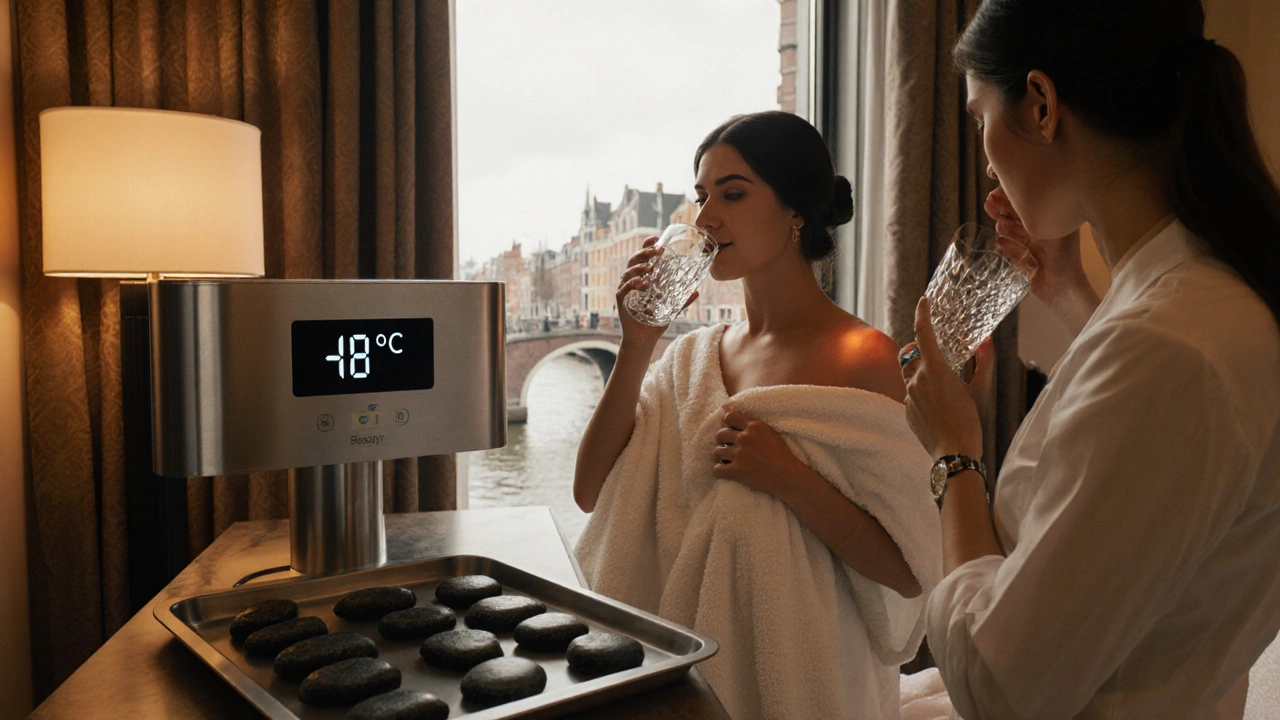
- Stone heating: Stones are warmed in a water‑filled stone heater to 45‑55°C (113‑131°F). This temperature feels warm but never scalding.
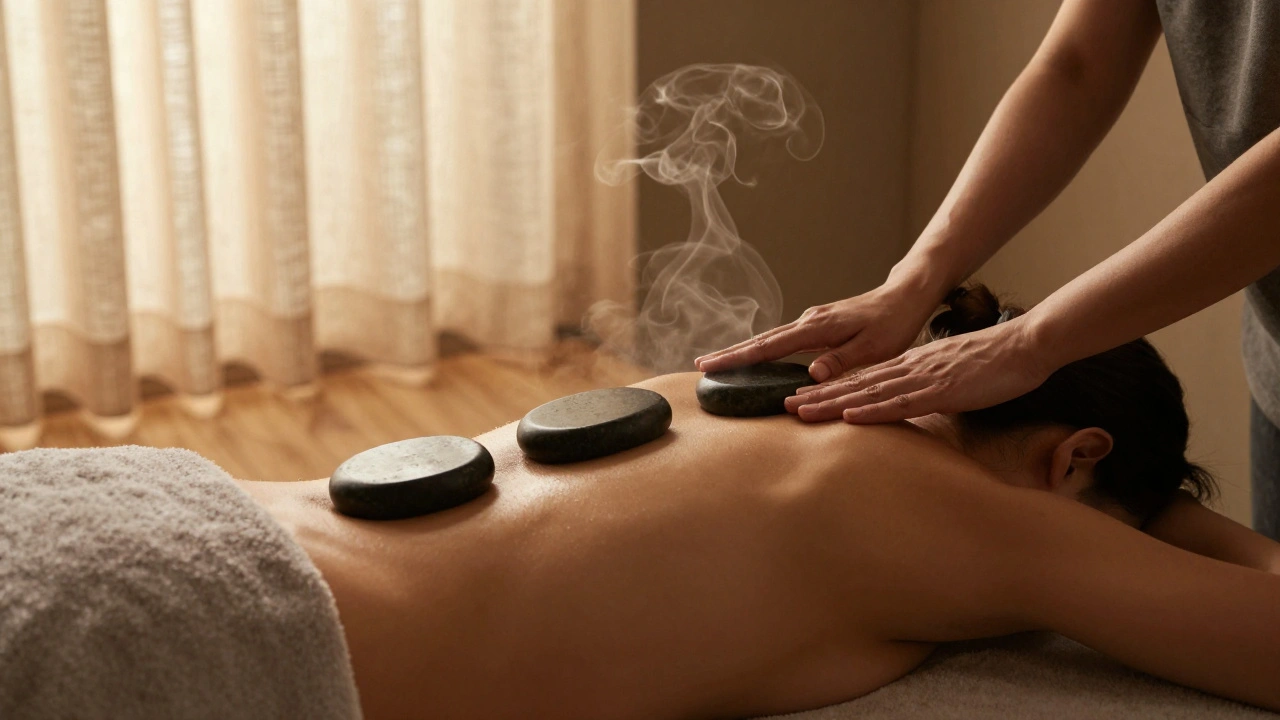
- Initial placement: Warm stones are positioned on key points - lower back, along the spine, chest, and palms.
- Massage: Using the stones as extensions of the hands, the therapist glides, rolls, and gently presses, combining long strokes with localized pressure.
- Switching stones: As stones cool, fresh ones replace them to maintain consistent warmth.
- Finishing: The therapist removes the stones, applies a brief warm towel wrap, and gives you a moment to rest before you get dressed.
The entire experience usually lasts 60 to 90 minutes. You’ll emerge feeling physically loosened and mentally calmer.
Pricing and Booking
Amsterdam’s market varies by location and spa ambiance:
- Standard 60‑minute session: €70‑€90.
- Extended 90‑minute session with aromatherapy: €100‑€120.
- Luxury hotel spa packages (including champagne or post‑massage tea): €130‑€150.
Most places accept online bookings through their website or platforms like Treatwell. It’s wise to book at least 24‑48 hours in advance, especially on weekends.
Safety Tips
Heat therapy is safe when proper protocols are followed. Keep these pointers in mind:
- Confirm the therapist checks stone temperature before placement - any stone hotter than 55°C could burn the skin.
- Inform the therapist about any medical conditions (e.g., diabetes, varicose veins, recent surgery) as heat can affect circulation.
- Pregnant clients should avoid the lower back area and opt for a lighter stone pressure.
- Hydrate before and after the session; warm therapy can increase fluid loss.
- Look for clear sanitation practices - stones should be cleaned with an approved disinfectant between clients.
Qualified practitioners often hold certifications from bodies like the International Association of Massage Therapists (IAMT) or Dutch Massage Federation.
Comparison Table: Hot Stone Massage vs. Swedish Massage in Amsterdam
| Feature | Hot Stone Massage | Swedish Massage |
|---|---|---|
| Primary tool | Heated basalt stones | Hands, forearms, elbows |
| Heat level | 45‑55°C (constant) | None |
| Pressure | Gentle to moderate | Light to firm |
| Ideal for | Muscle tension, stress relief, chronic pain | General relaxation, circulation boost |
| Typical cost (Amsterdam) | €70‑€120 | €60‑€90 |
| Session length | 60‑90 min | 60‑75 min |
Frequently Asked Questions
What temperature are the stones heated to?
What temperature are the stones heated to?
Stones are normally heated to between 45°C and 55°C (113°F‑131°F). This range feels warm but safe for skin contact.
Is hot stone massage painful?
It should never be painful. If a stone feels too hot or pressure is uncomfortable, let the therapist know immediately.
Can I have a hot stone massage if I have high blood pressure?
Most people with controlled hypertension can enjoy the treatment, but you should discuss it with your doctor and inform the therapist before the session.
How often should I book a hot stone massage?
For ongoing tension, a session every 2‑4 weeks works well. If you’re using it for occasional stress relief, once a month is sufficient.
Do I need to bring my own stones?
No. Professional spas provide sterilized basalt stones and maintain the proper heating equipment.
Ready to Experience the Warmth?
If you’re craving a gentle yet effective way to melt away muscle tension, book a hot stone session at a trusted Amsterdam spa today. Your body-and mind-will thank you.


tom sellack
October 12, 2025 AT 22:13Hot stones are great for loosening tight shoulders.
Aswinraj Rajendran
October 12, 2025 AT 23:36Totally feel you, man. I’ve seen clients who struggled with chronic back pain finally relax when the therapist pads the basalt stones just right. The heat kinda melts the tension like butter on toast, so you don’t need crazy deep pressure. Definately give it a shot if you spend a lot of time at a desk, it’s a solid low‑impact option.
Joshua Bastow
October 13, 2025 AT 12:06The article provides a thorough overview of hot stone massage, yet it occasionally sacrifices precision for breadth. While the historical context is appreciated, the claim that the practice originated in the United States during the 1970s neglects earlier indigenous applications of heated rocks for therapeutic purposes. The enumeration of benefits, such as improved circulation and reduced muscle stiffness, aligns with existing literature, but the lack of citations diminishes the credibility of these assertions. Moreover, the price ranges listed for Amsterdam spas are plausible; however, the article fails to differentiate between boutique establishments and luxury hotel suites in a manner that would aid the reader’s decision‑making process. The description of the procedural steps is commendably detailed, yet the repeated use of the phrase “stone heating” appears redundant. The safety section correctly emphasizes temperature monitoring, but it would benefit from a more explicit reference to the standardized temperature limits stipulated by professional massage associations. The comparison table between hot stone and Swedish massage is informative, although the formatting inconsistencies-such as missing closing tags-detract from the overall presentation. The inclusion of a FAQ segment is useful, yet several answers echo information already presented in earlier sections, resulting in unnecessary duplication. The article’s tone oscillates between informal promotional language and formal instructional discourse, which may confuse readers seeking a consistent voice. Additionally, the recommendation to book 24–48 hours in advance is sound advice, but the article does not address peak tourism periods when availability may be severely limited. The discussion of alternative stones, such as jade and marble, is brief and would merit further elaboration regarding their thermal properties compared to basalt. The mention of certifications from bodies like the IAMT and the Dutch Massage Federation is pertinent, though the article neglects to explain the specific competencies these credentials verify. In summary, the piece succeeds in delivering a comprehensive guide, yet it requires refinement in sourcing, structural coherence, and editorial precision. Future revisions should aim to integrate peer‑reviewed references and to streamline repetitive content. Until such enhancements are implemented, readers should consult additional reputable resources to confirm the information presented herein.
Danielle Yao
October 13, 2025 AT 13:30Thanks for the detailed analysis, Joshua! I appreciate the thoroughness and just wanted to point out a tiny typo-“therapist’s” should have an apostrophe. Other than that, great job breaking down the info.
Rehan Rasheed
October 14, 2025 AT 02:00Yo, if you’re staring at a screen all day, a hot stone session is literally a reset button for your body. The warmth gets your muscles humming and it’s way less intimidating than a hardcore deep‑tissue massage. Grab a spot in De Pijp and let those basalt rocks do the work-you’ll feel the difference instantly.
Caleb Wingate
October 14, 2025 AT 03:23Interesting take, Rehan. I’d add that the ambient lighting and background music can actually amplify the therapeutic effect, so don’t overlook the atmosphere when you choose a studio.
Robert Stoots
October 14, 2025 AT 15:53Hot stone massage - great for anyone who wants a gentle stretch without the “ouch” factor!!! It’s especially good for folks with tight shoulders, lower back knots, or just a need to chill out. Prices in Amsterdam vary, but you can usually find a decent session for around €80‑€100. Remember to check the therapist’s credentials, and don’t forget to hydrate before and after! If you’re near the Canal Belt, there’s a hidden gem that uses jade stones for an extra luxe vibe.
Ross Silvis
October 14, 2025 AT 17:16Oh wow, thanks for the groundbreaking tip-like I never knew to check credentials before getting smacked with a hot rock.
Schechter Donovan
October 14, 2025 AT 18:40Hey, Ross, totally get the eye‑roll-everyone’s been there. Still, a quick glance at reviews can save you from a steamy nightmare, and nobody wants to end up feeling like a baked potato.