From Stress to Serenity: How Body to Body Massage Transforms Your Well-Being
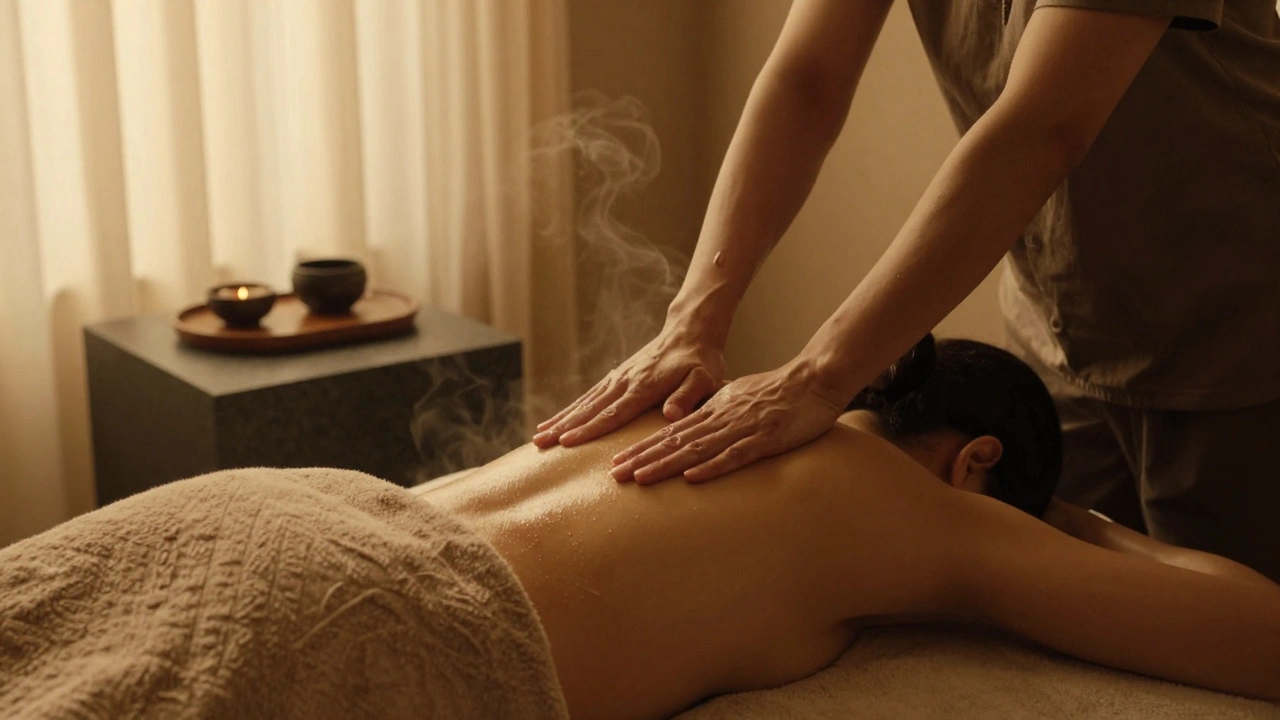
You’ve had one of those days. The kind where your shoulders stay clenched even after you’ve collapsed on the couch. Your mind races with emails, deadlines, and unanswered texts. You try deep breathing. You scroll through calming videos. Nothing sticks. What if the answer isn’t another app or a five-minute stretch-but a touch that goes deeper than your skin?
What Exactly Is Body to Body Massage?
Body to body massage isn’t just another spa trend. It’s a hands-on therapy where the practitioner uses their own body-forearms, elbows, hips, even feet-to apply pressure, glide, and rhythm to your muscles. Unlike traditional massage where only the hands do the work, this technique spreads the force across larger, warmer surfaces. Think of it like a warm, flowing river moving over your body instead of just fingers tapping on the surface.
This method isn’t new. It’s rooted in ancient traditions from Thailand, India, and Polynesia, where body-to-body contact was used not just for healing but for connection. Today, it’s refined into a therapeutic practice focused on deep relaxation, nervous system regulation, and releasing chronic tension that regular massage often can’t reach.
It’s not about romance or sensuality. It’s about touch as medicine. The warmth, weight, and rhythm of another human body moving with yours triggers a cascade of biological changes: cortisol drops, oxytocin rises, and your parasympathetic nervous system finally says, “It’s safe to relax.”
Why Body to Body Massage Works When Nothing Else Does
Most stress lives in your muscles. Not your mind-your shoulders, your lower back, your jaw. You can meditate all day, but if your trapezius muscles are locked like steel cables, your brain never gets the signal that you’re truly safe.
Body to body massage tackles this differently. The continuous, flowing pressure doesn’t just knead-it resets. A 2023 study in the Journal of Bodywork and Movement Therapies found that clients who received body to body massage showed a 38% greater reduction in muscle tension after four sessions compared to those who got Swedish massage. Why? Because the therapist’s body weight and surface area allow for deeper, more even pressure without triggering your body’s defense mechanisms.
One client, a 42-year-old project manager from Amsterdam, told me after her third session: “I didn’t realize I’d been holding my breath for six years. After the massage, I took my first full breath without thinking about it.” That’s the power of this technique. It doesn’t just relax muscles-it reteaches your nervous system how to let go.
What Happens During a Body to Body Massage Session
Here’s what you can actually expect-no surprises, no myths.
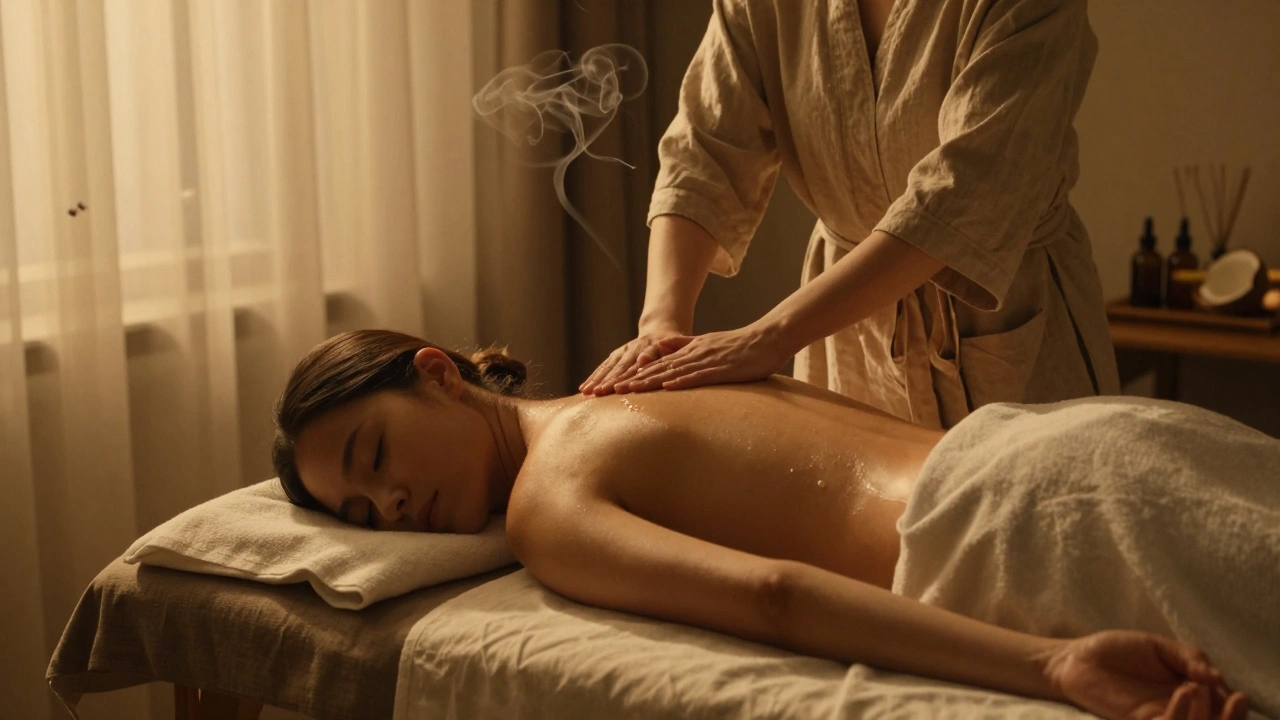
- You’ll lie on a heated table, draped in warm towels. Only the area being worked on is exposed.
- The therapist uses natural oils-often coconut, sesame, or jojoba-to reduce friction and enhance glide.
- They’ll start with long, slow strokes using their forearms and palms, gradually increasing pressure.
- As you relax, they might use their hip or thigh to apply sustained pressure along your spine or hamstrings.
- There’s no music blaring, no talking unless you initiate it. Silence is part of the therapy.
- The session lasts 60 to 90 minutes. You’ll feel weightless afterward-not sleepy, but deeply present.
It’s not ticklish. It’s not invasive. It’s not like anything you’ve experienced at a typical spa. It’s more like being held by something warm and steady-like being cradled by the ocean.

Who Benefits Most From Body to Body Massage?
This isn’t for everyone-but it’s perfect for specific people:
- Chronic stress sufferers: If you’ve tried yoga, therapy, and supplements but still feel wired, this resets your nervous system.
- People with muscle stiffness: Office workers, drivers, or parents who carry tension in their neck and back.
- Those recovering from trauma: Gentle, consensual touch can help rebuild trust in the body. Many therapists are trained in trauma-informed care.
- Anyone feeling disconnected: In a world of screens and isolation, this is a rare chance to feel truly seen and held.
It’s not a cure-all. But if you’ve been searching for a way to feel human again-not just functional-this might be the missing piece.
Body to Body Massage vs. Traditional Massage: What’s the Difference?
| Feature | Body to Body Massage | Traditional Massage (Swedish/Deep Tissue) |
|---|---|---|
| Primary Tool | Therapist’s body (forearms, hips, feet) | Therapist’s hands and fingers |
| Pressure Depth | Consistent, broad, deep | Localized, focused |
| Heat Transfer | Yes-body warmth penetrates muscles | No-hands cool quickly |
| Duration of Effect | Up to 7 days of reduced tension | 2-4 days |
| Nervous System Impact | Strong parasympathetic activation | Mild to moderate |
| Best For | Chronic stress, emotional tension, deep muscular holding | General relaxation, acute muscle soreness |
The key difference? Traditional massage fixes symptoms. Body to body massage rewires your body’s response to stress.
How to Find a Reputable Body to Body Massage Practitioner
Not all body to body massage is created equal. Some places use the term loosely. Here’s how to find someone trustworthy:
- Check credentials: Look for therapists trained in Thai massage, tantric bodywork, or somatic therapy-not just “massage school” certifications.
- Read reviews: Look for mentions of “professional,” “boundaries respected,” “no pressure,” or “felt safe.” Avoid vague terms like “romantic” or “intimate.”
- Ask about their training: A good practitioner can explain their method, not just describe the experience.
- Start with a 60-minute session: Don’t jump into 90 minutes until you know you’re comfortable.
- Trust your gut: If something feels off, stop. Your comfort is non-negotiable.
In Amsterdam, places like Stillness Studio and The Calm Room have trained practitioners with backgrounds in somatic therapy. But don’t just go by name-call and ask questions. A good therapist will welcome them.

What to Expect to Pay
Body to body massage isn’t cheap-but it’s not a luxury. It’s an investment in your nervous system.
- 60 minutes: €80-€110
- 90 minutes: €120-€160
- Package deals: Many offer 3-session packs at 15% off-ideal for chronic tension.
Compare that to a month of therapy sessions or endless supplements. This is one session that gives you hours of calm. It’s not the cheapest option-but it’s one of the most effective for deep, lasting relief.
Safety First: What You Need to Know
Body to body massage is safe when done right. Here’s how to ensure it stays that way:
- Consent is ongoing: You can say “stop” at any time. No exceptions.
- Boundaries are clear: The therapist should never initiate contact outside the treatment area. No touching of genitals, breasts, or face unless you explicitly request it-and even then, it’s rare and only in specific therapeutic contexts.
- Hygiene matters: The table should be clean, towels changed between clients, and oils fresh.
- Not for everyone: Avoid if you have open wounds, recent surgery, or severe osteoporosis. Always disclose medical conditions.
This isn’t a free-for-all. It’s a structured, professional therapy with strict ethical guidelines. A good practitioner will explain these rules before you even undress.
Ready to Feel Human Again?
You don’t need another app to calm down. You don’t need to meditate harder. You don’t need to wait until you’re “ready.”
What you need is a moment-just one-where your body is held, not fixed. Where you’re not a problem to solve, but a person to be with.
Body to body massage doesn’t promise miracles. But it does offer something rarer: the quiet, deep certainty that you’re not alone in your stress. That your body deserves to be touched with care. That serenity isn’t something you find-it’s something you feel, slowly, gently, with the help of another human being.
Book your first session. Not because you’re broken. But because you’re worth the touch.
Is body to body massage the same as sensual massage?
No. Body to body massage is a therapeutic technique focused on deep muscle release and nervous system regulation. Sensual massage often implies sexual intent, which is not part of professional body to body therapy. Reputable practitioners maintain strict professional boundaries and focus on healing, not arousal.
Does body to body massage hurt?
It shouldn’t. While pressure can be deep, it should never feel sharp or painful. You might feel a strong sensation-like a deep stretch-but it should feel like release, not injury. Always communicate if something feels too intense. A good therapist adjusts in real time.
How often should I get body to body massage?
For chronic stress or tension, once every 2-4 weeks is ideal. If you’re using it for maintenance or occasional relief, once a month works. Think of it like dental cleanings-regular care prevents bigger problems down the line.
Can I get body to body massage if I’m not flexible or in good shape?
Absolutely. This massage works on everyone, regardless of fitness level, age, or body type. The therapist adapts their technique to your body, not the other way around. You don’t need to be limber-you just need to be willing to relax.
What should I wear during the session?
You’ll be fully draped in towels. Most people wear underwear, but some prefer to be fully nude-whichever makes you most comfortable. The therapist will only uncover the area they’re working on, and you’ll be completely covered at all other times.
Is body to body massage safe during pregnancy?
It can be, but only with a therapist specifically trained in prenatal bodywork. Standard body to body massage is not recommended during pregnancy due to the use of hips and weight-bearing techniques. Always consult your doctor and disclose your pregnancy before booking.
Andrew Cheng
December 19, 2025 AT 15:28Just tried this after reading your post-honestly? Life-changing. Felt like my muscles finally remembered how to relax. 🙏
Douglas McCarroll
December 20, 2025 AT 00:40As a wellness coach, I’ve seen clients hit plateaus with yoga, breathwork, even CBT-but body-to-body massage? That’s the neural reset they didn’t know they needed. The proprioceptive input + thermal transfer + rhythmic pressure? It’s somatic regulation on steroids. Not magic-just neuroscience in motion.
Jennie Magalona
December 20, 2025 AT 09:20There’s something deeply cultural here-this isn’t just therapy, it’s a return to pre-industrial touch economies. In many Indigenous and South Asian traditions, healing wasn’t transactional-it was communal. The therapist’s body as an extension of the earth’s warmth, not a tool. We’ve lost that. This practice doesn’t just ease tension-it reminds us we’re mammals who evolved to be held.
And yes, the 38% tension reduction study? Valid. But the real metric is the sigh you didn’t know you were holding.
leslie levin
December 21, 2025 AT 05:13OMG I’ve been scared to try this bc I thought it’d be sketchy but now I’m booking one for next week!! 😍
Olivia Pang
December 23, 2025 AT 03:38Actually, the term ‘body-to-body massage’ is a marketing misnomer. It’s a euphemism for ‘sensual massage’ dressed in pseudoscientific jargon. The use of hips and feet? That’s not ‘therapeutic’-it’s a loophole in spa regulations. And ‘parasympathetic activation’? Please. That’s just a fancy way of saying ‘you feel relaxed because you’re lying still with a stranger.’
Also, the table is heated? How quaint. Did they forget to mention the essential oils are probably adulterated? And who’s auditing the ‘trauma-informed’ claims? No one. It’s all performative wellness.
Jillian Angus
December 24, 2025 AT 23:41Wait-so you’re telling me some random person gets to press their hip against my spine… and it’s ‘therapy’? What’s next? A stranger whispering affirmations into my ear while they knead my glutes? This is how cults start. And what’s stopping this from being a front for exploitation? No one’s checking licenses. No one’s tracking who’s doing this. I bet half these ‘practitioners’ have no medical training. And don’t get me started on the oil-could be laced with something. I’ve seen the dark web reports. They’re using this to collect biometric data. I’m not getting touched by anyone who isn’t a licensed PT with a background check.
Aashish Kshattriya
December 26, 2025 AT 02:54China does this better. No hype. Just pressure. You don’t need to pay $160 for someone to use their hip. You just need a grandma with calloused hands.
Gordon Kahl
December 27, 2025 AT 02:17So let me get this straight-I pay $120 to have someone use their *body* to massage me… but I can’t use my body to massage them? That’s not therapy. That’s a weird corporate version of ‘I’ll rub your back if you rub mine.’
Also, ‘serenity’? Nah. That’s just what they call the state you’re in after you’ve been drugged with lavender and told to shut up for 90 minutes.
Laura Fox
December 28, 2025 AT 07:07While the anecdotal reports of reduced muscle tension are compelling, the methodological rigor of the cited 2023 study in the Journal of Bodywork and Movement Therapies remains questionable. The sample size, control variables, and blinding protocols were not adequately disclosed in the abstract. Furthermore, the conflation of ‘nervous system regulation’ with ‘emotional healing’ constitutes a category error rooted in neuro-mythology. One cannot infer psychological transformation from physiological response without longitudinal, validated psychometric data. Additionally, the pricing structure-€80–€160-exhibits clear market inflation consistent with the wellness-industrial complex. One must question whether the perceived efficacy is attributable to the intervention itself, or to the placebo effect amplified by ambient lighting, ambient soundscapes, and performative vulnerability.