Exploring the Cultural Roots of Body to Body Massage
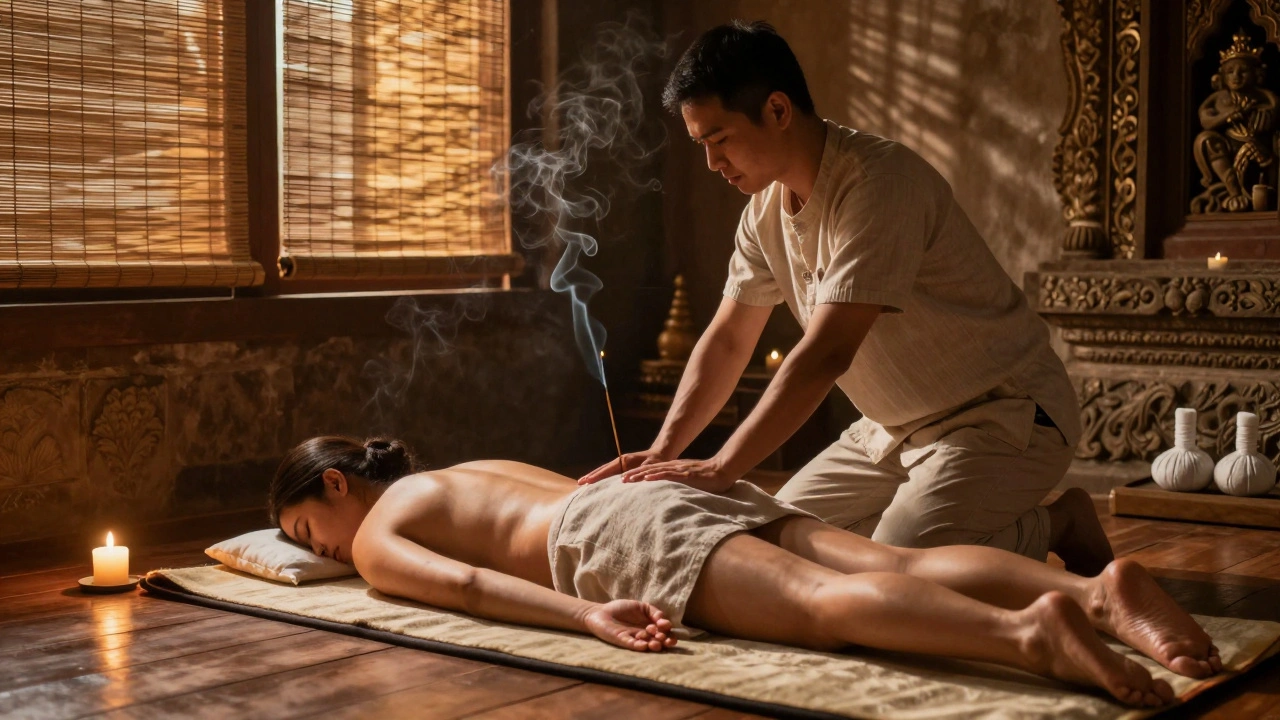
Have you ever wondered why body to body massage feels so different from a regular massage? It’s not just about the pressure or the oil-it’s about the connection. The skin-to-skin contact, the rhythm, the presence. That feeling doesn’t come from a modern spa brochure. It comes from centuries of tradition, ritual, and healing practices across Asia, the Pacific, and beyond.
What Exactly Is Body to Body Massage?
Body to body massage isn’t just a fancy term for sensual touch. At its core, it’s a technique where the therapist uses their own body-forearms, elbows, hips, even feet-to glide over yours, applying rhythmic pressure and movement. Unlike hand-only massage, this method creates a broader, more flowing sensation. It’s not about sex. It’s about energy, presence, and deep relaxation.
Think of it like surfing. Your body is the wave. The therapist doesn’t just push on you-they ride the contours of your muscles, letting their weight and motion do the work. This creates a deeper, more immersive release than fingers alone can achieve.
The Ancient Roots: Where Did It Begin?
The earliest records of body to body massage trace back to India over 5,000 years ago. In Ayurveda, massage wasn’t just physical-it was spiritual. Practitioners used oils and their entire bodies to balance the doshas (energies) in the body. The Abhyanga ritual involved a partner or therapist moving with the client in slow, synchronized strokes, often while chanting mantras. This wasn’t relaxation-it was purification.
From India, the practice traveled to Thailand. Thai temple massage, practiced by Buddhist monks, incorporated body-to-body techniques to help heal injuries and calm the mind. Monks used their legs to stretch and compress muscles, their forearms to roll along the spine. In ancient Thai hospitals, healers believed the body’s energy lines (sen lines) could only be fully opened with the full weight of another human.
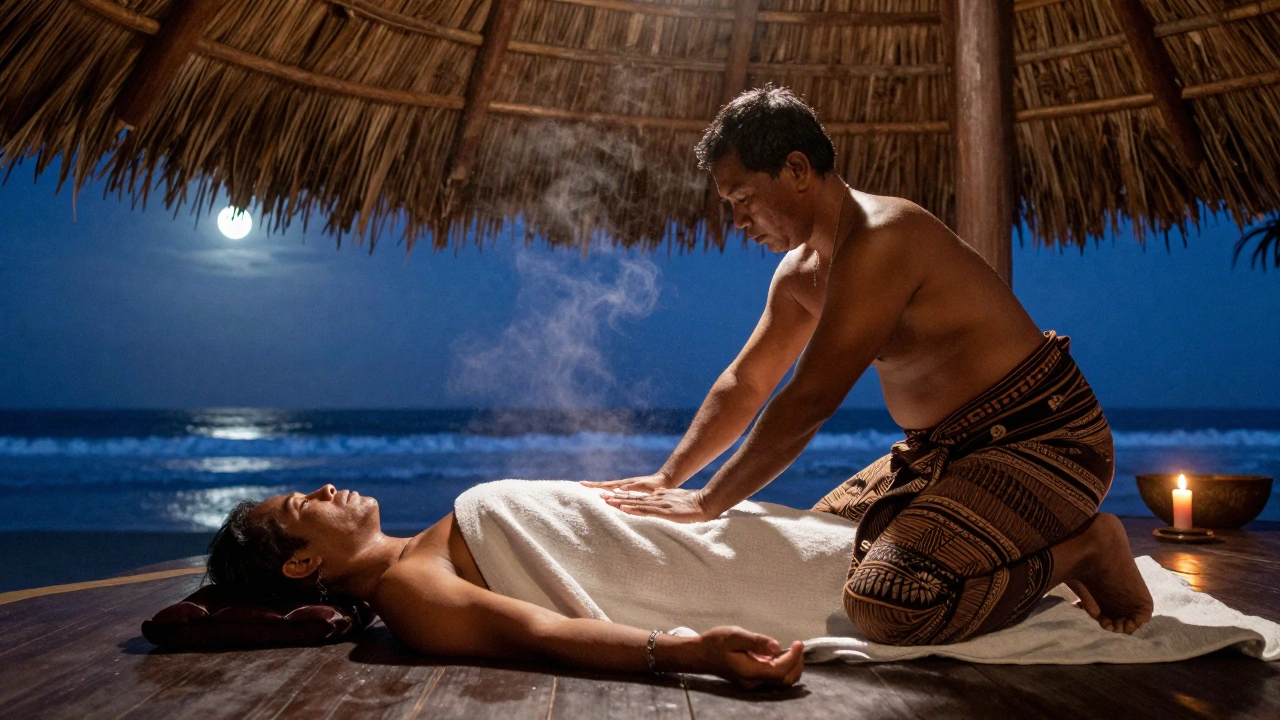
Meanwhile, in Polynesia, particularly in Hawaii and Tahiti, Lomilomi massage was performed by healers who moved like dancers. They used their forearms, elbows, and even knees to create long, flowing strokes. Lomilomi wasn’t just a treatment-it was a ceremony. Families would gather. Chants were sung. The massage was seen as a way to release not just physical tension, but ancestral grief and emotional blockages.
How Tantra Shaped Modern Body to Body Massage
In the 20th century, body to body massage evolved again-this time through Tantra. Not the sexualized version you see in pop culture, but the ancient Indian spiritual practice focused on expanding consciousness through touch.
Tantric practitioners believed that the body was a temple. Skin-to-skin contact wasn’t meant to excite-it was meant to awaken. By slowing down, breathing together, and moving with intention, both giver and receiver could enter a meditative state. This is where modern body to body massage got its emphasis on presence, breath, and non-goal-oriented touch.
Today, many body to body sessions in Amsterdam, Bali, or Portland still follow this model. The therapist doesn’t rush. They don’t aim for orgasm. They aim for surrender. That’s why people say, “I didn’t know I needed this until I felt it.”
Why This Technique Feels So Deeply Healing
Science backs up what ancient cultures already knew. Skin-to-skin contact triggers the release of oxytocin-the “bonding hormone.” It lowers cortisol (the stress hormone) and slows your heart rate. A 2021 study from the University of Miami found that full-body, skin-to-skin massage reduced anxiety levels by 47% in participants after just one session.
But it’s not just chemistry. It’s psychology. In a world where we’re constantly being touched by machines-phones, keyboards, steering wheels-being touched by another human, with warmth and intention, feels revolutionary. It reminds us we’re not alone.
People who’ve tried it often describe it as “like being held by the ocean.” Not in a romantic way. In a primal, grounding way. Like you’ve been floating for years and finally touched land.
How It’s Done Today: Variations Across the World
Body to body massage isn’t one thing. It’s many. Here’s how it looks in different places:
- Thailand: Used in traditional Thai healing centers. Therapists use their feet and forearms on a mat, applying deep, rhythmic pressure. Often paired with herbal compresses.
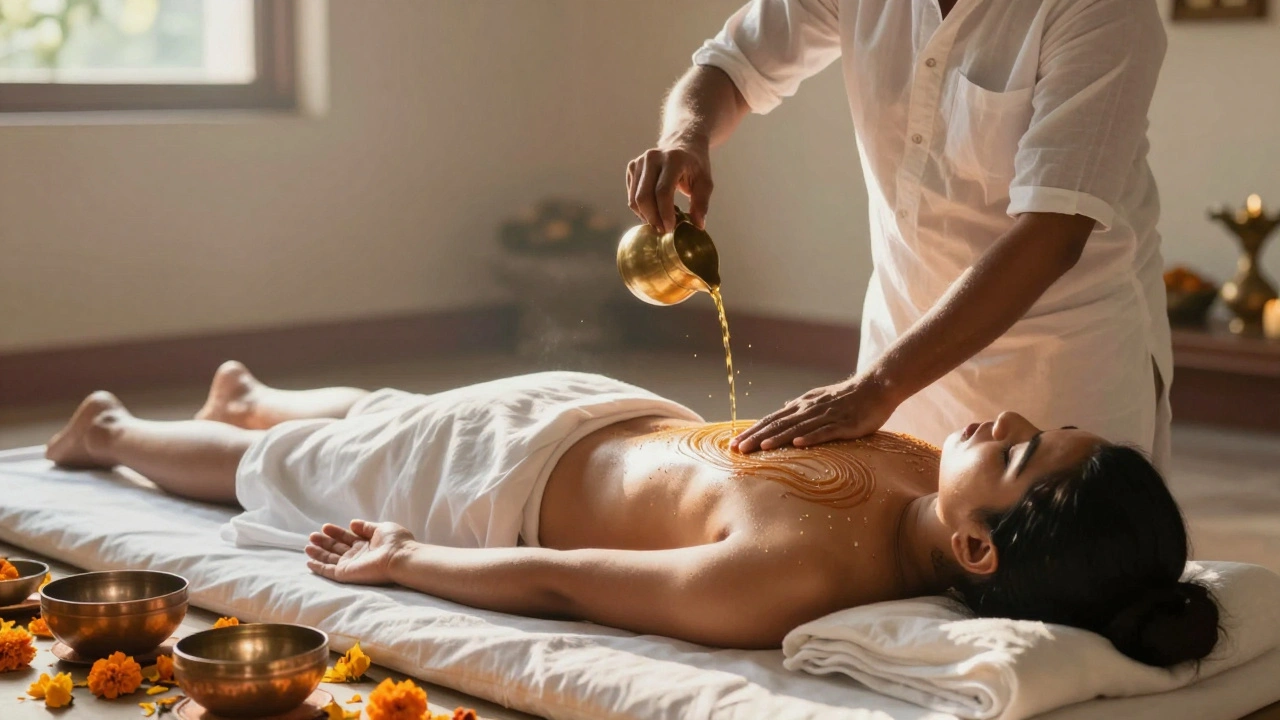
- India: Still practiced in Ayurvedic retreats. Oils like sesame or coconut are warmed and applied with long, circular strokes. The therapist often moves in sync with the client’s breath.
- Hawaii (Lomilomi): Fluid, dance-like movements. No set pattern. The therapist follows intuition and energy flow. Often includes prayer or song.
- Europe (Amsterdam, Berlin): Blends Tantra with modern relaxation. Focus on slow, sensual but non-sexual touch. Often includes candlelight, incense, and silence.
- Japan: Rare, but found in some onsen resorts. Uses body weight to release tension along meridians, similar to Shiatsu but with full-body contact.
Each style carries its own energy. One might leave you energized. Another, deeply still.
What to Expect in a Modern Session
If you’re new to this, here’s what actually happens:
- You’re asked to undress and lie under a warm towel on a heated table.
- The therapist enters quietly, often without speaking. They may light incense or play soft drums.
- They begin with light strokes-just the palm of their hand on your back. Then they step onto the table, barefoot, and begin to glide over you.
- You feel warmth, pressure, movement-but no grabbing, no sudden motions.
- They move from your shoulders down to your legs, using their body weight, not strength.
- There’s no talking. Just breath. Just presence.
- At the end, you’re wrapped in a blanket. You might cry. You might sleep. You might just sit quietly, stunned.
It’s not a massage you remember. It’s one you feel in your bones.
How to Find Authentic Sessions Today
Not every place calling itself “body to body” is genuine. Here’s how to spot the real ones:
- Look for therapists trained in traditional systems-Ayurveda, Lomilomi, or Thai temple massage.
- Ask if they offer a consultation first. Reputable practitioners want to understand your goals and boundaries.
- Check if the space is calm, clean, and private. No neon signs. No loud music.
- They should never pressure you. If they mention “romantic” or “sexual” outcomes, walk away.
- Read reviews that mention “deep peace,” “emotional release,” or “felt like a meditation.” Not “hot” or “sexy.”
In Amsterdam, places like De Stilte and Temple of Touch have trained with Thai and Indian masters. In Bali, look for retreats in Ubud that list Lomilomi or Ayurveda as core offerings.
Costs and Booking: What You’ll Pay
A 60-minute session typically costs between €80-€150 in Europe. In Bali or Thailand, you might pay €30-€60. Why the difference? It’s not about location-it’s about training.
Therapists who’ve studied for years in India or Thailand charge more because they’ve spent hundreds of hours learning energy flow, breathwork, and cultural context. A therapist who just learned a few moves from a YouTube video? They’ll charge less. And you’ll feel the difference.
Book ahead. Most authentic practitioners only take 2-3 clients a day. They need time to center themselves between sessions.
What to Avoid
Body to body massage is powerful. But it’s not for everyone-and not every provider is ethical.
- Never go to a place that doesn’t have clear boundaries. If the therapist doesn’t explain consent, leave.
- Avoid places that use terms like “sensual,” “erotic,” or “couples only.” Real body to body massage is about healing, not fantasy.
- Don’t expect to be touched on genitals. That’s not part of any traditional practice.
- If you feel pressured to undress more than you’re comfortable with, stop.
Trust your gut. If it feels transactional, it is.
Body to Body vs. Swedish Massage: What’s the Difference?
| Aspect | Body to Body Massage | Swedish Massage |
|---|---|---|
| Technique | Therapist uses body (forearms, feet, hips) to glide over client | Hands only, with strokes like effleurage and petrissage |
| Pressure | Deep, flowing, full-body weight | Light to medium, rhythmic |
| Goal | Energy release, emotional calm, deep presence | Relaxation, muscle tension relief |
| Duration | Usually 75-90 minutes | 60-75 minutes |
| Environment | Quiet, candlelit, often silent | Calming music, sometimes talk |
| Origin | Ayurveda, Lomilomi, Thai temple | 18th century Sweden |
Frequently Asked Questions
Is body to body massage sexual?
No. Authentic body to body massage is not sexual. It’s spiritual, therapeutic, and deeply non-sexual. The focus is on energy, breath, and presence-not arousal. Legitimate practitioners set clear boundaries and prioritize emotional safety. If a place implies or encourages sexual activity, it’s not body to body massage-it’s something else entirely.
Do I need to be naked?
You’ll be covered with a towel at all times. Only the area being worked on is exposed, and the therapist never touches private areas. Most people feel more comfortable fully nude under the towel, but you can wear underwear if you prefer. Your comfort comes first.
Can I do this if I’ve never had a massage before?
Yes. Many first-timers find it surprisingly gentle. The slow pace and warmth are calming, not overwhelming. Tell your therapist you’re new. They’ll adjust the pressure and pace. This isn’t about toughness-it’s about surrender.
Why does it make me cry?
Touch can unlock stored emotions. If you’ve held in stress, grief, or trauma, your body might release it during deep, safe contact. Crying isn’t a sign something’s wrong-it’s a sign your body is healing. The therapist won’t interrupt. They’ll just stay present.
How often should I get it?
Once a month is ideal for most people. It’s not a quick fix-it’s a reset. Think of it like meditation: the more you return, the deeper the effect. Some people come every two weeks during stressful times. Others wait six months. Listen to your body.
Ready to Feel Something Real?
Body to body massage isn’t about luxury. It’s about remembering what it feels like to be held-without words, without judgment, without agenda. In a world that’s always pushing, pulling, demanding, this is a rare gift: the chance to simply be touched, deeply and safely.
If you’ve been carrying stress in your shoulders, grief in your chest, or numbness in your limbs-this might be the key you didn’t know you were looking for. Not because it’s trendy. But because it’s ancient. And sometimes, the oldest things are the ones we need most.
Kevin Puls
January 9, 2026 AT 19:04Body-to-body massage isn’t just a technique-it’s a reconnection with something primal. I’ve had it in Bali, and honestly, it felt less like a treatment and more like being wrapped in a slow-moving tide. The therapist didn’t just massage me-they moved with me, like we were breathing the same air. No words. Just warmth. And yeah, I cried. Not because it was sad-because I hadn’t realized how long I’d been holding my breath.
Science says oxytocin spikes, sure. But the real magic? It’s the silence. In a world where everything screams for attention, someone just… being still with you? That’s the revolution.
Also, if you’re going to try it-skip the places with neon signs and EDM playlists. Go for the ones where the therapist meditates before each session. You’ll feel it.
And no, it’s not sexual. It’s sacred. Big difference.
Oskar Banaszek
January 11, 2026 AT 03:22Oh please. This is just spa prostitution repackaged as ‘ancient wisdom.’ Every time someone says ‘energy flow’ or ‘surrender,’ I hear ‘I’m charging $120 for a handjob with extra incense.’
Thai monks didn’t use their feet to massage people-they used them to sweep the temple floors. And Ayurveda? That’s a system of medicine, not a Tinder bio. Someone’s monetizing cultural appropriation and calling it ‘spiritual.’
Next thing you know, people will be paying $200 to have a yoga instructor whisper mantras while they rub coconut oil on their glutes. Wake up. This isn’t healing-it’s marketing.
Johanna Iñiguez
January 13, 2026 AT 12:15‘Body to body massage’ is grammatically incorrect. It should be ‘body-to-body massage.’ You’re missing hyphens. Also, ‘sen lines’ is not a term from Thai medicine-it’s ‘sen’ as in energy lines, singular. And ‘doshas’ is plural, so ‘balance the doshas’ is correct, but you wrote ‘balance the doshas in the body’-redundant. Doshas are inherently bodily.
Also, you claim ‘Lomilomi’ includes prayer, but you don’t specify if it’s Hawaiian or Tahitian, and those are distinct traditions. And you said ‘monks used their legs to stretch and compress muscles’-no, they used their forearms and feet, not their knees. You’re conflating techniques.
And the study from the University of Miami? You didn’t cite the journal. That’s sloppy. This isn’t a blog post. It’s a cultural artifact. Treat it with precision.
Gerald White
January 13, 2026 AT 13:50They’re all lying. Every single one of them. The ‘ancient traditions’? Fabricated. The ‘energy lines’? Corporate branding. The ‘meditation’? A cover for illegal activity.
I used to work in a massage parlor in Portland. They called it ‘Tantric body-to-body’-but the owner was a former cult member who got kicked out of a commune in Oregon for ‘unauthorized spiritual touching.’ He hired people who’d never touched a human before and gave them a 3-day training video. The ‘chants’? YouTube audio loops. The ‘candlelight’? LED string lights from Walmart.
They’re selling trauma as transcendence. And people are buying it because they’re lonely. And the worst part? They don’t even know they’re being scammed. They just feel better for five minutes. Then they come back. And again. And again.
It’s not healing. It’s addiction with a Sanskrit name.
Ankit Chamaria
January 14, 2026 AT 07:19Bro, I’m from India. My auntie did Abhyanga on me every winter when I was a kid. We used warm sesame oil. She’d hum bhajans. I’d fall asleep. No one called it ‘spiritual’-it was just what we did. Like eating roti with your hands.
Now it’s ‘sacred energy flow’ and $150 sessions in Amsterdam? I get it. The West loves to package the familiar as exotic. But don’t pretend you invented it. We didn’t need a TED Talk to know touch heals.
And yes, it’s okay if you cry. My auntie used to say, ‘Tears are the soul’s sweat.’ She didn’t charge for that.
Also, if you’re going to do this, go to someone who grew up with it. Not someone who watched a YouTube video and bought a silk robe.
Travis Reeser
January 14, 2026 AT 13:19I’ve had both. The $150 ‘Tantric’ one in Berlin and the $40 one in Goa. The Berlin one had lavender oil, soft music, and a therapist who whispered, ‘Let go.’ The Goan one? A woman in a sari, no music, no candles, just the sound of rain outside. She used her elbow like a rolling pin and asked if I wanted more oil. That’s it.
Guess which one changed me? The one that didn’t try to sell me enlightenment.
It’s not about the technique. It’s about the intention. And intention doesn’t need incense. It just needs presence.
Also, if you’re scared to be naked-wear underwear. No one’s judging. The therapist’s not thinking about your body. They’re thinking about your breath. Trust me. I’ve been one.