Deep Tissue Massage: The Secret Weapon for Stress Relief
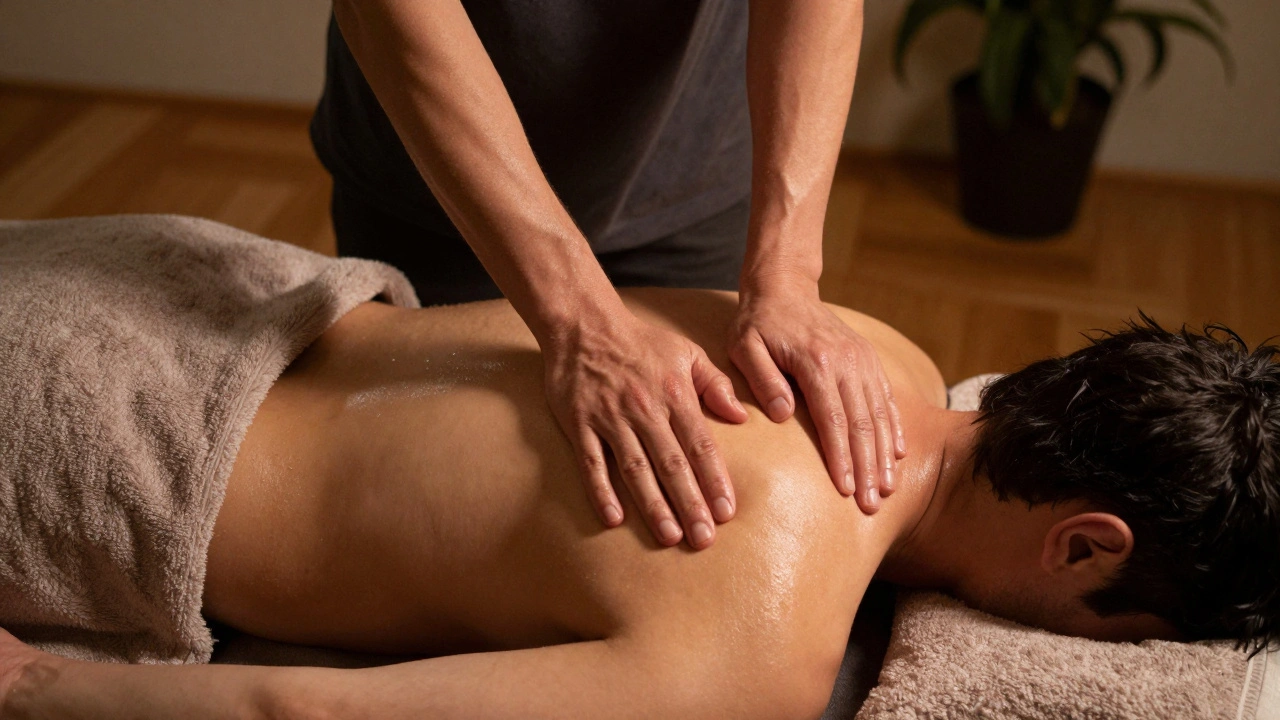
You know that heavy, tight feeling in your shoulders? The one that sticks around even after a good night’s sleep? Or the knot behind your neck that refuses to let go, no matter how much you stretch? If you’ve tried everything-yoga, foam rollers, even those expensive neck massagers-and nothing sticks, you’re not broken. You just haven’t tried the right kind of massage yet. Deep tissue massage isn’t just another spa add-on. It’s the hidden tool millions of stressed-out people are quietly using to finally feel like themselves again.
What Exactly Is Deep Tissue Massage?
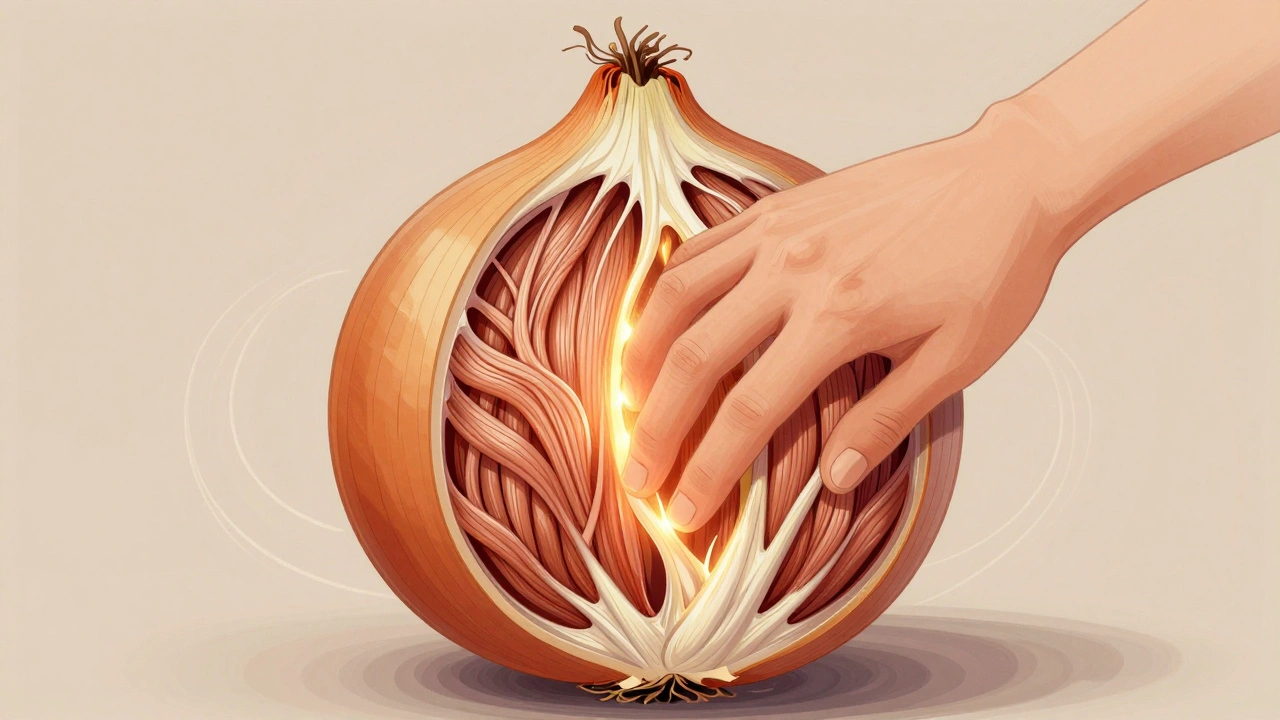
Let’s cut through the hype. Deep tissue massage isn’t about being rubbed harder. It’s about going deeper-literally. While Swedish massage glides over the surface like a feather, deep tissue targets the layers beneath: the fascia, the dense connective tissue that wraps around your muscles, and the actual muscle fibers themselves. Think of it like peeling back layers of an onion, but instead of tears, you get relief.
This technique uses slower strokes, more pressure, and focused finger work to break up adhesions-those sticky, painful spots that form when muscles get stuck from overuse, injury, or constant tension. It’s not a gentle experience. You’ll feel pressure. You might even wince. But if it’s done right, that discomfort turns into release.
It’s not magic. It’s anatomy. Your body stores stress in your muscles. Chronic stress? That’s not just in your head-it’s in your lower back, your jaw, your hips. Deep tissue massage doesn’t ignore that. It works directly on the source.
Why It Works for Stress Relief (The Science Behind It)
Stress isn’t just a feeling. It’s a physical state. When you’re stressed, your body releases cortisol. That hormone tenses up your muscles, tightens your blood vessels, and shuts down digestion. Over time, your muscles stay locked in fight-or-flight mode-even when there’s no tiger in the room.
Deep tissue massage interrupts that cycle. Studies from the Journal of Clinical Psychiatry in 2023 showed that people who received regular deep tissue sessions had a 31% drop in cortisol levels after just four weeks. That’s not placebo. That’s measurable change.
Here’s how it breaks down:
- Breaks up muscle knots: Those stubborn trigger points? They’re physical barriers to relaxation. Deep tissue melts them.
- Improves circulation: Better blood flow means more oxygen and nutrients reach tired muscles, helping them heal faster.
- Triggers the parasympathetic nervous system: That’s your body’s ‘rest and digest’ switch. Once it flips, your heart rate slows, your breathing deepens, and your mind finally lets go.
One client in Utrecht told me, "I didn’t realize how much I was holding in my shoulders until the therapist pressed into them. I cried. Not from pain-from relief. I hadn’t breathed fully in years."
How It’s Different from Other Massages
Not all massages are created equal. Here’s how deep tissue stacks up against the most common types you’ll find in Amsterdam:
| Massage Type | Pressure Level | Focus Area | Best For | Stress Relief Effect |
|---|---|---|---|---|
| Swedish Massage | Light to medium | Surface muscles | Relaxation, general well-being | Mild, temporary |
| Deep Tissue Massage | Medium to firm | Deep muscle layers, fascia | Chronic tension, stress-related pain | Strong, lasting |
| Hot Stone Massage | Medium | Surface with heat | Calming, circulation boost | Calming, but surface-level |
| Thai Massage | Variable, includes stretching | Full body, energy lines | Flexibility, energy flow | Moderate, indirect |
| Lymphatic Drainage | Extremely light | Fluid flow, immune system | Swelling, detox | Subtle, systemic |
Swedish massage feels nice. Hot stone feels warm. Thai massage stretches you out. But only deep tissue goes deep enough to undo the physical grip of long-term stress.
What to Expect During Your First Session
Walking into a deep tissue session can feel intimidating. You might worry it’ll hurt too much. Here’s the reality:
- Initial chat: A good therapist will ask about your pain points, stress triggers, and any injuries. They don’t guess-they listen.
- Positioning: You’ll lie on your stomach, back, or side. You’re covered with a towel. Only the area being worked on is exposed.
- The work: The therapist uses elbows, knuckles, forearms-not just hands. You’ll feel deep pressure, sometimes sharp, sometimes dull. If it’s too much, speak up. This isn’t a pain contest.
- The release: Around the 20-minute mark, you’ll feel a shift. The tension doesn’t vanish, but it softens. Your breathing changes. That’s when you know it’s working.
- Aftercare: Drink water. You’ll be flushed with toxins released from the muscles. A warm shower helps. Avoid intense exercise or caffeine for a few hours.
One woman from Haarlem came back after her first session and said, "I felt like I’d been carrying a backpack full of bricks for ten years. I didn’t know I was that heavy."
Where to Find Real Deep Tissue Massage in Amsterdam
Not every "massage therapist" knows how to do deep tissue right. In Amsterdam, look for these signs:
- Specialized training: Ask if they’ve studied myofascial release, trigger point therapy, or neuromuscular techniques. These are the real tools.
- Client reviews: Look for mentions of "knots broken," "pain turned to relief," or "finally felt better after years." Avoid reviews that just say "relaxing" or "nice ambiance." That’s Swedish.
- Location matters: Areas like De Pijp, Jordaan, and Oud-Zuid have clinics with therapists who specialize in chronic pain and stress. Check out Bodywork Studio in De Pijp or Tension Break near the Vondelpark-they’ve been doing this for over a decade.
Don’t go to a spa that pushes 60-minute packages. Deep tissue needs time. A 75-minute session is the sweet spot.
Costs and Booking Tips
Here’s what you’ll pay in Amsterdam as of early 2026:
- 60-minute session: €85-€110
- 75-minute session: €110-€140
- 90-minute session: €140-€180
Why the range? It depends on the therapist’s experience, location, and whether they offer add-ons like heat therapy or aromatherapy. Stick to the base deep tissue for stress relief.
Booking tip: Call ahead. Many top therapists don’t take online bookings. A quick chat lets them know you’re serious about results, not just relaxation. Say: "I’m looking for deep tissue for chronic shoulder tension and stress. Can we schedule a 75-minute session?" That filters out the fluff.
Who Should Avoid It
Deep tissue isn’t for everyone. Skip it if you have:
- Recent injuries or open wounds
- Severe osteoporosis
- Blood clotting disorders
- Active inflammation (like a flare-up of rheumatoid arthritis)
If you’re pregnant, wait until after the first trimester and only go to a therapist trained in prenatal deep tissue. Always mention any medical condition before the session.

How Often Should You Do It?
For acute stress or pain: once a week for 3-4 weeks, then back to monthly.
For maintenance: once a month keeps your muscles from locking up again. Think of it like brushing your teeth-you don’t wait until your gums bleed.
One man from Amstelveen told me he started monthly sessions after his divorce. "I didn’t know I was holding so much grief in my back. Now I don’t even need painkillers anymore."
What Happens After?
You might feel sore the next day. That’s normal. It’s like a workout for your muscles. Drink water. Take a warm bath. Don’t stretch aggressively.
Within 2-3 days, you’ll notice:
- Better sleep
- Less jaw clenching
- Deeper breathing
- Less irritability
That’s not coincidence. That’s your nervous system finally relaxing. Your body doesn’t lie. When your muscles loosen, your mind follows.
Frequently Asked Questions
Does deep tissue massage hurt?
It shouldn’t hurt like an injury. You’ll feel pressure, maybe even discomfort, but it should never feel sharp, burning, or unbearable. Good therapists adjust pressure based on your feedback. If it feels like pain, speak up. The goal is release, not punishment.
Can deep tissue massage help with anxiety?
Yes. Anxiety isn’t just in your head-it’s stored in your body. Tight shoulders, clenched jaw, shallow breathing-all physical signs. Deep tissue helps reset your nervous system by releasing physical tension. Studies show it lowers cortisol and increases serotonin. It’s not a cure, but it’s one of the most effective physical tools for calming the body’s stress response.
How long until I feel results?
Some people feel lighter after one session. For lasting change, give it 3-4 sessions. Chronic stress doesn’t vanish overnight. But after the second session, most clients report better sleep and less mental fog. It’s cumulative.
Is deep tissue better than a chiropractor for stress?
They serve different purposes. Chiropractors adjust bones. Deep tissue therapists work on the muscles that pull on those bones. If your pain comes from tight muscles pinching nerves or pulling joints out of alignment, deep tissue addresses the root. Many people use both: massage to loosen the muscles, chiropractor to fine-tune the alignment.
Can I do deep tissue massage at home?
You can use foam rollers or massage guns, but they can’t replicate the precision of a trained therapist. Deep tissue requires knowing exactly where to apply pressure, how long to hold it, and how to navigate around bones and tendons. Home tools are good for maintenance, not for breaking up long-standing tension.
Ready to Let Go?
You’ve carried this stress long enough. The tight shoulders, the sleepless nights, the constant buzz of tension-it doesn’t have to be your normal. Deep tissue massage isn’t a luxury. It’s a reset button for your body. And in a city like Amsterdam, where life moves fast and pressure never stops, you deserve to feel light again.
Book your first session. Not tomorrow. Not next week. Today. Your body’s been waiting.