Deep Tissue Massage: A Holistic Approach to Pain Management

You know that ache in your shoulders that won’t go away? The one that wakes you up at 3 a.m. and makes typing feel like climbing a hill? Or maybe it’s your lower back, stiff as a board after sitting all day. Most people reach for painkillers or hope it goes away on its own. But what if there’s a way to actually deep tissue massage the root of the problem-not just cover it up?
Deep tissue massage isn’t just a stronger version of a regular massage. It’s a targeted, therapeutic tool used by physical therapists, athletes, and people dealing with long-term pain. It doesn’t promise instant magic, but if you’ve tried everything else and still feel stuck, this might be the missing piece.
What Deep Tissue Massage Really Does
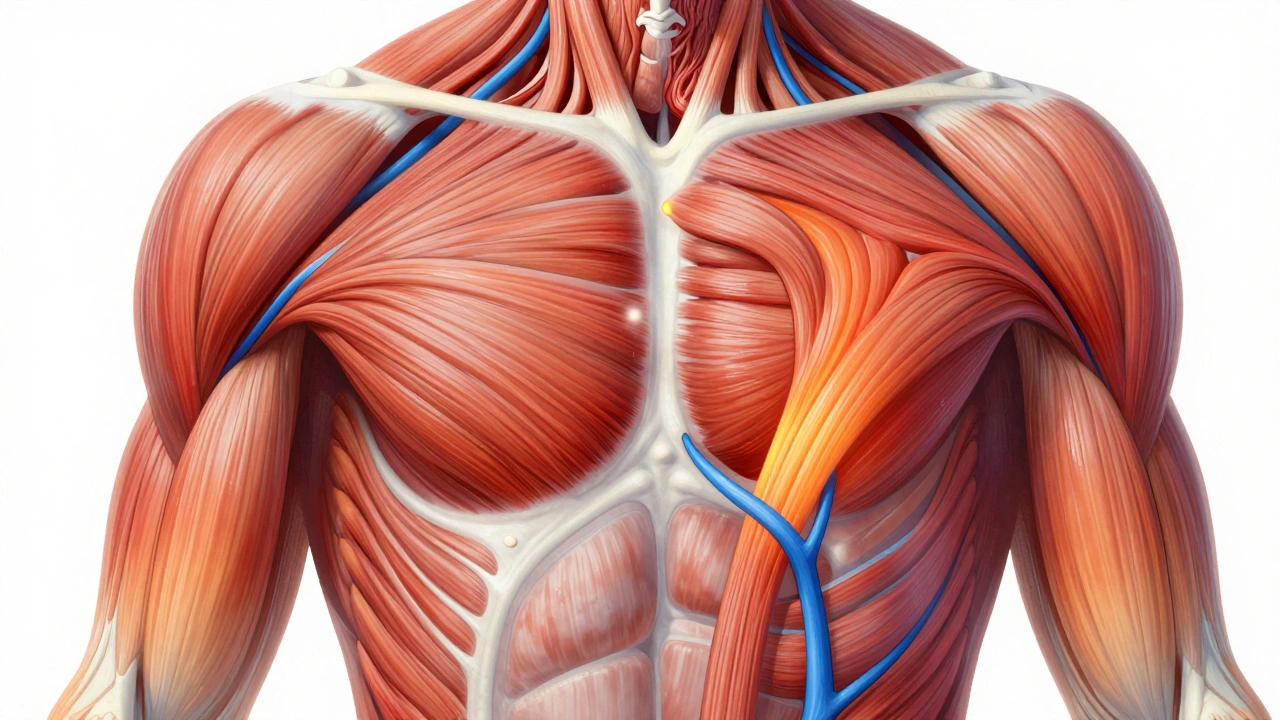
Think of your muscles like tangled ropes. Over time, stress, bad posture, or injury causes fibers to stick together, forming knots-what therapists call adhesions. These aren’t just uncomfortable; they restrict blood flow, trap inflammation, and pull your skeleton out of alignment. That’s why your neck hurts even though you didn’t strain it.
Deep tissue massage uses slow, deliberate pressure to get past the surface layers of muscle. The therapist works into the deeper layers-fascia, tendons, and muscle fibers-breaking up those stuck spots. It’s not about brute force. It’s about precision. A good therapist will adjust pressure based on your feedback, never just going all-in because "it’s supposed to hurt."
Studies from the Journal of Clinical Psychiatry in 2023 showed that participants with chronic lower back pain who received weekly deep tissue sessions for eight weeks reported a 52% reduction in pain intensity. Not just temporary relief-real, measurable improvement.
Why It Works for Chronic Pain
Most pain isn’t just "in your muscles." It’s a cycle. Tight muscles → poor circulation → inflammation → more tension → more pain. Deep tissue massage breaks that cycle.
Here’s how:
- Reduces inflammation: By improving blood flow, it helps flush out inflammatory chemicals that build up after injury or overuse.
- Resets nerve sensitivity: Chronic pain often makes nerves hypersensitive. Deep pressure helps calm overactive pain signals.
- Releases trigger points: These are hyper-irritable spots in muscle that refer pain to other areas-like a knot in your shoulder causing headaches.
- Improves mobility: When muscles can move freely again, joints don’t have to compensate. That means less strain on knees, hips, and spine.
One woman in Utrecht, 54, had sciatica for three years. She tried physiotherapy, acupuncture, even cortisone shots. Nothing stuck. After six deep tissue sessions focused on her glutes and hamstrings, she walked without pain for the first time in years. "It wasn’t the massage itself," she told me. "It was the fact that someone finally looked at how my whole body was connected."
What to Expect During a Session
Don’t imagine a spa with candles and lavender. Deep tissue is more like a skilled repair job.
You’ll lie on a firm table, usually undressed from the waist down (with draping for privacy). The therapist will start with lighter strokes to warm up the tissue, then move into deeper work. You’ll feel pressure-sometimes intense-but it shouldn’t make you gasp in pain. If it does, speak up. Good therapists check in constantly: "Is this too much?" "Does this area feel tender?"
It’s common to feel sore afterward-like after a hard workout. That’s normal. Drink water. Move gently. The soreness fades in 1-2 days. Many people say the second session feels easier because their body is starting to release.
Typical session length: 60-90 minutes. First-time clients often start with 60 minutes to see how their body responds.
Who Benefits Most
This isn’t for everyone. But if you fit any of these, you’re likely a great candidate:
- You have persistent muscle pain that doesn’t improve with rest or stretching
- You sit at a desk all day and feel tightness in your neck, shoulders, or lower back
- You’re an athlete recovering from overuse injuries
- You’ve had surgery or trauma that left scar tissue
- You’ve tried Swedish massage and it felt too light
It’s not recommended if you have: acute injuries, open wounds, blood clots, osteoporosis, or are in early pregnancy. Always consult your doctor if you’re unsure.
Deep Tissue vs. Swedish Massage
| Feature | Deep Tissue Massage | Swedish Massage |
|---|---|---|
| Pressure | Firm, focused, slow | Light to moderate, flowing |
| Goal | Release chronic tension, break adhesions | Relaxation, improve circulation |
| Best for | Chronic pain, injury recovery, tight muscles | Stress relief, general relaxation |
| Soreness after | Moderate to high (1-2 days) | Minimal to none |
| Frequency recommended | Every 2-4 weeks for maintenance | Weekly or monthly |
How to Find Quality Deep Tissue Massage in Amsterdam
Not all massage therapists are trained the same. In Amsterdam, look for practitioners with:
- Certification in deep tissue or myofascial release (not just "massage therapist")
- Experience working with chronic pain clients
- Clear communication-ask them how they adjust pressure and what they focus on
Some trusted spots in Amsterdam include:
- Therapy House (Jordaan)-specializes in musculoskeletal rehab
- Bodywork Studio (De Pijp)-therapists trained in anatomy-based techniques
- Amsterdam Pain Relief Center (Centrum)-offers combined deep tissue and movement therapy
Check reviews for mentions of "pain relief," "didn’t leave me sore," or "understood my issue." Avoid places that only advertise "relaxation" or "romantic" sessions-those rarely do deep work.

Pricing and Booking
Expect to pay between €70-€110 for a 60-minute session. Higher prices usually mean more specialized training or longer sessions. Some clinics offer package deals: 5 sessions for €300-€400. That’s often the best value if you’re tackling chronic pain.
Book your first session as a consultation. A good therapist will ask about your history, pain patterns, and goals before even touching you. Don’t rush into a session without this step.
Safety and Aftercare
Deep tissue isn’t dangerous when done right. But here’s what to avoid:
- Don’t drink alcohol before or after-your body needs to process released toxins
- Don’t skip hydration-water helps flush out metabolic waste
- Don’t do intense exercise right after-you’ll risk inflammation
- Don’t ignore bruising or lasting numbness-contact your therapist
After your session, take a warm bath, stretch gently, and rest. Many people report better sleep the night after. That’s your body healing.
Frequently Asked Questions
Does deep tissue massage hurt?
It can feel intense, but it shouldn’t be unbearable. Think "good hurt"-like a deep stretch. If you’re clenching your fists or holding your breath, the pressure is too much. Always communicate. A skilled therapist will adjust in real time.
How many sessions do I need to see results?
Most people feel a difference after 2-3 sessions. For chronic issues, 6-8 weekly sessions followed by monthly maintenance works best. Pain that’s been there for years won’t vanish in one visit-but it can fade with consistent care.
Can deep tissue massage help with headaches?
Yes-if they’re tension headaches. Many originate from tight neck and shoulder muscles pulling on the scalp. A therapist focusing on the upper trapezius and suboccipital muscles can significantly reduce frequency and intensity. One client cut her monthly migraines in half after three sessions.
Is it better than physical therapy?
They’re complementary. Physical therapy focuses on strengthening and movement retraining. Deep tissue releases the muscle tension that makes those exercises hard to do. Many therapists and PTs work together. If you’re stuck in a loop of pain and stiffness, combining both can be powerful.
Can I do this myself with a foam roller?
Foam rollers help with general tightness, but they can’t replicate the precision of a trained therapist. You can’t target deep adhesions the same way. Think of it like trying to fix a watch with a hammer-sometimes it helps, but you’re not getting to the root. Use rollers for maintenance, not correction.
If you’ve been living with pain that won’t quit, deep tissue massage might be the quiet solution you’ve overlooked. It’s not a quick fix-but it’s one of the few tools that actually rewires how your body holds tension. Give it a try. Your future self will thank you.