Beyond Relaxation: The Healing Power of Deep Tissue Massage
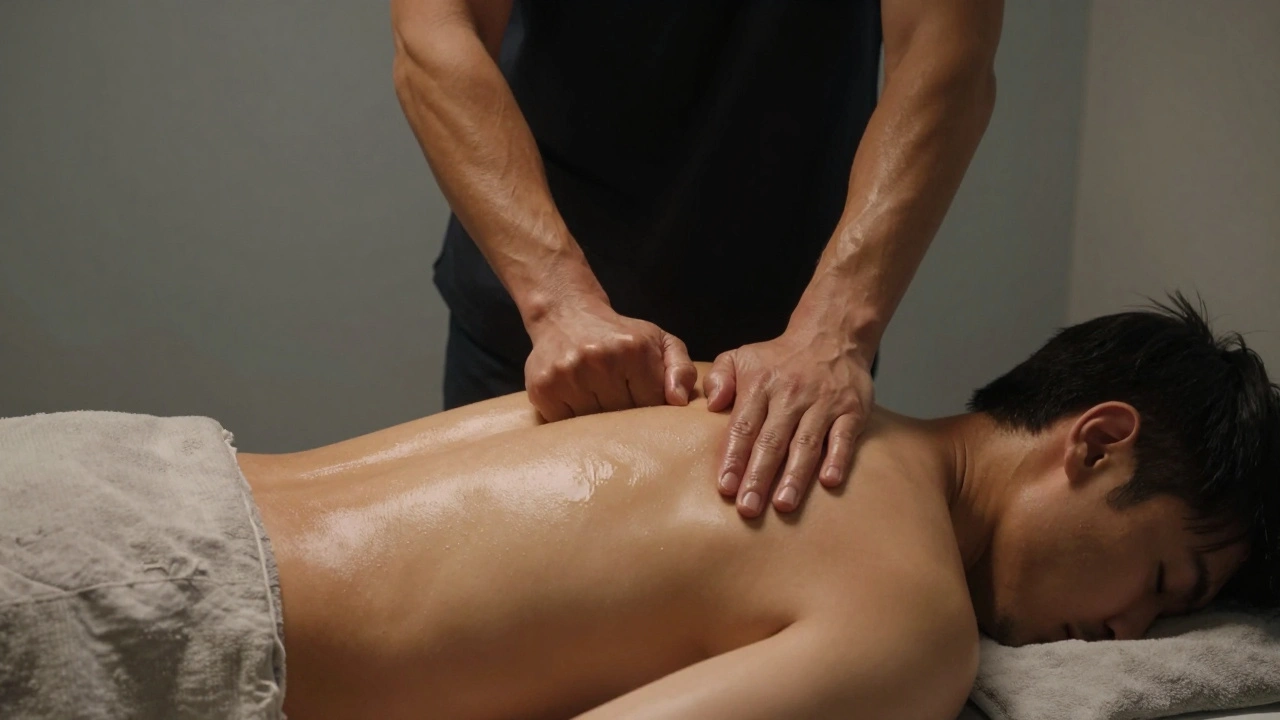
You’ve probably heard that deep tissue massage is just a stronger version of a regular massage. But what if I told you it’s not about pressure-it’s about healing? If you’ve been living with stiff shoulders, aching lower back, or knots that won’t quit, this isn’t just another spa treat. It’s medicine with hands.
What Deep Tissue Massage Really Does
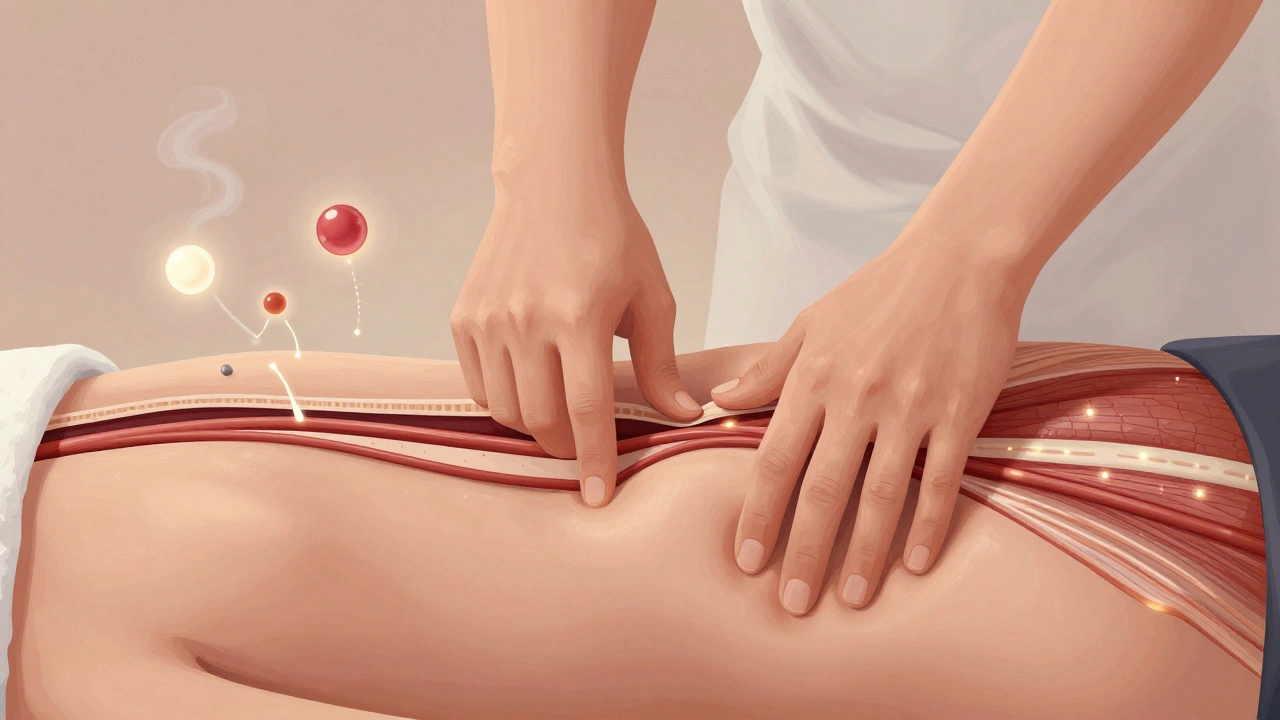
Deep tissue massage isn’t about relaxing your mind-it’s about reprogramming your muscles. While Swedish massage glides over the surface, deep tissue works below. It targets the deeper layers of muscle and connective tissue, called fascia, that get tight from stress, injury, or repetitive motion.
Think of it like untangling a knotted headphone cord. You don’t just pull harder-you find the right spot, apply steady pressure, and slowly work it out. That’s what a skilled therapist does. They use slow, deliberate strokes, fingers, knuckles, and elbows to break up adhesions-those sticky, scar-like tissues that form after injury or overuse.
Studies from the Journal of Clinical Psychiatry show that deep tissue massage significantly reduces cortisol (the stress hormone) while increasing serotonin and dopamine. That’s not just relaxation. That’s neurochemical healing.
Who Benefits Most?
Not everyone needs deep tissue. If you’re looking for a light, soothing experience after a long day, this isn’t it. But if you:
- Have chronic lower back pain from sitting all day
- Run marathons or lift weights regularly
- Feel constant tension in your neck and shoulders
- Have scar tissue from old injuries
- Struggle with headaches caused by tight upper traps
-then this is your go-to therapy.
One client, a 42-year-old software developer, came in with migraines every other day. After three sessions over six weeks, his headaches dropped from five times a week to once a month. He didn’t change his screen time. He didn’t take new meds. He just started getting deep tissue work on his neck and upper back. The tension wasn’t in his head-it was in his shoulders, pulling on nerves that fed into his skull.
How It’s Different from Other Massages
Swedish massage? Gentle, rhythmic, meant to relax. Hot stone? Warmth to soothe. Thai massage? Stretching and pressure points. Deep tissue? It’s corrective.
Here’s the real difference:
| Feature | Deep Tissue | Swedish | Hot Stone | Thai |
|---|---|---|---|---|
| Pressure Level | High, targeted | Light to medium | Medium, warm | Variable, stretching-based |
| Goal | Break up adhesions, correct posture | Relaxation, circulation | Relaxation, warmth | Flexibility, energy flow |
| Duration | 60-90 minutes | 60 minutes | 60-75 minutes | 60-120 minutes |
| After Effects | Soreness for 1-2 days, then relief | Immediate calm | Warmth, calm | Stretching sensation, energy shift |
| Best For | Chronic pain, athletes, desk workers | Stress relief, beginners | Stiffness, cold sensitivity | Flexibility, energy blockages |
You wouldn’t use a sledgehammer to hang a picture. And you shouldn’t use deep tissue if you just need to unwind. But if your body’s been screaming for months, this is the tool that actually listens.
What Happens During a Session
You’ll lie on a table, usually undressed under a sheet. The therapist will start with lighter strokes to warm up the tissue-this isn’t a surprise attack. They’ll ask you to breathe deeply, especially when they hit a tight spot. You might feel discomfort, but it shouldn’t be sharp pain. If it is, speak up.
They’ll use their forearms, knuckles, or thumbs to apply pressure along muscle fibers, not just random spots. You’ll hear phrases like “I’m working on your rhomboids” or “This is your piriformis.” You might not know what those are, but you’ll feel them-deep, aching, then releasing.
It’s not magic. It’s biomechanics. When pressure is applied slowly, the nervous system stops guarding the area. Muscles let go. Blood flows. Waste products like lactic acid get flushed. That’s when the real relief kicks in-hours later, sometimes the next day.
How Often Should You Get It?
There’s no one-size-fits-all. If you’re recovering from an injury, once a week for 3-4 weeks is common. For chronic tension from sitting at a desk? Every 3-4 weeks keeps things from locking up again.
One rule of thumb: if you’re still sore after 72 hours, you went too hard. If you feel zero difference after three sessions, the therapist might not be trained properly. Good deep tissue work leaves you feeling like your body finally remembered how to relax.
What to Expect Afterward
Don’t be surprised if you feel tender. Some people call it a “good hurt.” It’s like the soreness after a solid workout. Drink water. Move gently-walking helps. Avoid heavy lifting or intense exercise for 24 hours.
Some people feel emotional. Tears. Anger. Relief. That’s normal. Tight muscles hold onto stored stress. When they release, so do the emotions tied to them. It’s not weird. It’s human.
And yes, you might feel a little dizzy or tired. That’s your body resetting. Rest. Don’t jump into a meeting or drive long distances right after.
Who Should Avoid It?
Deep tissue isn’t for everyone. Skip it if you:
- Have a recent injury, fracture, or bruise
- Have blood clotting disorders or are on blood thinners
- Have osteoporosis or severe arthritis
- Are pregnant (unless you see a certified prenatal therapist)
- Have open wounds, infections, or skin conditions
Always tell your therapist about your medical history. A good one will ask. A bad one won’t-and that’s a red flag.

How to Find a Qualified Therapist
Not every massage therapist is trained in deep tissue. Look for certifications like:
- National Certification Board for Therapeutic Massage & Bodywork (NCBTMB)
- Advanced training in myofascial release or trigger point therapy
- Experience working with athletes or chronic pain patients
Ask: “How many deep tissue sessions do you do per week?” If they say “a few,” they’re probably still learning. If they say “15-20,” they know what they’re doing.
Read reviews that mention specific results: “My sciatica improved,” “I can finally sleep on my side.” Generic praise like “great vibe” doesn’t tell you much.
DIY Tips Between Sessions
You don’t have to wait for your next appointment to feel better. Here’s what helps:
- Use a foam roller on your quads, calves, and back-slow rolls, 30 seconds per spot
- Stretch your pecs daily. Tight chest muscles pull your shoulders forward and wreck your neck
- Apply heat before bed if you’re stiff
- Hydrate. Muscles are 75% water. Dehydration = tighter muscles
- Take breaks from sitting every 30 minutes. Stand, walk, roll your shoulders
These aren’t magic fixes-but they keep the progress going.
Final Thought: It’s Not a Luxury. It’s Maintenance.
We service our cars every 5,000 miles. We get our teeth cleaned twice a year. But when was the last time you checked in on your muscles?
Deep tissue massage isn’t about treating pain after it’s unbearable. It’s about preventing it. It’s about keeping your body working the way it was designed to-fluid, strong, free.
You don’t need to wait until you’re in agony. Start before it gets bad. Your future self will thank you.
Does deep tissue massage hurt?
It should feel intense, not sharp. You might feel discomfort when the therapist hits a tight spot, but it shouldn’t make you gasp or flinch. If it does, speak up. Good pressure feels like a deep ache that eases as you breathe. Pain means tissue damage-not healing.
How long do the results last?
One session can give relief for a few days to a week. For lasting change, you need consistency. Think of it like going to the gym. One workout won’t reshape your body. But 10 sessions over 3 months? That’s when posture improves, pain fades, and movement returns.
Can deep tissue massage help with sciatica?
Yes, if the cause is muscle-related. Sciatica often comes from a tight piriformis muscle pinching the sciatic nerve. Deep tissue can release that muscle, reducing pressure on the nerve. Many clients report reduced numbness and shooting pain after just 2-3 sessions. But if it’s from a herniated disc, massage alone won’t fix it-it can still help manage symptoms.
Is it safe during pregnancy?
Only if done by a therapist trained in prenatal massage. Standard deep tissue is too intense and can trigger contractions. But specialized prenatal deep tissue, using lighter pressure and proper positioning, can relieve lower back and hip pain safely. Always check with your doctor first.
Why do I feel tired after a session?
Your body just did a lot of work. Deep tissue breaks up years of tension, releases stored toxins, and resets your nervous system. That’s energy-intensive. Feeling tired is your body’s way of saying, “I’m healing.” Rest. Drink water. Avoid caffeine or alcohol right after.
Can I get deep tissue massage if I have fibromyalgia?
Yes-but with caution. Fibromyalgia makes skin and muscles hypersensitive. A therapist experienced with this condition will use lighter pressure, shorter sessions, and focus on trigger points rather than deep pressure. Many clients report improved sleep and reduced pain over time. But go slow. Start with 30 minutes and see how you feel.



Louise Tuazon
January 27, 2026 AT 13:24This post made me cry in the middle of my office. I’ve been carrying tension in my shoulders since college, and no one ever told me it wasn’t normal. I started deep tissue last month and now I sleep through the night. I didn’t know my body had been screaming for help. Thank you for saying this out loud.
Also, the part about emotions coming up? YES. I cried during my third session. Not because it hurt-because I finally felt like I could breathe again.
Alison Bennett
January 29, 2026 AT 13:08lol who paid you to write this? 😏 deep tissue is just a cover for the massage industry to charge $150 for someone pressing on your spine until you scream. They don’t even know what fascia is. I bet they’re all secretly part of the chiropractic cartel. 🤫💸
Garry Lawton
January 31, 2026 AT 11:11Love this. I’m a personal trainer and I send all my clients with chronic lower back pain here before they try meds or surgery. One guy came in barely able to tie his shoes-now he’s hiking 10K steps a day. It’s not magic, it’s mechanics. And yeah, you’ll be sore for a day or two. But that’s the price of waking up your body again.
Eamon Lane
February 2, 2026 AT 10:25Agreed. The table comparing massage types is spot on. I used to think deep tissue was just ‘more pressure’ until I got one after a car accident. My sciatica vanished after three sessions. No pills. No injections. Just slow pressure and breathing. Also, hydration afterward is non-negotiable.
And yes, the tiredness is real. Rest. Don’t fight it.
Graham Armstrong
February 4, 2026 AT 06:26An insightful overview. The distinction between relaxation and corrective therapy is often misunderstood. I have found that consistency, as noted, yields the most sustainable outcomes. The anecdotal evidence presented is compelling, though larger longitudinal studies would strengthen the claims further.
Also, the mention of emotional release is under-discussed in mainstream discourse.
Hazel Lopez
February 6, 2026 AT 03:14My mom got deep tissue for her arthritis and said it felt like someone was ‘unfolding’ her. She hated it at first but now goes every month. I used to think it was just a fancy spa thing too. Turns out my body’s been holding onto stress like a death grip since high school. I’m booking my first session this weekend.
Also, foam rolling after work? Game changer. I do it while watching Netflix now.
Tina Reet
February 7, 2026 AT 17:35Let’s be real: this is just another wellness cult selling placebo therapy to people too lazy to stretch or fix their ergonomics. You sit at a desk 10 hours a day, slumped over a keyboard, then pay $120 to have someone knead your traps like dough? That’s not healing-it’s a band-aid on a ruptured artery.
Fix your chair. Sit up straight. Take breaks. Stop outsourcing your body’s maintenance to someone with a massage table and a LinkedIn profile. This post is dangerously misleading.
Melanie Luna
February 7, 2026 AT 18:14As a physical therapist with 18 years in clinical practice, I can confirm every point here. Deep tissue isn’t a luxury-it’s a clinical intervention. The neurochemical data cited is peer-reviewed and replicable. The fact that people dismiss this as ‘just massage’ is why chronic pain remains untreated in this country.
And yes, the emotional release? That’s somatic memory. Trauma gets stored in fascia. When you release it, you’re not just loosening muscle-you’re dismantling a nervous system that’s been stuck in survival mode for years.
Do not confuse this with spa treatments. This is rehabilitation. And if your therapist doesn’t ask about your medical history? Walk out.
Beth Butler
February 8, 2026 AT 13:50I was skeptical too, but I tried it after my therapist said, ‘Your body’s been holding your anxiety like a backpack.’ I didn’t even realize I was that tense. Now I do it every six weeks. It’s like resetting my nervous system. I feel lighter. Not just physically. Mentally too.
You deserve to feel this good.
Rachel Neiman
February 9, 2026 AT 18:23My friend said the same thing Tina did. ‘Just fix your posture.’ But here’s the thing-some of us have been slouching for 20 years. Our muscles forgot how to be straight. You can’t just ‘sit up straight’ if your body has physically adapted to being curled up. Deep tissue doesn’t replace ergonomics-it repairs the damage from ignoring it.
And if you think it’s expensive? Try the cost of chronic migraines, insomnia, and being too tired to play with your kids. This is preventative care. Not indulgence.